
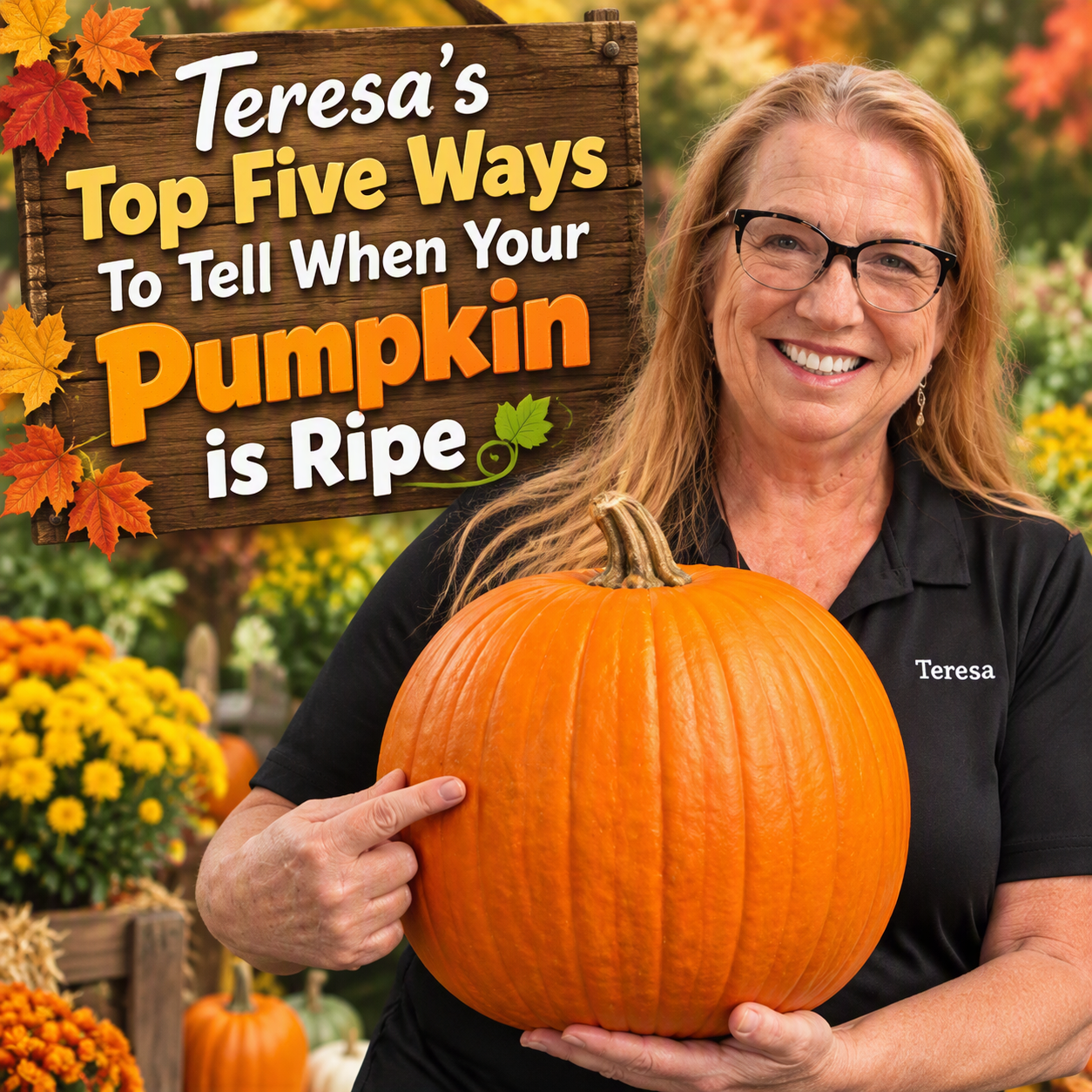
5. Color Is Deep and Even
A ripe pumpkin has a rich, even color all over. Traditional carving pumpkins turn a deep orange with no green spots. Other types will have their own mature colors, such as tan, gray-blue, or white. The spot resting on the ground also changes from pale green or white to a creamy yellow or light orange as the pumpkin ripens.
4. The Skin Is Hard
Press your thumbnail into the pumpkin's skin. If the skin is hard and doesn't puncture easily, the pumpkin is ripe. If your thumbnail leaves a deep dent, it needs more time on the vine.
3. The Stem Is Brown and Dry
A ripe pumpkin has a stem that is dry, hard, and woody. The stem changes from green to brown or gray when the pumpkin is ready to harvest.
2. The Tendrils Are Brown and Dry
Look at the small curly tendrils near the pumpkin's stem. When they turn brown, dry, and brittle, the pumpkin is usually mature. Green tendrils mean the plant is still feeding the fruit.
1. The Vine Is Dying Back
When the leaves and vines begin turning yellow or brown and start to wither, the pumpkin is often fully mature. This is a natural sign that the growing season is ending.
Best Tip: Don't rely on just one sign. Look for at least two of these signs before harvesting. Pick pumpkins on a dry day and leave 3 to 4 inches of stem attached to help them store longer.