mulch

Selecting a Mulch

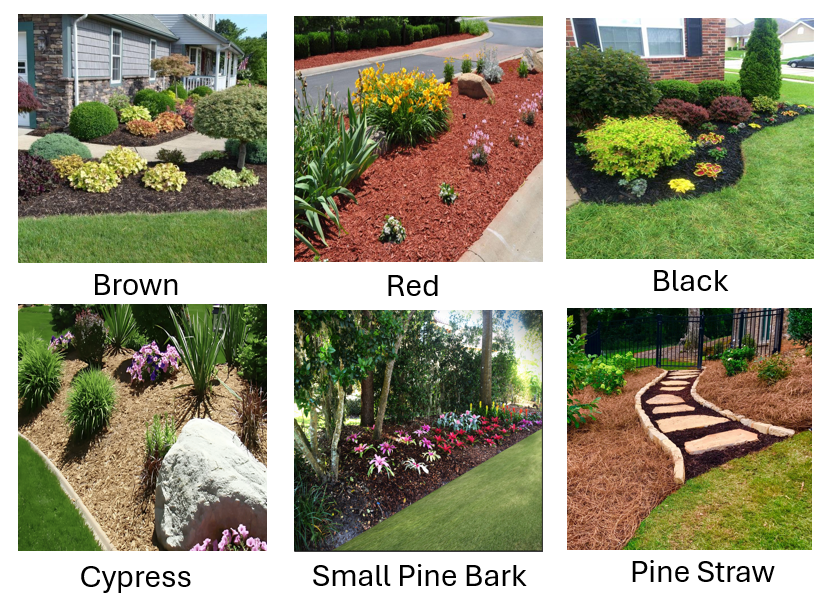
Choosing the right organic mulch is key to finishing your landscape. The best mulch complements both your landscape and home, taking into account features like the roof, house color, front door, window shutters, and driveway material.

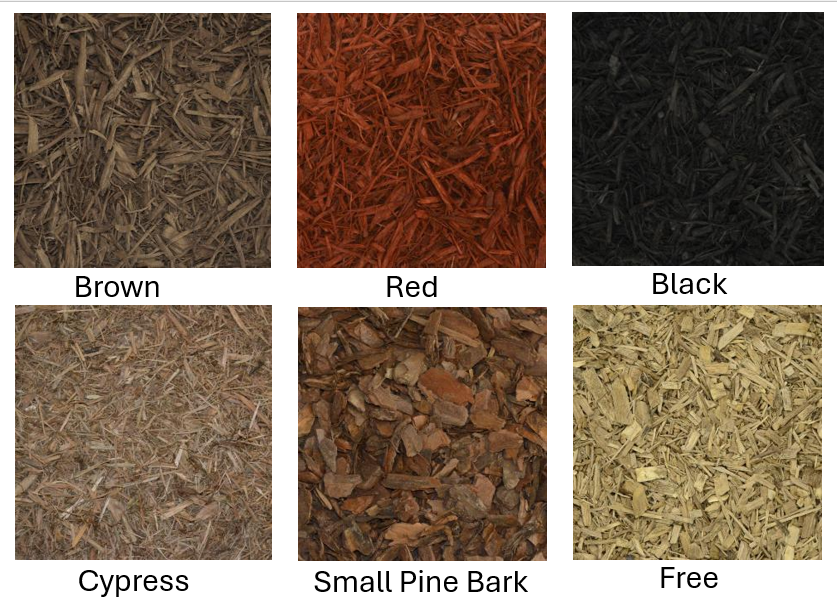
Consider cypress, pine, colored recycled wood, or pine straw as options. For most landscape themes, black mulch, small pine bark, or pine straw work well. Choose color combinations thoughtfully — red or orange mulch pairs with green, tan, or soft yellow, while black, as English satirist, Terry Pratchett said, goes with everything.  Black mulch makes your landscape pop!

A common issue with organic mulch is that it tends to float—since wood naturally floats in water. To prevent mulch from washing away, avoid piling it too high next to sidewalks or driveways, or placing it near areas with poor drainage and exposed gutters that release heavy rainwater. Ensure that the recommended 3” of mulch is level with hardscape. This means that the ground needs to be 3” below the sidewalk. Alternatively, you can use rock mulch, install a splatter guard, or place a flat stone to slow down or block the flow of water.

A common misconception is that organic mulches attract termites, but termites are actually drawn to moisture. Keeping your home's foundation wet—such as through irrigation or gutters draining too close—creates conditions termites prefer.  Maintain mulch, whether organic or rock, at 1”–2” from your foundation to allow it to dry out.

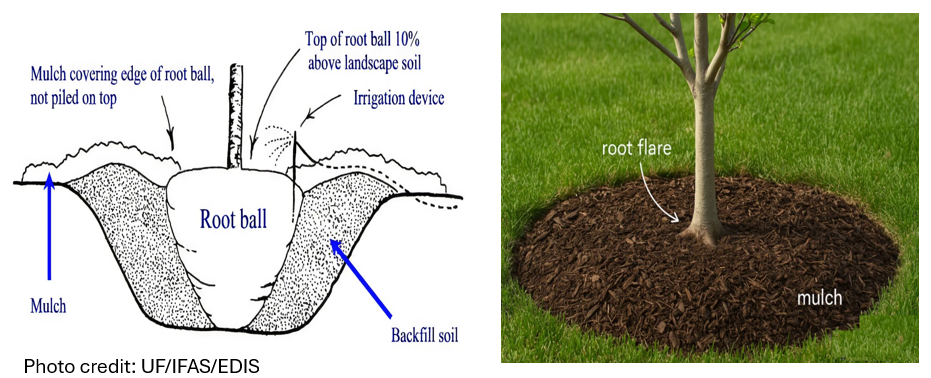
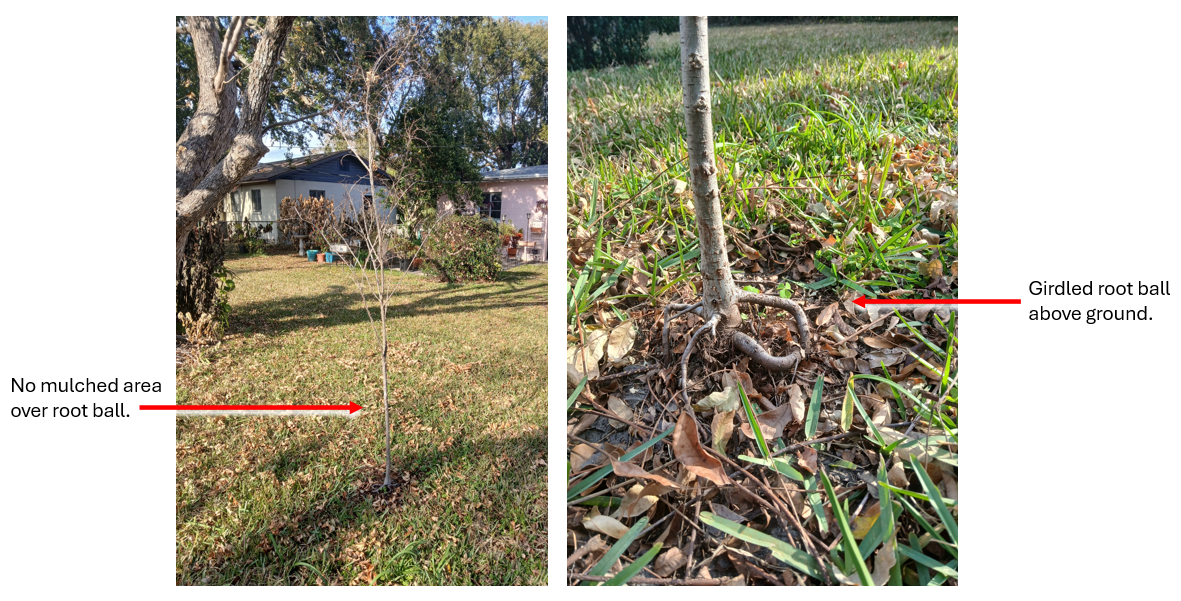
Mulch naturally decomposes after one to two years, which is good for your soil. You don’t have to put down the same amount of mulch each application. Apply only enough mulch to keep it at 3”. Make sure it does not crowd the top of your root system. You want to see the flare at the bottom of your shrub or tree.

Organic mulch offers numerous advantages for your landscape: it shields against temperature extremes, reduces water loss, and inhibits weed growth. Mulch is essential for effective landscaping. Don’t leave your home without it.

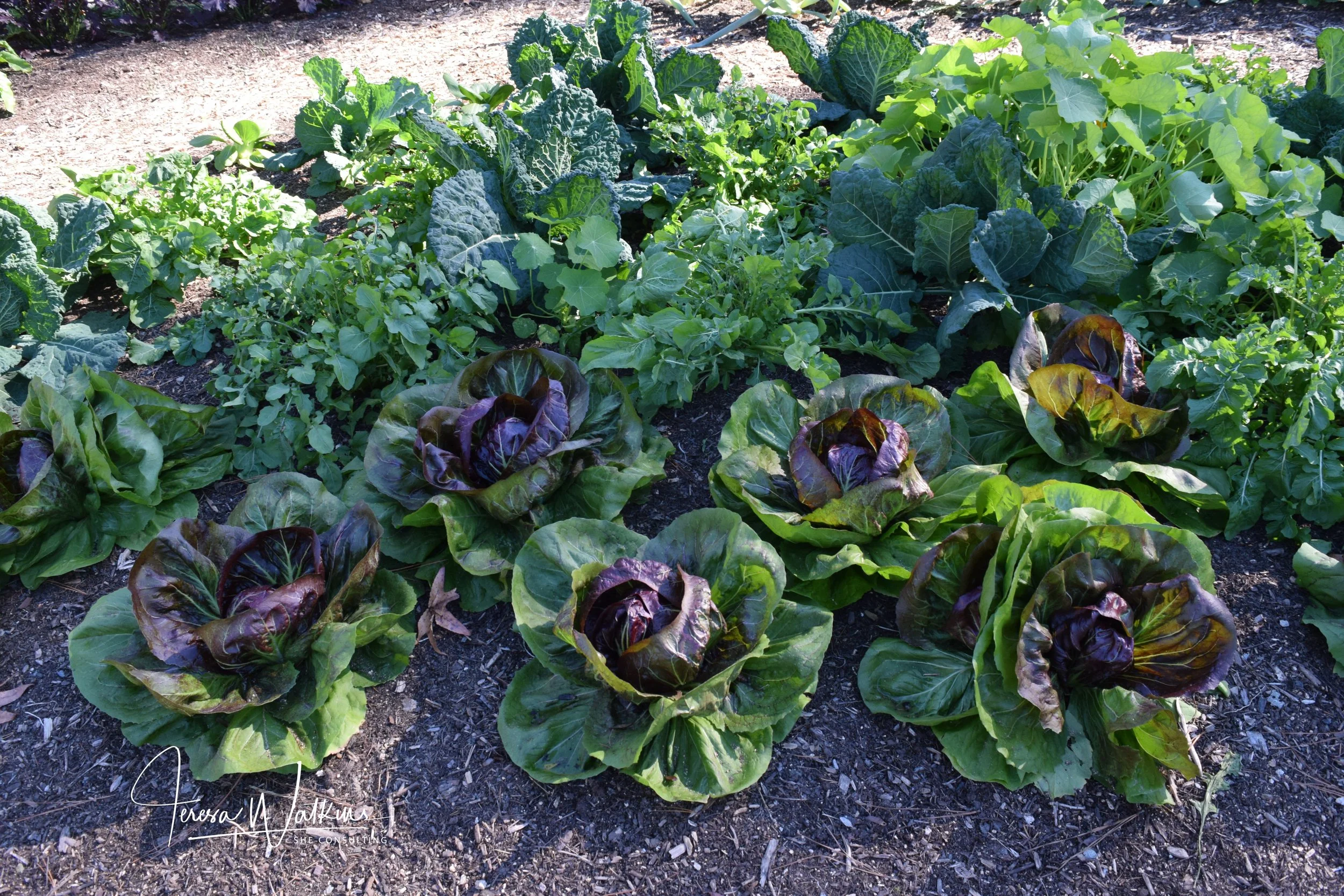
Photo credit: Teresa Watkins, Pinterest.

What to Do In Your Backyard in November

 Average temperature: High 79 Low 59 

 Rainfall: 2.32 inches

 November Plantings

Vegetables: Beet, broccoli, Brussels sprouts, cabbage, carrot, cauliflower, celery, Chinese cabbage, collard, endive, kale, kohlrabi, lettuce, mustard, onion, pea, radicchio, radish, rhubarb, rutabaga, spinach, Swiss chard and turnip.

Flowers: Ageratum, alyssum, baby's breath, black-eyed Susan, bush daisy, calendula, California poppy, candy tuff, carnation, cat's whiskers, chrysanthemum, cleome, cornflower, delphinium, dianthus, Drift roses, dusty miller, foxglove, gaillardia, geranium, goldenrod, heliotrope, hollyhocks, Iceland poppy, impatiens, larkspur, lobelia, ornamental cabbage & kale, pansy, petunia, phlox, salvia, Shasta daisy, snapdragon, stock, sweet pea, verbena, viola and wax begonias.

Herbs: anise, arugula, basil, borage, chive, cardamon, chervil, cilantro, coriander, dill, fennel, garlic, ginger, lavender, lemon balm, lovage, Mexican tarragon, mint, nasturtium, oregano, parsley, rosemary, sage, sweet marjoram, thyme and watercress.

Bulbs: African iris, amaryllis, anemone, bulbine, crinum, day lily, rain lily, ranunculus, society garlic, spider lily and narcissus; refrigerate Dutch iris, tulips, daffodils, hyacinths and similar bulbs needing a cold treatment before flowering.

 Lawn Care

  •  Fall is a good time to sod or plug problem areas in lawns; delay Bahia seeding until spring.

  • Sow winter ryegrass seed at end of November.

  • Complete fall feedings with a low phosphorus fertilizer during early November.

  • Lawns can dry quickly during the warmer days of November; water as permitted.

  • Set irrigation times to once a week when Daylight Savings Time on Nov 2nd.

  • Water lawns separately from trees and shrubs that need less moisture.

  • Repair and adjust sprinklers to water efficiently

  • Chinch bug and caterpillar control may still be needed during warm fall weather.

  • Have lawn soil tested by the University of Florida lab before fertilizing.

  • Brown patch disease can be severe in zoysia; treat this month or when first noted.

  • Apply herbicides for your lawn type if needed for broadleaf and sedge weed control.

  • Continue mowing at normal heights.

  • Aerate hard to wet, compacted and nematode infected soils.

  • Remove and compost fallen leaves.

  • Fill in shady problem spots with ornamental ground covers.

Vegetable & Fruit Tree Care

  •  Fall rains and heat have damaged many plants; continue good care to obtain a harvest.

  • Remove declining crops and plant the cool season vegetables

  • Herbs like cooler weather; begin new plantings and revive older ones.

  • Start seeds of broccoli, cauliflower, collards, onions and produce transplants.

  • Cool season vegetables can be added to the garden until February.

  • Add a few vegetable plants to the garden each month to have a continual supply.

  • Tomato and pepper planting time is over until spring.

  • The dry season is here; water when the surface soil begins to dry to the touch.

  • Improve sandy soils with garden soil, compost, peat moss and composted manure.

  • Feed the garden every 3 to 4 weeks with composted manure or a general garden fertilizer.

  • Stake or trellis taller growing crops to prevent wind damage and pests.

  • Maintain 3” of mulch between plants and rows to conserve water and control weeds.

  • Caterpillars have been feeding in the garden; hand pick or use natural controls.

  • Build raised beds to better contain plantings and make their care easier.

  • Give bananas and pineapples a final fall feeding with a general garden fertilizer.

  • Many early citrus are ready to harvest; use the taste test to tell when they are ripe.

  • Feeding time for citrus and other fruit trees is over.

  • Water citrus trees once or twice each week during dry times.

  • Add new citrus or other fruiting trees to the landscape.

  • Sow papaya seeds to over winter in containers.

  • Delay all fruit tree pruning until late January or February.

 Landscape Chores

  •  Renew mulches to help conserve water during the drier months ahead.

  • Most shrub pruning should be completed this month to allow new growth to mature before winter.

  • Only remove declining fronds and flower or fruiting stalks from palms to maintain vigor.

  • Palm diseases may be spread by pruners; disinfect at least between palms. 

  • Remove declining warm season flowers and replace them with the cool season flowers.

  • Work organic matter into flower beds and replace soil in planters before planting.

  • Slow-release fertilizers are best way to feed flower beds and containers.

  • Extend chrysanthemum life; remove faded flowers, keep the soil moist and feed lightly.

  • Make sure poinsettias receive no nighttime light; keep the soil moist and feed monthly.

  • Established trees and shrubs need infrequent watering; moisten only during dry times.

  • Flower beds need watering when the surface soil begins to dry to the touch.

  • Scale insects have been heavy this year on shrubs and foliage plants; use Neem oil spray.

  • Leaf spots and die-back are normal on many trees and perennials as they prepare for winter.

  • Cooler months provide the ideal time to move small trees and shrubs in the landscape.

  • Check braces and supports added to new trees, palms and shrubs.

  • Hurricane season ends November 30; select small sturdy trees for new plantings

  • Remove limbs and weeds interfering with sprinklers.

  • Complete all tree, palm and shrub feedings by mid-month.                    

  • Collect and refrigerate favorite flower seeds in plastic bags and store them in the refrigerator.

  • Hurry to create wildflower plantings that won’t flower until spring.

  • Reduce feedings of orchids and bromeliads in the landscape as the weather cools.

  • Divide perennials and bulbs

  • Create compost piles to recycle yard waste.

  • Be prepared to cover or move cold sensitive plants to a warm location.

  • Fill hard to mow and problem areas with shrubs and ground covers.

  • Clean birdbaths and prepare feeders for winter.

  • Reduce feedings of water garden plantings

 House and Foliage Plant Care

  •  Plant chilled narcissus and amaryllis bulbs in containers to begin growth for holiday blooms.

  • Remember, prevent any nighttime light for holiday plants until they begin to bloom.

  • Water holiday cactus and kalanchoe when the soil dries to the touch; keep poinsettias moist.

  • Wash away dust and plant pests with a soapy water solution

  • Check and treat outdoor plants for insects before bringing them indoors.

  • Discontinue or reduce foliage plant feedings to every other month.

  • Begin bringing cold sensitive foliage plants indoors.