

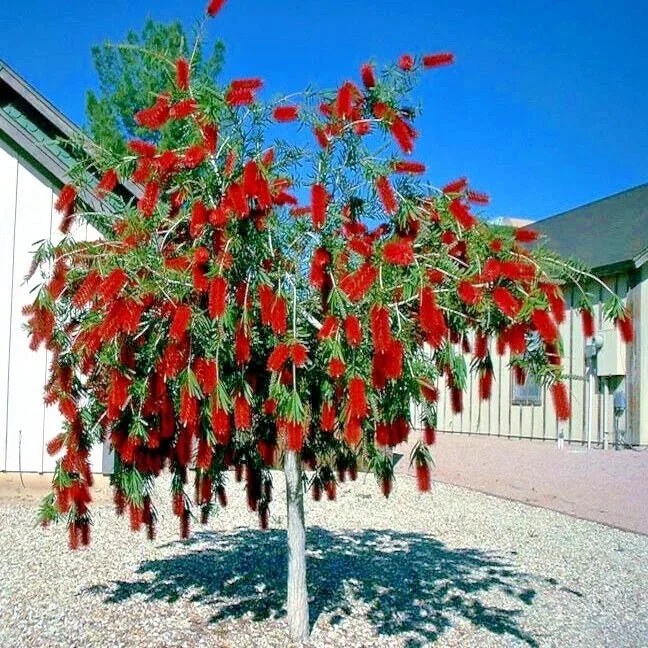
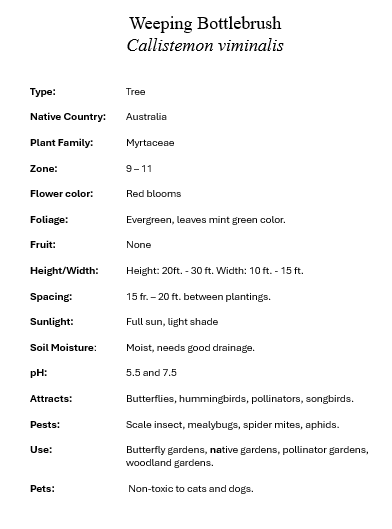
Several Australian plant species evoke mixed feelings due to their varied impact. Florida is home to some imported species, such as the Melaleuca tree and Australian Pine trees, which are terribly invasive. In contrast, ornamental varieties like Lomandra ‘Breeze’, Australian violet (Viola hederacea), and Weeping Bottlebrush are highly valued for their aesthetic appeal and sustainability. The Weeping Bottlebrush is a gorgeous flowering tree easily recognizable for its vibrant, bottlebrush-like flowers that attract hummingbirds, and it performed well during the recent winter in Central Florida. Bottlebrushes may be grown as tall shrubs or multi-trunked weeping trees. As the plant matures, it develops dense foliage and requires maintenance under the canopy to achieve an umbrella-shaped appearance.
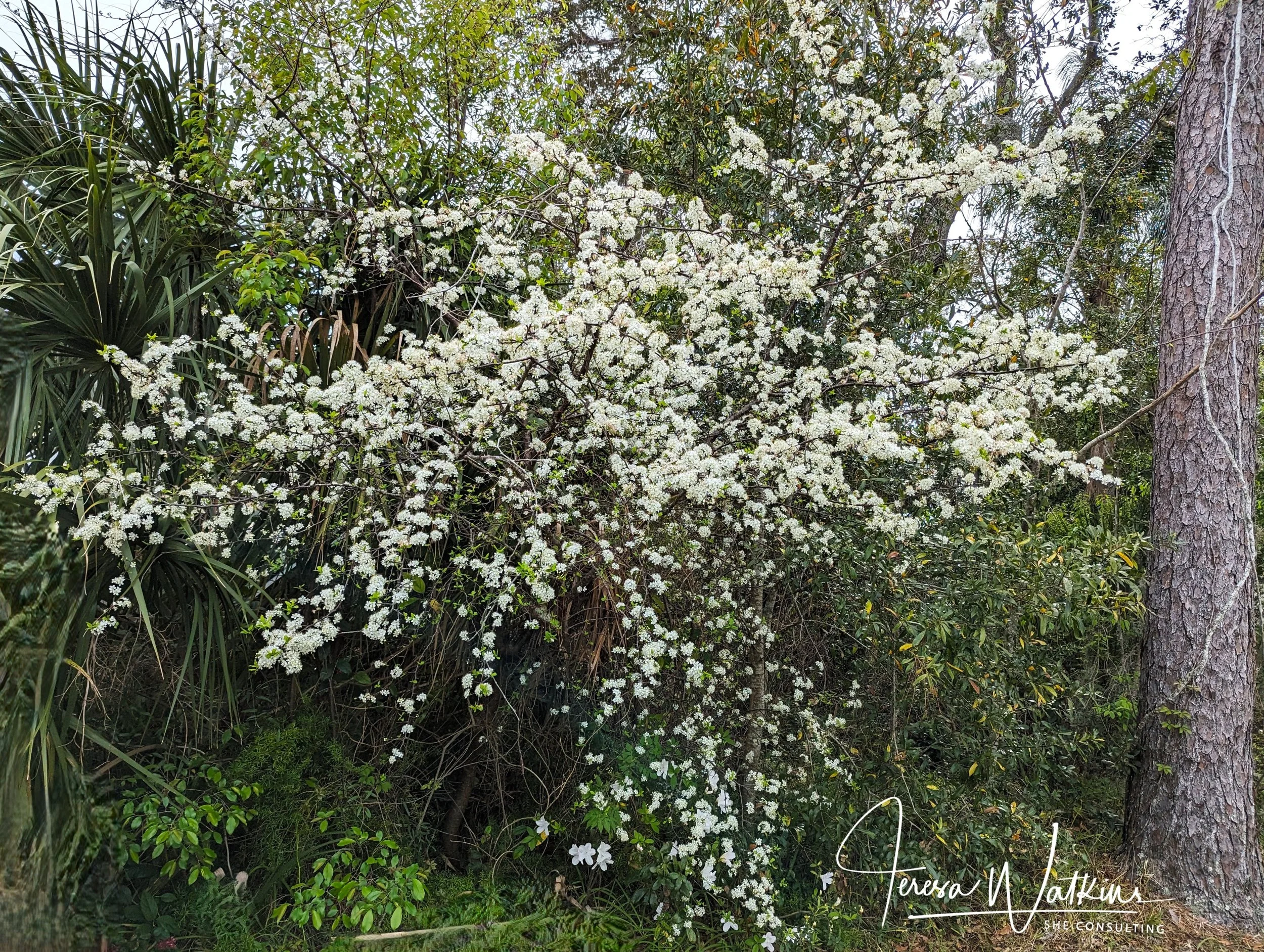
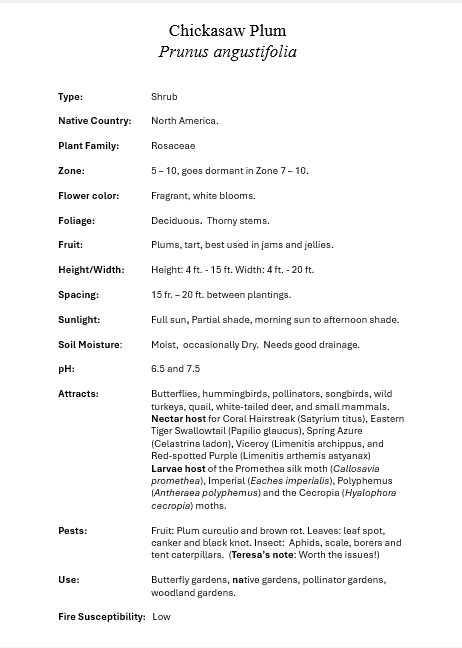
Chickasaw Plum, Prunus angustifolia. Florida native shrub.

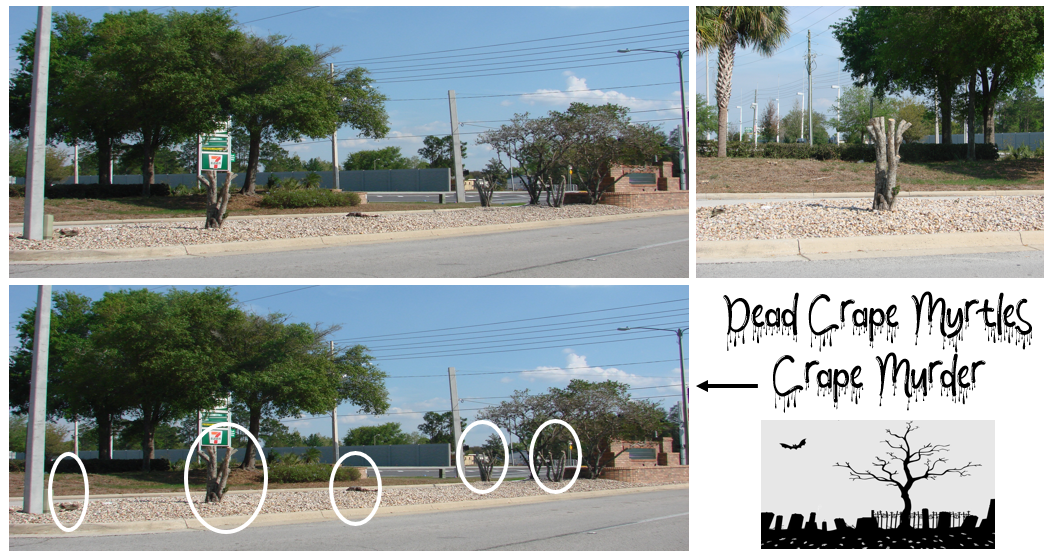
Challenges come frequently when talking about pruning crape myrtles.: “I cut my crape myrtles every year and they are just fine.” “Crape myrtles need to be cut to bloom.” “The HOA tells me to cut the crape myrtles and I try to stop them, but they say, ‘Cut them!”.
If you prune your crape myrtles this way every year and they are fine, you’re fortunate. It’s not a best management practice and it may only be a matter of time when the cut is the one that kills your tree.
Crape myrtles, if located correctly, shouldn’t need pruning except for cutting off suckers at the bottom, cleaning the trunk of sprouting shoots during spring, or trimming off the spent seed heads. Crape myrtles that are hacked off bloom later or don’t bloom as much, and cutting the trees incorrectly causes more suckering.
Don’t kill your crape myrtle. Read the University of Florida’s pruning instructions.