landscape design

Selecting a Mulch

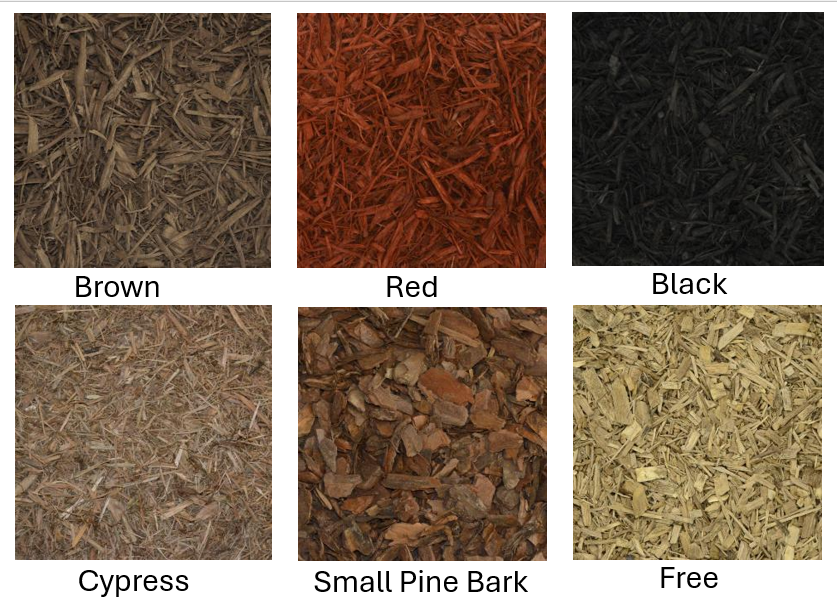
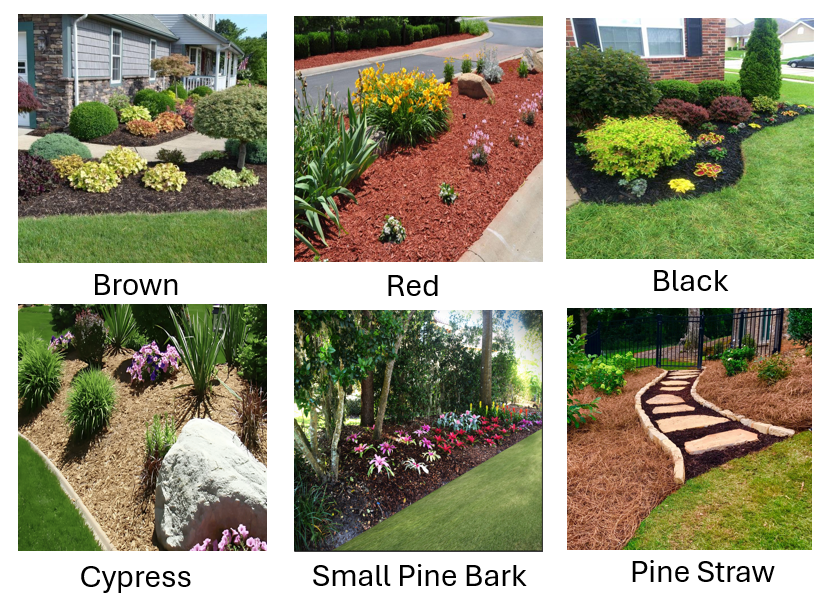
Choosing the right organic mulch is key to finishing your landscape. The best mulch complements both your landscape and home, taking into account features like the roof, house color, front door, window shutters, and driveway material.

Consider cypress, pine, colored recycled wood, or pine straw as options. For most landscape themes, black mulch, small pine bark, or pine straw work well. Choose color combinations thoughtfully — red or orange mulch pairs with green, tan, or soft yellow, while black, as English satirist, Terry Pratchett said, goes with everything.  Black mulch makes your landscape pop!

A common issue with organic mulch is that it tends to float—since wood naturally floats in water. To prevent mulch from washing away, avoid piling it too high next to sidewalks or driveways, or placing it near areas with poor drainage and exposed gutters that release heavy rainwater. Ensure that the recommended 3” of mulch is level with hardscape. This means that the ground needs to be 3” below the sidewalk. Alternatively, you can use rock mulch, install a splatter guard, or place a flat stone to slow down or block the flow of water.

A common misconception is that organic mulches attract termites, but termites are actually drawn to moisture. Keeping your home's foundation wet—such as through irrigation or gutters draining too close—creates conditions termites prefer.  Maintain mulch, whether organic or rock, at 1”–2” from your foundation to allow it to dry out.

Mulch naturally decomposes after one to two years, which is good for your soil. You don’t have to put down the same amount of mulch each application. Apply only enough mulch to keep it at 3”. Make sure it does not crowd the top of your root system. You want to see the flare at the bottom of your shrub or tree.

Organic mulch offers numerous advantages for your landscape: it shields against temperature extremes, reduces water loss, and inhibits weed growth. Mulch is essential for effective landscaping. Don’t leave your home without it.

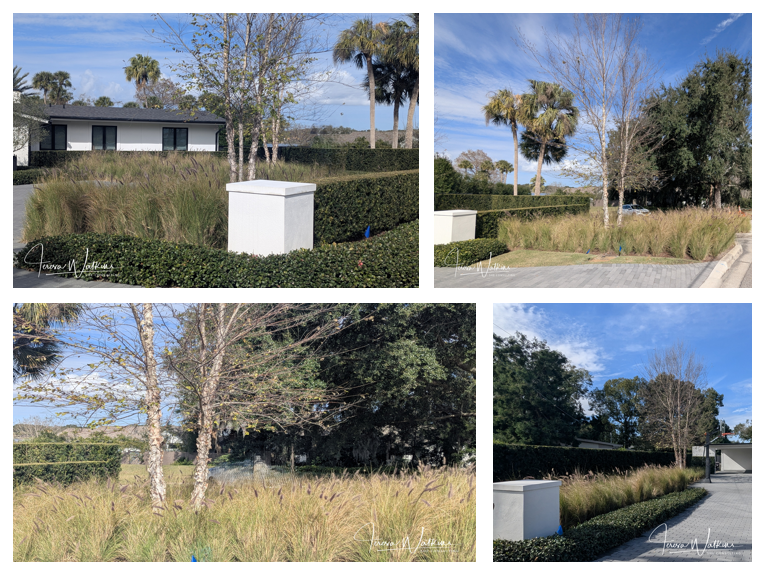
Photo credit: Teresa Watkins, Pinterest.

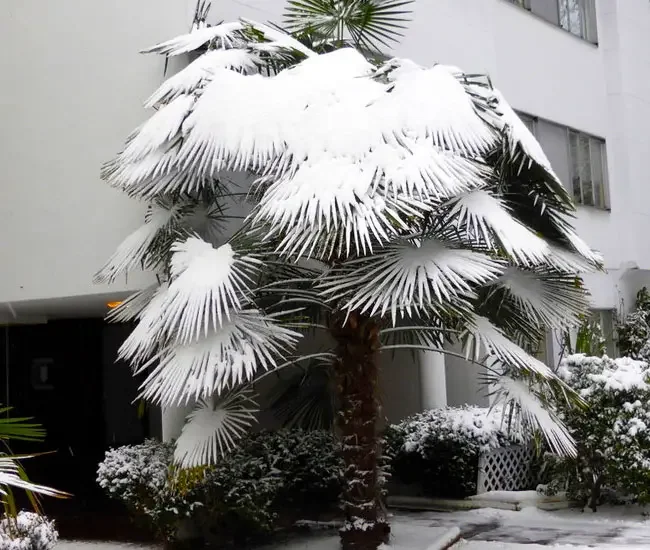
Photograph credit: Flickr

ALERT - Freeze predicted Tuesday Nov 11th and 12th in Florida Zones 8 - 9. Protect your tropical plants next week!

Dreaming of relaxing under a palm on a sunny January day is one of the main reasons retirees move to Florida. Florida's mild winters attract new residents who want to plant those palm trees in their yards. Florida’s gardening zones span 8b to 12, covering both tropical and subtropical climates. Subtropical areas can experience freezes that harm tropical plants, and despite USDA zone updates, Florida will continue to have occasional freezes.  The general demarcation of Florida’s subtropical regions starts on the northern side of Lake Okeechobee (Zone 10) up through North Florida (Zones 8b). Zones 11 and 12 below Lake Okeechobee is considered tropical with rare chances of a freeze.

These are the palm tree species I suggest for surviving freezing temperatures in subtropical landscapes. I’ve included the lowest temperature for each palm species.

Bismarck Palm, Bismarckia nobilis 25°F

Mexican Blue Palm, Brahea armata 25°F

California Fan Palm, Washingtonia filifera 15°F -20°F

Chinese Fan Palm, Livistona chinensis 20°F – 25°F

Dwarf Palmetto, Sabal minor 0°F             

European Fan Palm, Chamaerops humilis 15º – 20°F

Lady Palm, Rhapis excelsa 15º - 20°F               

Mexican Fan Palm, Washingtonia robusta 15ºF – 20°F

Mazari Palm, Nannorrhops ritchiana 10°F

Needle Palm, Rhapidophyllum hystrix 5°F – 10° F

Paurotis Palm, Acoelorrhaphe wrightii 20°F – 25°F

Pindo Palm, Butia capitata 5°F – 10°F

Saw palmetto, Serenoa repens 0ºF – 5°F                  

Sago Palm, Cycas revoluta 10°F – 15°F                     

Windmill Palm, Trachycarpus fortunei 5ºF – 10ºF

Palms prone to diseases like Lethal Bronzing, Yellowing, or Fusarium Wilt are not on this cold-hardy list. Check each species for size and site needs before buying. Only mature palms tolerate low temperatures; young palms need protection.

Fall Garden Showcase for florida

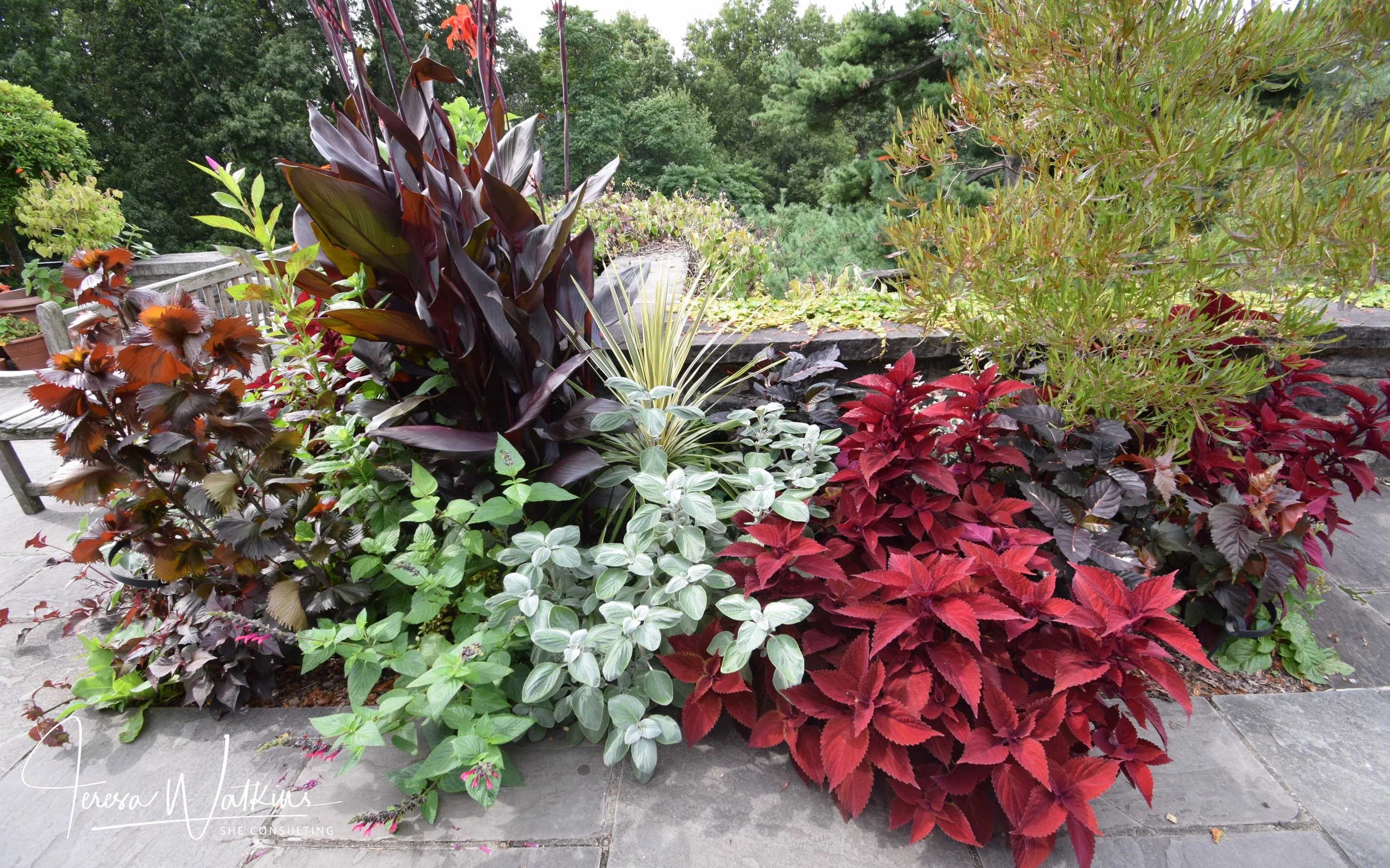
Burgandy and silver Fall plant display

Inspirational Fall display I discovered at our Art in Bloom Garden Tour in Wave Hill in the Hudson River Valley, New York. Plants include from left to right:
Front row: Copperleaf 'Ceylon', Salvia pink, Plectranthus argentea 'Silver Spur', ColorBlaze® Rediculous®, Copperleaf 'Louisiana Red',
Back Row: Celosia, Canna, 'Orange Chocolate', Cordyline 'Torbey Dazzler (I think), Leucondendron.

Most of these Zone 8 - 11 plants can be grown in Florida landscapes or container gardens year-round. Tuck a few pumpkins and gourds underneath and voilà, you have a lovely Fall display. For Winter, add a few holiday gold and silver glittery picks to stick in the ground or planter, and it’s perfect. For Spring add pink salvias or a hibiscus, and a butterfly accoutrement, and it becomes delightful. For summer gardens, add yellow Black-eyed Susans or Sunflowers and a metal piece of art featuring a sun and it will be glorious.

Show me your Fall displays! Send your photos to teresa dot watkins at live dot com.

In Your Backyard for August 2025

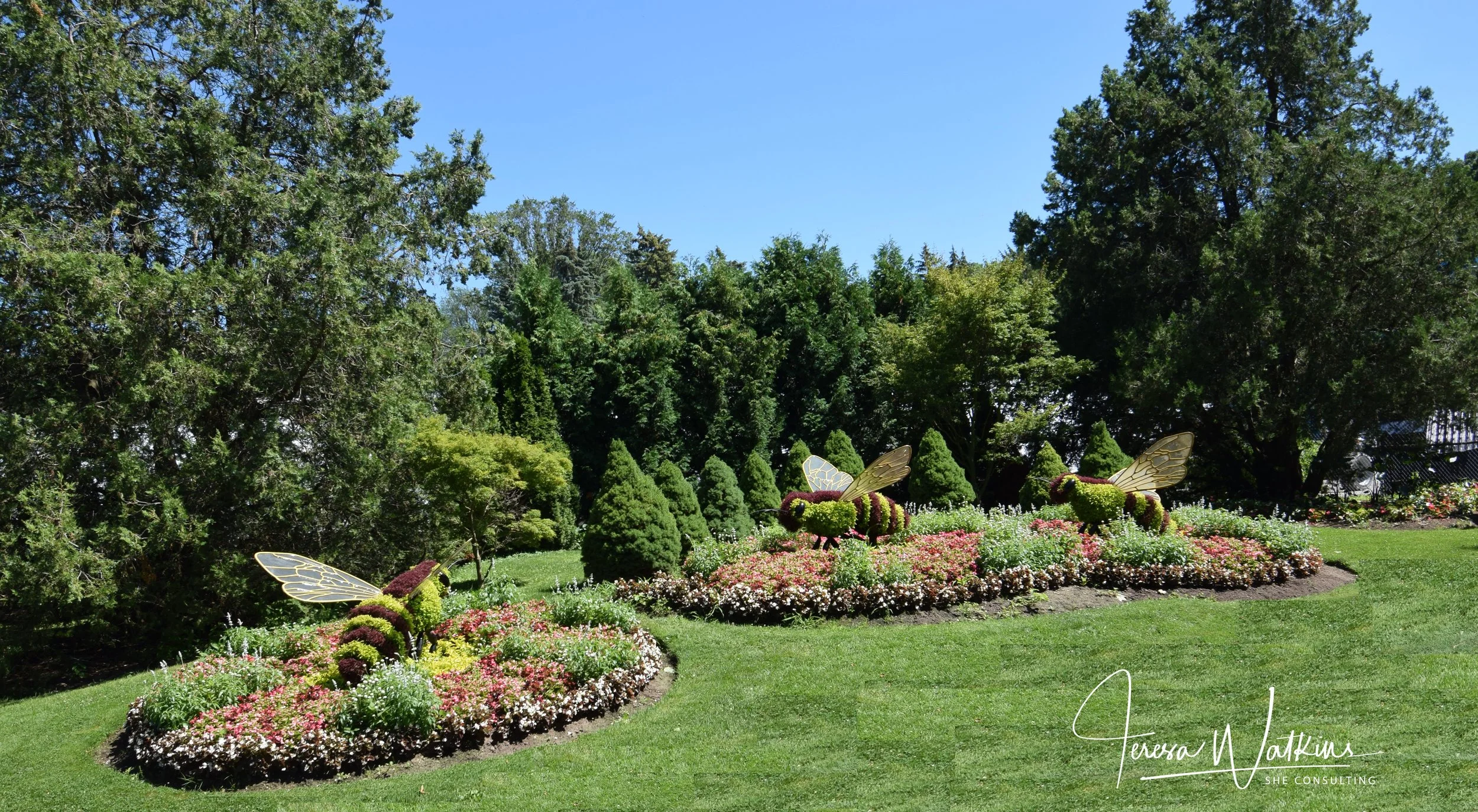
Photo credit: Teresa Watkins, Art in Bloom Garden Tours at Niagara Falls Botanical Garden, Canada.

It’s heating up this month. I can’t remember a hotter summer. But I’m glad to live in Florida. We are lucky to live on a peninsula that is surrounded by the Gulf and the Atlantic Ocean. We don’t reach 100 º. In fact, as Matt Devitt’s, weatherman at WINK, graphic shows, it’s very rare. While we may have hot temperatures, it’s been hotter around the country.

Graphic credit: Matt Devitt WINK

I have seen a lot of large patch disease in yards this summer. Large patch is caused by overwatering grass. It is a practice that is meant to be kind and attentive but it’s the worst thing a homeowner can do to their grass. That and using herbicides in this heat. Don’t.

Large Patch Disease

No matter the variety, established turfgrass only needs 1.5” a week at the most. Check your rain gauge, we have been getting enough rain in most parts of Central Florida although the South is seeing drought conditions.

How can you keep your grass unstressed in these dog-days of summer?

  1. ·  Keep your grass mowed high at 3” – 4”.

  2. ·  Make sure lawn mower blades are sharp.

  3. Water deeply but infrequently.  Add 15 mins to your timer 2x a week   

  4. Do not fertilize.

I have posted What to Do In Your Backyard for August.  Lots of pointers, but don’t overdo. It’s too hot!

Speaking of hot times. Check out my Landscape Design Tips and Landscape Malpractice Tip #39.  Both feature the same subject: Hellstrips.

My Plant of the Month is a pretty tropical with a fun name. Great for tropical gardens.

The scheduled tours for Art in Bloom Garden Tours for 2026 is up on our website. We have fantastic gardens for garden enthusiasts next year.  We are just finalizing up details to ensure the best prices and services. We already have waiting lists for most of our Spring destinations, so let us know if you want to be notified before the final itinerary get posted.  Email:  artinbloomgardentours@gmail.com

Have lots of photos to upload from our Garden Walk Buffalo, Niagara Falls, and the Newport Flower Show, and will include our trip this month from Scotland.

Let us hear from you about what you are doing to stay cool this summer!

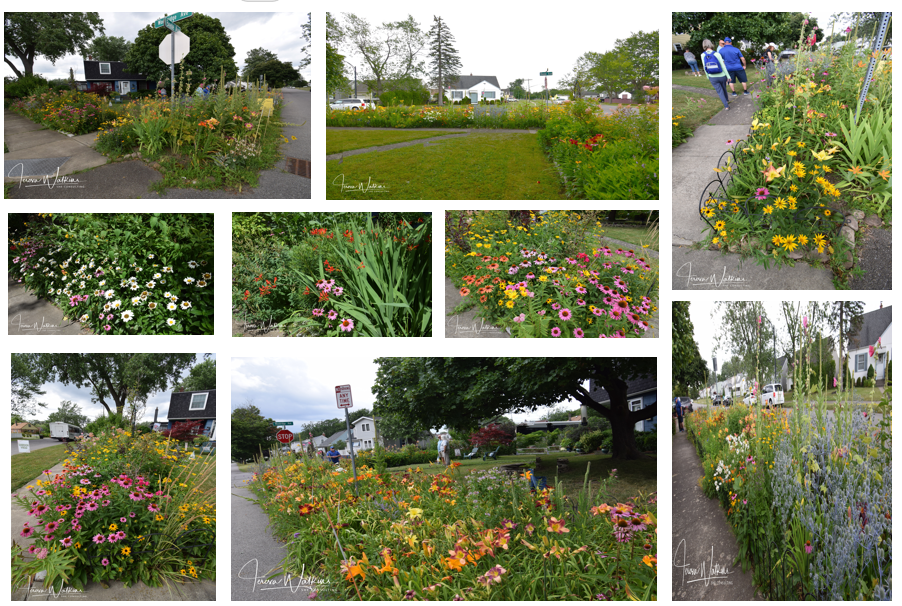
Turning a Hellstrip Into a Pollinator’s Heaven.

Beyond our home’s property easement is a space owned by the city or county.  Property owners are required to maintain this area. The typical landscape choice is grass. It is easy to mow, and it is green, right? But it is also an opportunity to create a little bit of heaven.

This rectangular space along the front of your home is used for entering your yard, deliveries, and by the mailman to reach into your mailbox. But can it be useful for something else?

Depending on your landscaping style, and if you are not in an HOA-ruled community, what about turning that small strip into a pollinator garden?

Benefits of a Florida pollinator strip include colorful flowers seasonally and no need for mowing or pesticide use. A selection of native and non-native annuals and perennials will provide ample diverse resources for butterflies, birds, and other pollinators. The cons will be a need for rainfall or another water source and more oversight to catch weeds as they germinate (and they will come). Pollinator gardens are not “no maintenance.”  

Designing a pollinator garden always starts off with soil testing, assessing sunlight, and a clean palette. Do not be apathetic and halfhearted about ensuring that your garden is weedless before you start. No need for landscape fabric. It is worthless keeping weeds out and will be a source of frustration in the future.

Owner: Ellie Dorritie, Hellstrip in Buffalo, NY. July 2025.

Once you know what you are working with, then you can select your plant palette and whether you want to start with seeds or plants. It is up to you. Planting seeds is less expensive; just remember that planting seeds will require monitoring and mulch to reduce the weed factor. (they will come.)

If you can afford it, planting annuals and perennials provides an instant effect that will give you satisfaction. I like to go with a combination of two-thirds plants and one-third seeds. Mark your seed areas with signs so that you do not pull sprouts up thinking they are weeds.

Start off with clearing a small area and as you have success, each season you can continue to remove your grass and substitute flowers and shrubs. Planting a heavenly area in your Hellstrip will be divine for pollinators. They will come.

The previous homeowners enjoyed a long, narrow lap pool and bulky firepit in their backyard. The new homeowners, with a three-year old boy and new baby girl, wanted a play area for the children and a place to watch them. My clients asked me to redesign the backyard. What could they do?  

First, I had to determine if the outdoor bench was in the ground permanently. Having the crew dig down to the bottom of the legs, and finding no cement, we knew that the bench could be dug up and flipped. The firepit was heavy but once the metal center was temporarily removed, we could roll it into place. My contractor’s crew worked very hard and rearranged the seating to face the pool.

 The landscape was then rearranged to border the new seating by transplanting the bottlebrush and the Lakeview jasmine and cutting back the Jatropha trees. I added low maintenance shrubs like fragrant tea olives, and colorful flowers like plumbago, hibiscus, and whirling butterflies. Final touch was to add the necessary zoysiagrass that can handle the children’s Little Tykes play toys and Tonka trucks in the gravel bed.  Playground transformation complete.

My design tip? Think outside of the bench, I mean box. Having a landscape that works for you means checking out all possibilities and finding a way to accomplish what needs done.  Also, find a contractor who is willing to dig out the box. Thanks, Mickey and crew!