harvest

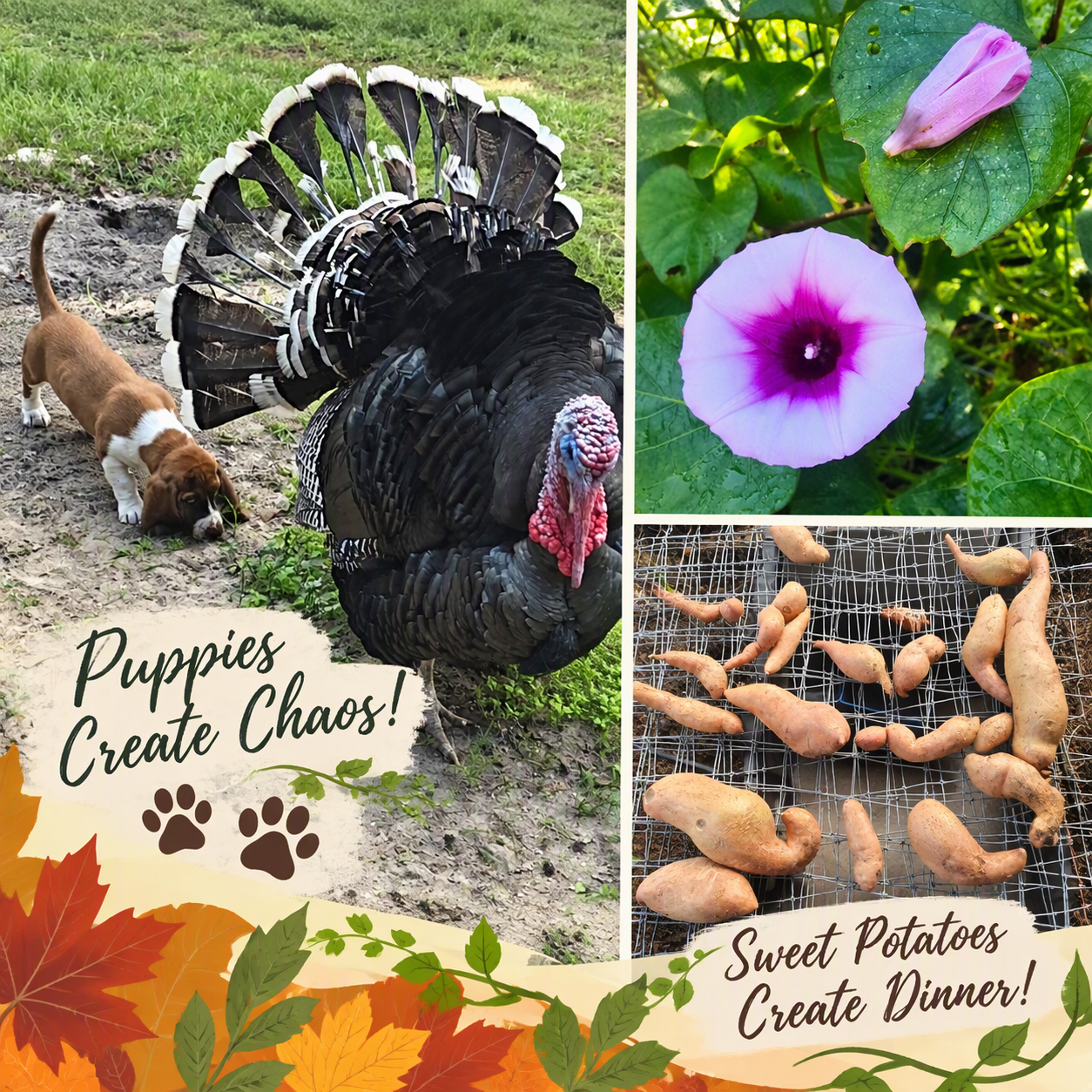
Photo credit: Lizzie Steele. The new puppy, Pearl, Lizzie’s pet turkey, Gerald, and Lizzie’s bountiful harvest of Sweet potatoes.

Bringing home a new puppy is a little like inviting a furry tornado with a wagging tail into your life. One minute Pearl is curled up like an angel, and the next she’s racing through the Turkey Run, giving #SpareGerald some much-needed exercise and, perhaps, improving his chances of staying off the Thanksgiving menu.

On the quieter side of life, I grew sweet potatoes this year and was delighted by their beautiful purple flowers. Honestly, growing them was almost as easy as forgetting about them. I planted them outside my fenced garden so the vines could use the fence as a trellis, got busy with life, and let nature take over. Months later, there they were, ready to harvest.

Puppies create chaos. Sweet potatoes create dinner. I’m calling that balance.

Have a wonderful Thanksgiving holiday!

Remember, life can be a joyful journey. Enjoying all moments is up to YOU!  

Updates through “Lizzie Said What” socials.   


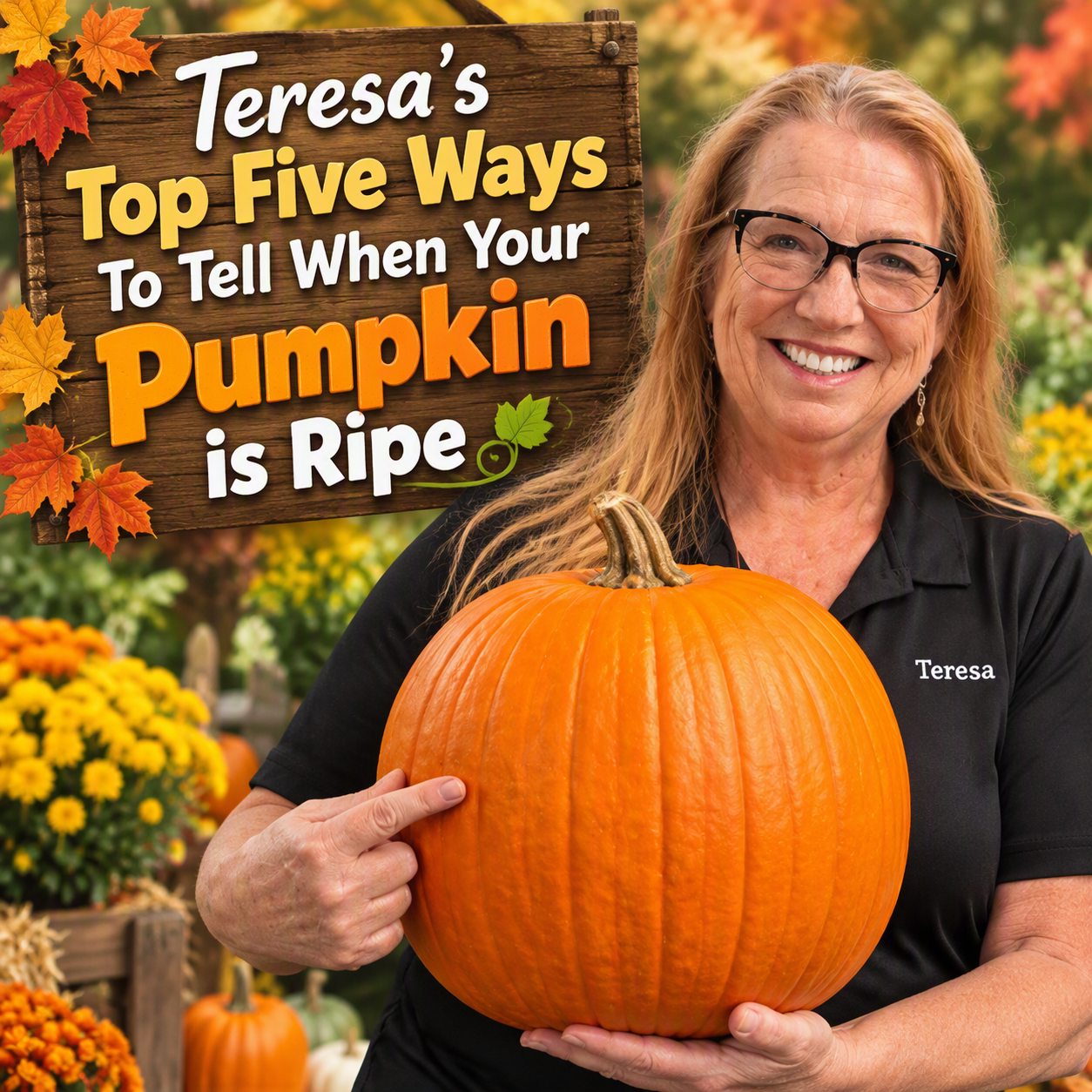
5. Color Is Deep and Even

A ripe pumpkin has a rich, even color all over. Traditional carving pumpkins turn a deep orange with no green spots. Other types will have their own mature colors, such as tan, gray-blue, or white. The spot resting on the ground also changes from pale green or white to a creamy yellow or light orange as the pumpkin ripens.

 4. The Skin Is Hard

Press your thumbnail into the pumpkin's skin. If the skin is hard and doesn't puncture easily, the pumpkin is ripe. If your thumbnail leaves a deep dent, it needs more time on the vine.

3. The Stem Is Brown and Dry

A ripe pumpkin has a stem that is dry, hard, and woody. The stem changes from green to brown or gray when the pumpkin is ready to harvest.

2. The Tendrils Are Brown and Dry

Look at the small curly tendrils near the pumpkin's stem. When they turn brown, dry, and brittle, the pumpkin is usually mature. Green tendrils mean the plant is still feeding the fruit.

1. The Vine Is Dying Back

When the leaves and vines begin turning yellow or brown and start to wither, the pumpkin is often fully mature. This is a natural sign that the growing season is ending.

Best Tip: Don't rely on just one sign. Look for at least two of these signs before harvesting. Pick pumpkins on a dry day and leave 3 to 4 inches of stem attached to help them store longer.

Who knew you could grow over 7 dozen onions and garlic in an abnormally dry season? Against all odds—and with a lot of mulch, sweat, and sweet nothings whispered to them, I turned the dry season into paradise. The onions are plump, and the garlic has swagger. Birds nod respectfully. Even the sun seems impressed. My Shrek, aka my great husband, is proud of my celery, herbs, okra, and peppers, showing off our harvest on Facebook.

Moral of the story? If your garden dreams seem impossible, just remember onions don’t cry in the heat, and neither should you.    

The newest turkey poults are 2 months old, their feathers are shifting from soft down to vibrant, multicolored plumage. 

Updates through “Lizzie Said What” socials.  Remember, life can be a joyful journey. Enjoying all moments is up to YOU!