
houseplants

Forget another candle, another pair of socks, or one more gadget nobody remembers asking for. Give a gardener a plant catalog and you’ve given them weeks of entertainment, temptation, and completely unrealistic plans for where they’re going to put 47 new plants.

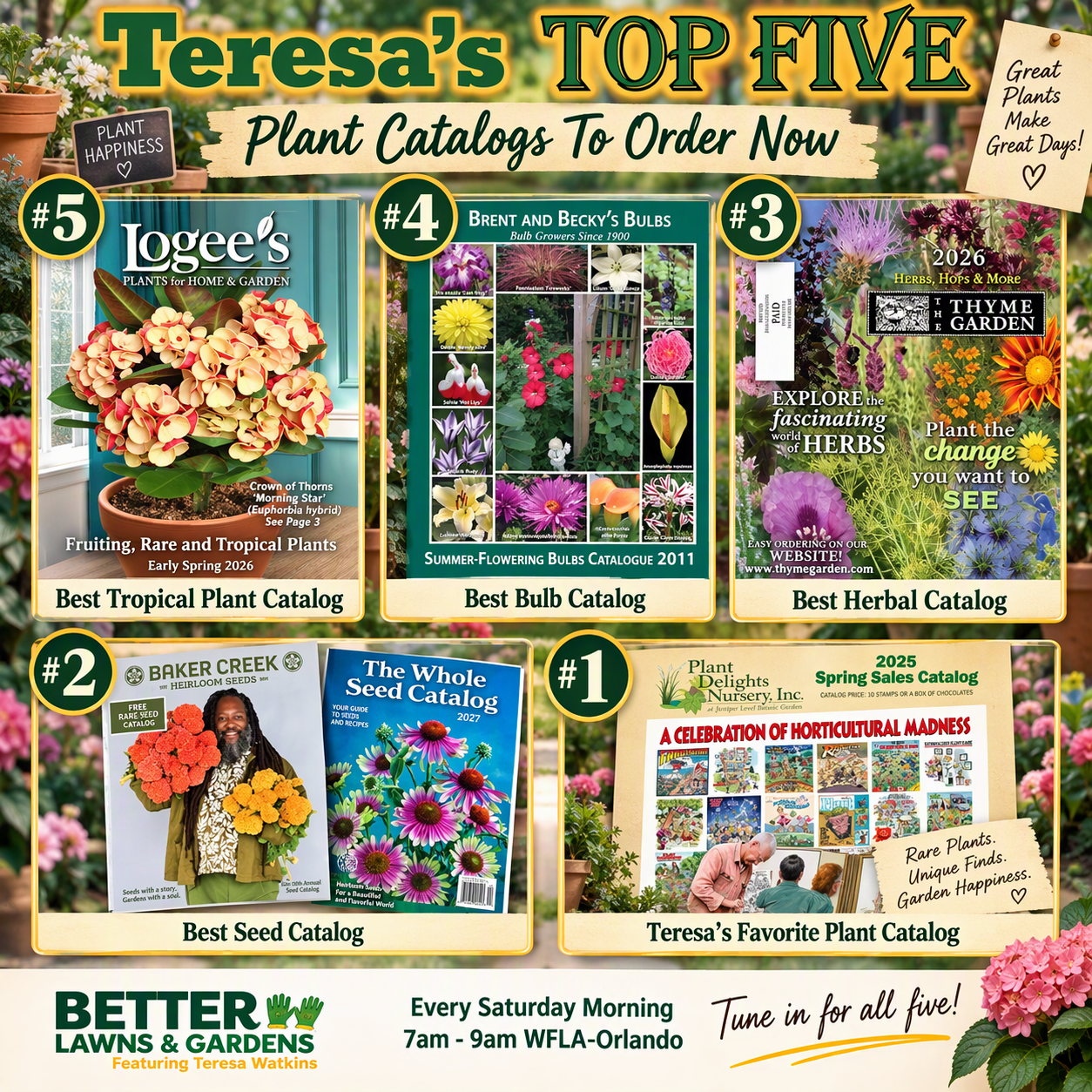
 Here are Teresa’s Top Five Plant Catalogs to Order Now. Consider yourselves warned.

5. Best Tropical Plant Catalog: Logee’s Rare, Tropical & Fragrant Plants

If you think houseplants begin with pothos and end with philodendrons, Logee’s would like a word.

This is plant temptation at its finest: rare and unusual plants, fragrant plants, tropicals, fruiting and edible plants, orchids, begonias, succulents, cactus and plenty of things you didn't know existed until five minutes ago...and now desperately need. The website is wonderful for browsing, too. Just remember: browsing is how it starts.

Catalog: Request the plant catalog by mail.

 4. Best Bulb Catalog: Brent and Becky’s Bulbs

There are bulbs, and then there are Brent and Becky’s Bulbs.

This longtime Virginia bulb nursery is the kind of business gardeners love: deeply rooted in horticulture and absolutely packed with spring and summer possibilities.

You’ll find tulips, lilies and plenty of other bulbs to make you start mentally redesigning the garden before you finish your morning coffee.

And if there’s a gardener on your Christmas list, a gift certificate solves the age-old question: What do you buy someone who would rather have rain lilies than diamonds?

Honestly, I understand that person.

Catalog: Free by mail.

 3. Best Herbal Catalog: The Thyme Garden

This one is dangerous for people who say things like, “I’m just going to grow a little basil this year.”

The Thyme Garden catalog is part seed catalog and part herbal education. Its listings cover an extraordinary assortment of herbs, flowers and other botanicals, with useful growing information and plenty of herbal history and lore.

You can explore herb seeds, hops and botanical products while learning about annuals, biennials and perennials, growing conditions and mature size.

In other words, you may open it looking for thyme and emerge convinced that what your garden has been missing all these years is an entire apothecary.

Catalog: $2.50 by mail or download the PDF for free.

 2. Best Heirloom Seed Catalog: Baker Creek Heirloom Seeds

Get comfortable before opening this one.

Baker Creek is famous among gardeners for rare and heirloom seeds and for catalogs filled with glorious photography that make perfectly rational adults believe there is absolutely room for seven more tomato varieties.

There’s a free Rare Seed Catalog, packed with heirloom varieties, and the enormous Whole Seed Catalog, with expanded descriptions, gorgeous photography, recipes and garden stories.

Vegetables, flowers, herbs and some seriously unusual varieties fill the pages. I call it a seed catalog. Your credit card may call it something else. 

And my number one?

1. Teresa’s Favorite Plant Catalog: Plant Delights Nursery

I have saved my Plant Delights catalogs from the past 15 years. That should tell you something. Plant Delights is for gardeners who have graduated from saying, “That’s pretty,” to saying, “What IS that, and where can I get one?”

The nursery specializes in unique, rare and native perennials, and its catalog has always combined serious horticultural information with personality, beautiful plants and a wonderfully irreverent sense of humor.

Over the years, even the catalog covers became collectibles, with horticultural cartoons poking fun at current events. This is a nursery that knows plants can be serious business without gardeners having to take themselves too seriously.

And Florida gardeners, don’t assume everything interesting is meant for somewhere else. Plant Delights offers many plants suited to warmer climates, including wonderfully unusual sedges, agaves, mangaves, succulents and other plants that can send a Florida gardener straight down the botanical rabbit hole.

That’s why Plant Delights Nursery is my number one plant catalog.

A little Christmas advice from Teresa...

Order these catalogs now, put on the coffee, find your favorite chair and start dreaming about next year’s garden.

Because gardeners know the truth:

The garden may be sleeping, but the gardener’s shopping cart certainly isn’t. 

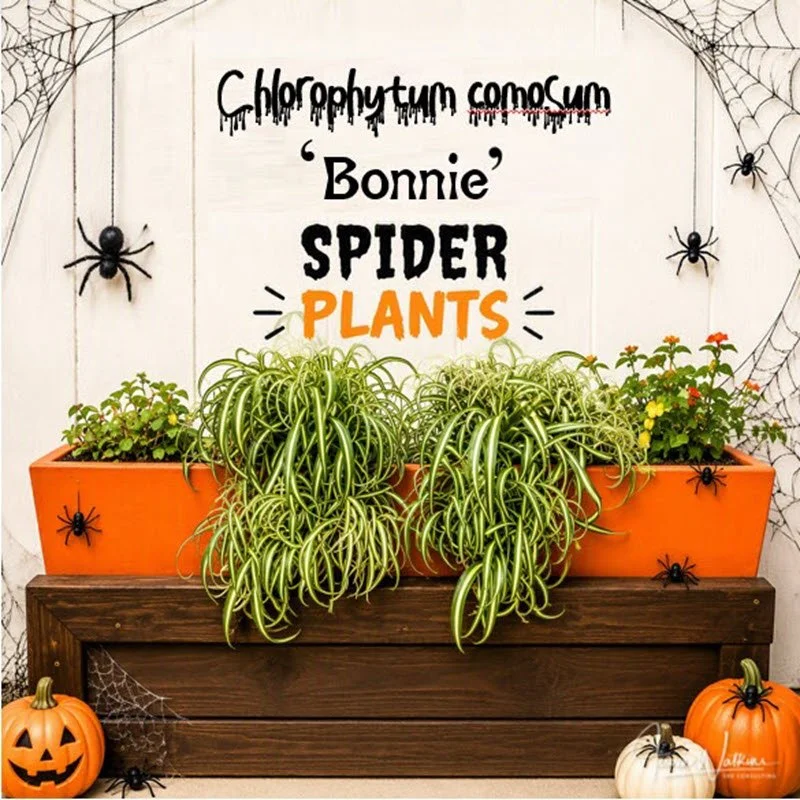
Photo of spider plants, spider graphics: Teresa Watkins

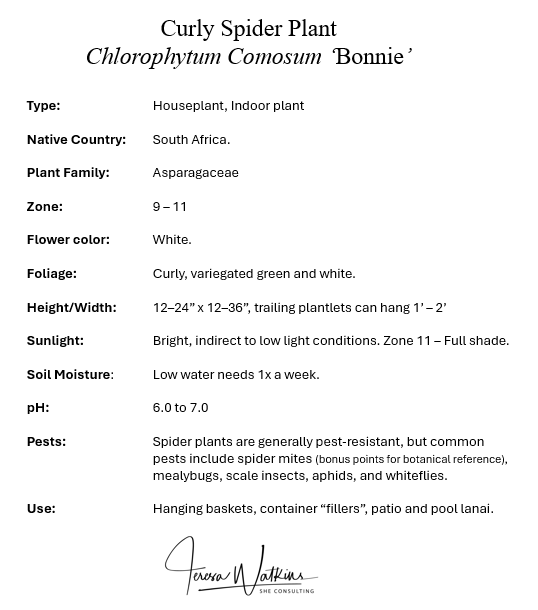
Spider plants (Chlorophytum comosum) are among the most recognizable and forgiving houseplants around, especially for anyone who remembers the 1960s and 70s when they seemed to occupy every college dorm room, hippie hideaway, and macramé hanging basket in America. Today, there are more than 200 named varieties, ranging from solid green selections to the white-striped 'Variegatum' and the reverse-variegated 'Vittatum', all known for producing arching foliage and their famous dangling "spiderettes." My favorite is the Curly Spider Plant, Chlorophytum comosum 'Bonnie'. Instead of long, straight leaves, 'Bonnie' sports playful green-and-white curls that look as though they just came from a garden salon. Its compact, whimsical form adds texture and personality to containers and hanging baskets while maintaining the spider plant's well-earned reputation as one of the easiest, most carefree houseplants you'll ever grow.

Teresa’s Note: The planter featured in the graphic is one of my client installations, showcasing Curly Spider Plant 'Bonnie' paired with colorful impatiens.

What To Do In Your Backyard in October

Average temperatures High 85 Low 65

Average rainfall is 2.73 inches

Time Change happens October 31st. Change your irrigation system to 1x a week watering.

October plantings

Vegetables: Beet, broccoli, Brussels sprouts, cabbage, carrot, cauliflower, celery, collards, kohlrabi, lettuce, mustard, onion, peas, potato, radicchio, radish, rhubarb, roquette, rutabaga, spinach, strawberry, Swiss chard and turnip

Flowers: African daisy, alyssum, angelonia, ageratum, begonia, black-eyed Susan, blue daze, calendula, candytuft, celosia, chrysanthemums, cleome, coleus, cornflower, cosmos, dianthus, dusty miller, gaillardia, gazania, geraniums, gerbera, heliotrope, hollyhock, impatiens, larkspur, lobelia, nicotiana, pentas, petunia, salvia, snapdragon, sunflower, sweet pea, verbena and zinnia.

Herbs: Anise, basil, bay laurel, borage, cardamom, chervil, chives, coriander, dill, fennel, garlic, lavender, lemon balm, lovage, mint, nasturtium, oregano, rosemary, sage, sweet marjoram, tarragon, thyme and water cress.

Bulbs: African lily, agapanthus, amaryllis, anemone, bulbine, calla, crinum, day lily, gingers, gladiolus, pineapple lily, rain lily, society garlic, spider lilies, walking iris, watsonia. Refrigerate crocus, daffodils, hyacinth, narcissus, and tulips for forcing.

Grasses: Lomandra Breeze, Miscanthus ‘Adagio’, Muhly Grass, Dwarf Fakahatchee, White Fountain Grass, Lemon Grass.

Lawn care

  • Get a soil test from the UF Soil Laboratory before fertilizing to know what nutrients to apply.

  • Have the soil acidity tested.

  • Apply a phosphorus-free lawn fertilizer to regreen the turf, (15-0-15)

  • When applying fertilizer, follow label instructions.

  • October is the last feeding for Bahiagrass, centipede, and zoysia lawns this year.

  • Apply fertilizers, herbicides, after a rain event, not before.

  • Apply fertilizer and herbicides as separate treatments. Skip weed-and-feed products for more effective, targeted applications.

  • Regreen lawns that continually have a yellow look with an iron or minor-nutrient application.

  • Herbicide-only products may be used following label instructions for your lawn type.

  • Herbicides may not control all weeds; pull, dig or use non-selective spot sprays as labeled.

  • October through April is a good time to install sod.

  • Fill bare spots in lawns left from summer pests with sod or plugs.

  • Seeding time for Bahiagrass is over.

  • Delay rye seedings until temperature highs are in the low to mid-70’s.

  • Chinch bugs and sod webworms can linger into Fall; control as needed

  • Time Change happens October 31st. Change your irrigation system to 1x a week watering.

  • Water turf when it shows signs of moisture stress.

  • Use soil aeration in older, compacted, and poorly-drained soils to encourage better root growth.

  • Continue mowing to maintain proper turf height; keep mowing height the same year-round.

  • Sharpen & balance mower blades to give a smooth cut to leaf blades.

  • Change the oil and air filters of gas-powered equipment for Fall.

  • Use mulch or ornamental ground covers in areas where turf won’t grow.

 Vegetable and fruit tree care

  • Harvest pumpkins this month. Look for dying leaves and vines, deep color, and hardened stem and rind.   

  • Use large transplants of tomatoes, peppers, and eggplants to get a Fall crop.

  • Stake or trellis tall or vine crops to keep the edible portions off the ground.

  • Feed gardens every 3 to 4 weeks with a traditional fertilizer or use a slow-release product.

  • Tomatoes begin setting and holding their fruits early to mid-month.

  • Add flowers to vegetable gardens to attract pollinators.

  • Prevent spray damage to pollinators; apply sprays when they are not active.

  • Caterpillars feed on cucumbers, melons and tomatoes; control with a natural spray.

  • Begin plantings of cool season vegetables around mid-month.

  • Gardeners cramped for space can grow vegetables in containers.

  • Start seeds for transplants of broccoli, cauliflower, and similar vegetables in containers.

  • Add a mulch to the surface of the soil to conserve moisture and keep vegetables dirt free.

  • Groom Summer-weary herb plantings and start new ones that prefer the cooler weather.

  • Most vegetables & herbs need a moist soil; water when the surface begins to dry to the touch.

  • Fruit splitting on citrus trees is normal and may continue into the Fall.

  • Help prevent citrus fruit drop and splitting, water once or twice a week during dry weather.

  • Give citrus the final feeding of the year during early October.

  • Till new garden sites and enrich sandy soils with garden soil, organic matter and manure.

  • Remove offshoots from pineapple plants to start new beds.

  • Start papaya seedlings for late winter transplants.

  • Add strawberry plants to a garden or build a pyramid for planting.

  • Delay pruning all fruit plantings until mid to late winter.

  • Speed up the composting process by turning the piles monthly.

  • Harvest maturing chayote, cocoyam, dasheen, and gourds.

  • Dig in the soil to check sweet potato plantings; most have roots ready to harvest.

  Landscape chores

  • Recycle dead shrubs and branches in your Halloween landscape.

  • Many plants produced late summer growth; prune to remove out of bounds shoots.

  • Major pruning time is over for azaleas, bougainvillea, camellias, gardenias, and poinsettias.

  • Shield poinsettias and holiday cactuses from nighttime light starting mid-month.

  • Shrubs, ground covers, and perennials, are ready for a final Fall feeding.

  • Use a slow-release fertilizer that can feed in-ground and container planting for months.

  • Most ornamental and shade trees do not need a special feeding

  • Give palms a final feeding of the year with an 8-0-12-4mg fertilizer or similar product.

  • Palm diseases are prevalent; clean and sterilize pruners between palms.

  • Be smart and only remove the brown fronds and flower stems from palms.

  • Give hedges a final trimming.

  • Remove suckers and low limbs from trees.

  • Weeds are plentiful in ornamental plantings; hand pull or spot kill to prevent seeding.

  • Whiteflies and mealy bugs are major pest; systemic insecticides offer good control.

  • Drier weather lies ahead; water when the surface soil begins to dry.

  • Most established trees and shrubs can go a week or more between waterings.

  • Trim away limbs and weeds blocking the operation of sprinkler systems.

  • Check container plantings for plugged drainage holes; repotting may be needed.

  • Maintain mulch under trees and shrubs; start the mulch several inches from trunks.

  • Determine tree needs and plant smaller growing wind resistant species.

  • Check tree and palm supports to make sure they are secure but not damaging the plants.

  • Add Fall plants to hanging baskets and container gardens.

  • Edge sidewalks and plant beds.

  • Replace soil in problem flower beds and planters.

  • Replant flower beds with cool season annuals and perennials; delay pansies until November.

  • Start Pansy and other winter annual seeds now for planting in November and December.

  • Divide perennial and bulb plantings.

  • Give water lilies and bog plants a monthly feeding.

 House & foliage plant care

  •  Order gift amaryllis to be delivered in December for Xmas.

  • Plants reduce pollutants and create a pleasing atmosphere when added to homes and offices.

  • Foliage plants are often a good buy at garden centers during Fall; replace declining plants.

  • Many foliage plants have grown too large for their containers; repot as needed.

  • Groom outdoor foliage plants and begin moving them to a warm location.

  • Most foliage plants need a bright light location but out of the direct sun.

  • Feed plants in bright light monthly; less often in low light.

  • Control insects on plants before moving them indoors.

  • Water holiday cactuses only when the surface soil dries

  • Begin forcing amaryllis and paper white narcissus for indoor displays and discontinue feedings.

  • Make sure indoor poinsettia, holiday cactuses and kalanchoes receive no nighttime light.