Pruning

What to Do In Your Backyard in November

 Average temperature: High 79 Low 59 

 Rainfall: 2.32 inches

 November Plantings

Vegetables: Beet, broccoli, Brussels sprouts, cabbage, carrot, cauliflower, celery, Chinese cabbage, collard, endive, kale, kohlrabi, lettuce, mustard, onion, pea, radicchio, radish, rhubarb, rutabaga, spinach, Swiss chard and turnip.

Flowers: Ageratum, alyssum, baby's breath, black-eyed Susan, bush daisy, calendula, California poppy, candy tuff, carnation, cat's whiskers, chrysanthemum, cleome, cornflower, delphinium, dianthus, Drift roses, dusty miller, foxglove, gaillardia, geranium, goldenrod, heliotrope, hollyhocks, Iceland poppy, impatiens, larkspur, lobelia, ornamental cabbage & kale, pansy, petunia, phlox, salvia, Shasta daisy, snapdragon, stock, sweet pea, verbena, viola and wax begonias.

Herbs: anise, arugula, basil, borage, chive, cardamon, chervil, cilantro, coriander, dill, fennel, garlic, ginger, lavender, lemon balm, lovage, Mexican tarragon, mint, nasturtium, oregano, parsley, rosemary, sage, sweet marjoram, thyme and watercress.

Bulbs: African iris, amaryllis, anemone, bulbine, crinum, day lily, rain lily, ranunculus, society garlic, spider lily and narcissus; refrigerate Dutch iris, tulips, daffodils, hyacinths and similar bulbs needing a cold treatment before flowering.

 Lawn Care

  •  Fall is a good time to sod or plug problem areas in lawns; delay Bahia seeding until spring.

  • Sow winter ryegrass seed at end of November.

  • Complete fall feedings with a low phosphorus fertilizer during early November.

  • Lawns can dry quickly during the warmer days of November; water as permitted.

  • Set irrigation times to once a week when Daylight Savings Time on Nov 2nd.

  • Water lawns separately from trees and shrubs that need less moisture.

  • Repair and adjust sprinklers to water efficiently

  • Chinch bug and caterpillar control may still be needed during warm fall weather.

  • Have lawn soil tested by the University of Florida lab before fertilizing.

  • Brown patch disease can be severe in zoysia; treat this month or when first noted.

  • Apply herbicides for your lawn type if needed for broadleaf and sedge weed control.

  • Continue mowing at normal heights.

  • Aerate hard to wet, compacted and nematode infected soils.

  • Remove and compost fallen leaves.

  • Fill in shady problem spots with ornamental ground covers.

Vegetable & Fruit Tree Care

  •  Fall rains and heat have damaged many plants; continue good care to obtain a harvest.

  • Remove declining crops and plant the cool season vegetables

  • Herbs like cooler weather; begin new plantings and revive older ones.

  • Start seeds of broccoli, cauliflower, collards, onions and produce transplants.

  • Cool season vegetables can be added to the garden until February.

  • Add a few vegetable plants to the garden each month to have a continual supply.

  • Tomato and pepper planting time is over until spring.

  • The dry season is here; water when the surface soil begins to dry to the touch.

  • Improve sandy soils with garden soil, compost, peat moss and composted manure.

  • Feed the garden every 3 to 4 weeks with composted manure or a general garden fertilizer.

  • Stake or trellis taller growing crops to prevent wind damage and pests.

  • Maintain 3” of mulch between plants and rows to conserve water and control weeds.

  • Caterpillars have been feeding in the garden; hand pick or use natural controls.

  • Build raised beds to better contain plantings and make their care easier.

  • Give bananas and pineapples a final fall feeding with a general garden fertilizer.

  • Many early citrus are ready to harvest; use the taste test to tell when they are ripe.

  • Feeding time for citrus and other fruit trees is over.

  • Water citrus trees once or twice each week during dry times.

  • Add new citrus or other fruiting trees to the landscape.

  • Sow papaya seeds to over winter in containers.

  • Delay all fruit tree pruning until late January or February.

 Landscape Chores

  •  Renew mulches to help conserve water during the drier months ahead.

  • Most shrub pruning should be completed this month to allow new growth to mature before winter.

  • Only remove declining fronds and flower or fruiting stalks from palms to maintain vigor.

  • Palm diseases may be spread by pruners; disinfect at least between palms. 

  • Remove declining warm season flowers and replace them with the cool season flowers.

  • Work organic matter into flower beds and replace soil in planters before planting.

  • Slow-release fertilizers are best way to feed flower beds and containers.

  • Extend chrysanthemum life; remove faded flowers, keep the soil moist and feed lightly.

  • Make sure poinsettias receive no nighttime light; keep the soil moist and feed monthly.

  • Established trees and shrubs need infrequent watering; moisten only during dry times.

  • Flower beds need watering when the surface soil begins to dry to the touch.

  • Scale insects have been heavy this year on shrubs and foliage plants; use Neem oil spray.

  • Leaf spots and die-back are normal on many trees and perennials as they prepare for winter.

  • Cooler months provide the ideal time to move small trees and shrubs in the landscape.

  • Check braces and supports added to new trees, palms and shrubs.

  • Hurricane season ends November 30; select small sturdy trees for new plantings

  • Remove limbs and weeds interfering with sprinklers.

  • Complete all tree, palm and shrub feedings by mid-month.                    

  • Collect and refrigerate favorite flower seeds in plastic bags and store them in the refrigerator.

  • Hurry to create wildflower plantings that won’t flower until spring.

  • Reduce feedings of orchids and bromeliads in the landscape as the weather cools.

  • Divide perennials and bulbs

  • Create compost piles to recycle yard waste.

  • Be prepared to cover or move cold sensitive plants to a warm location.

  • Fill hard to mow and problem areas with shrubs and ground covers.

  • Clean birdbaths and prepare feeders for winter.

  • Reduce feedings of water garden plantings

 House and Foliage Plant Care

  •  Plant chilled narcissus and amaryllis bulbs in containers to begin growth for holiday blooms.

  • Remember, prevent any nighttime light for holiday plants until they begin to bloom.

  • Water holiday cactus and kalanchoe when the soil dries to the touch; keep poinsettias moist.

  • Wash away dust and plant pests with a soapy water solution

  • Check and treat outdoor plants for insects before bringing them indoors.

  • Discontinue or reduce foliage plant feedings to every other month.

  • Begin bringing cold sensitive foliage plants indoors.

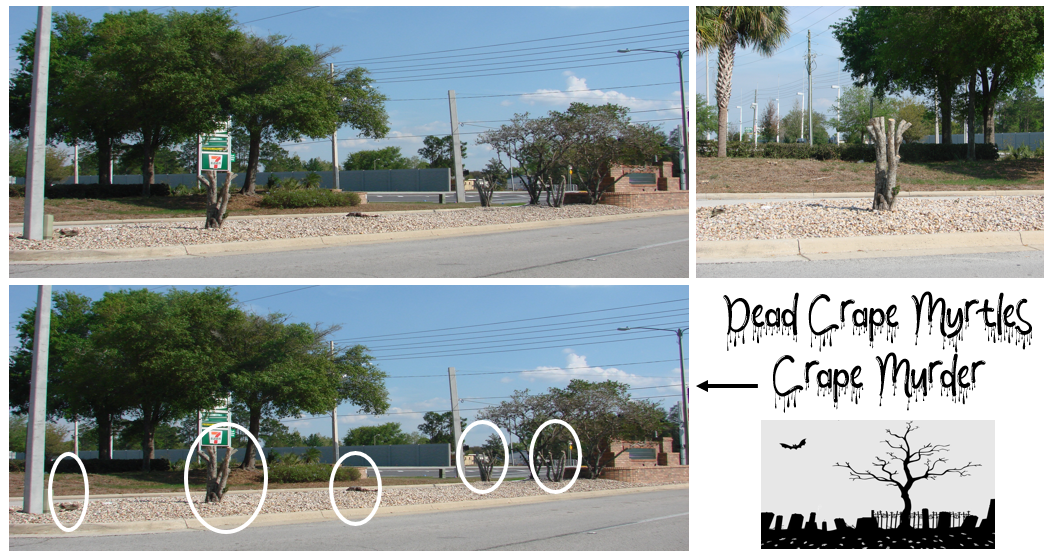
Challenges come frequently when talking about pruning crape myrtles.: “I cut my crape myrtles every year and they are just fine.” “Crape myrtles need to be cut to bloom.” “The HOA tells me to cut the crape myrtles and I try to stop them, but they say, ‘Cut them!”.

If you prune your crape myrtles this way every year and they are fine, you’re fortunate. It’s not a best management practice and it may only be a matter of time when the cut is the one that kills your tree.

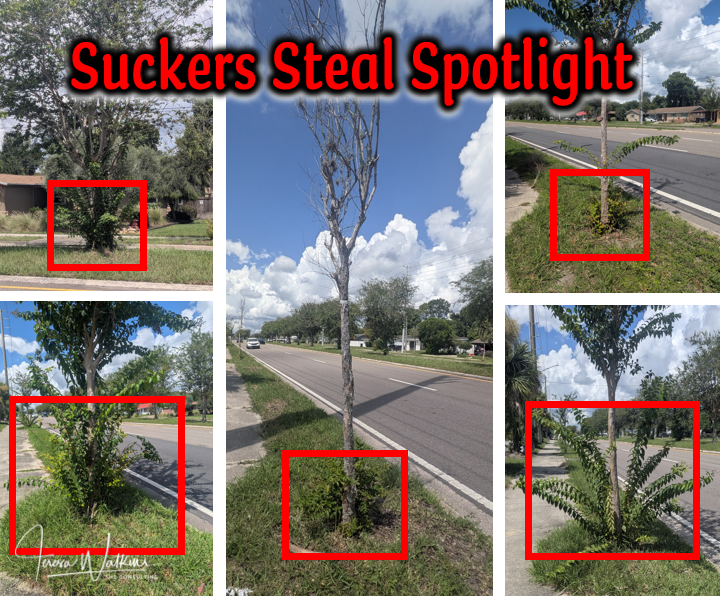
Crape myrtles, if located correctly, shouldn’t need pruning except for cutting off suckers at the bottom, cleaning the trunk of sprouting shoots during spring, or trimming off the spent seed heads. Crape myrtles that are hacked off bloom later or don’t bloom as much, and cutting the trees incorrectly causes more suckering.

Don’t kill your crape myrtle. Read the University of Florida’s pruning instructions.

Proper way to prune palms.

Proper way to prune shrubs and trees.

Growing up in the 50’s and 60’s my idea of bare-bottom was the Coppertone advertisements of its sunscreen lotion. A frisky puppy tugging at a baby’s diaper displayed on billboards and magazines, bare-bottom became synonymous with nostalgic Florida beaches. It became an iconic symbol selling millions of dollars in suntan products.

Back to the future in the 21st century, a frequent public display of landscape malpractice is what I call “bare-bottom syndrome.”  It’s when landscape maintenance companies or homeowners, especially ISTJ and ESTJ personalities, engineers, or linear thinkers, use their pruning tools to cut straight down the sides and tops of shrubs. They look perfectly neat and straight… for a while.

After one to two years of cutting the branches and leaves with straight lines prevents the shrub from receiving adequate sunlight to the bottom of the plant. This causes the plant to drop its leaves, resulting in a bare bottom with a V-shaped shrub. Leaves only at the top of the plant and no privacy.

To prevent losing your foliage, cutting shrubs with a slight angle outward at the bottom will enable the plant to keep bottom branches growing leaves.  

Rejuvenate improperly cut shrubs in stages, prune the tops first so that the area is smaller than the rest of the shrub. Allow sides to grow out.  Prune thereafter at a slight 80⸰ angle allowing the bottom to be larger than the top of the shrub.

Pruning your shrub correctly without bare-bottom syndrome, you won’t need to have nostalgia remembering what your plants looked like when you first installed them. Your hedge will stay full and dense with plenty of leaves at the bottom. .  

See the graphic for correct angle.

What To Do in Your Landscape for September

By Teresa Watkins

September 2024

 Average temperatures High 90 Low 72

Average rainfall 5.76 inches

Autumn arrives September 22nd, 2024

  September Plantings

 Vegetables: Early plantings include lima bean, snap bean, corn, cucumber, eggplant, pepper, southern pea, rhubarb, squash, and tomato; End of the month crops include arugula, broccoli, Brussel sprouts, cabbage, celery, collard, endive, lettuce, mustard, onion, radish, strawberry, and turnip.

 Flowers: Agapanthus, ageratum, angelonia, begonia, blue daze, butterfly weed, buttonbush, cat's whiskers, celosia, cleome, coleus, coreopsis, cosmos, firebush, garden mums, gaura, gazania, gerbera, goldenrod, gomphrena, heliotrope, impatiens, Jacobina, lantana, marigold, melampodium, New Guinea impatiens, nicotiana, pentas, periwinkle, plumbago, roses, salvia, sunflower, sweet alyssum, thyrallis, torenia, Turk’s cap, verbena, and zinnia.

 Herbs: Anise, basil, bay laurel, borage, chives, coriander, dill, lemon balm, lavender, Mexican tarragon, mint, parsley, rosemary, sage, sweet fennel, sweet marjoram, and thyme.

 Bulbs: African iris, agapanthus, amaryllis, blackberry lily, bulbine, calla lily, crinum, crocosmia, day lily, gladiolus, kaffir lily, narcissus, society garlic, spider lily, rain lilies and walking iris. Look for and purchase cool-season bulbs for refrigeration, including crocus, daffodils, crocus, hyacinths, muscari, and tulips.

 Fruit and Vegetable Care

 ·       Get a soil test of garden every year to find out what fertilizer nutrients to apply.

·       Clean used containers before planting.

·       Give large growing plants big containers to have room for good root growth.

·       Keep container-grown tomatoes uniformly moist to avoid blossom-end rot.

·       New to gardening? Start a garden journal and list names of seeds, the varieties, date planted, days to harvest, temperatures, and any weather conditions that might affect growth, i.e., extreme heat, lack of rain, storms.

·       Add vegetables and herbs to containers for patio and balcony gardens. 

·       All vegetables like a sunny site with at least 6 – 8 hours; leafy crops can often grow in filtered sun.

·       Remember the sun dips south Fall through Winter so note sites that may become shady.

·       Last year’s gardens may need an additional layer of organic compost or manure, like Black Kow.

·       Remove plastic covers from solarization treatments and plant without tilling.

·       Where nematodes are a problem, dig a large hole and fill it with organic amendments or potting soil before planting.

·       Keep new plantings and seedlings moist; water older plantings when the soil begins to dry.

·       Apply a first feeding two weeks after adding transplants or seed germination.

·       Continue with monthly feedings for in-ground plantings, every other week for containers.

·       Use slow-release fertilizer which may be the only feeding needed.

·       Add flowering plants to gardens to invite pollinators to visit.

·       Set tomatoes in the ground or in containers early and start training to a trellis.

·       Provide support for tomatoes, peppers, cucumbers, and others from vegetables above.

·       Rejuvenate older herb gardens in late September by adding fresh plantings.

·       Check the garden daily to determine soil moisture of ground and check for pests.

·       Harvest herbs to encourage continued growth. .

·       Use mulches to conserve water, control weeds and keep soil off leafy crops.

·       Remove side shoots/pups to root from pineapple plants and increase your plantings.

·       Start seedlings of Fall cool season crops later in the month.

·       Begin citrus and avocado tree feedings toward the end of the month. For more specific information on fertilizing different size citrus trees: https://edis.ifas.ufl.edu/publication/HS132

 Lawn Care

 ·       Get soil test analysis of turf areas before fertilizing.

·       If your lawn is susceptible to fungus and you have had excessive rains during past storms, apply a preventative fungicide according to the label.

·       Where grass won’t grow because of too much shade, consider use of an ornamental ground cover, like ajuga, Asiatic jasmine, ferns, liriope, mondo grass, or pachysandra,

·       Lawns with aggressive weeds need attention; dig out, resod or spot treat with herbicides, but if temperatures average above 85 degrees, wait until October to use an herbicide.

·       Most local ordinances restrict fertilization until October 1st.

·       To green up lawns, use an iron-only or minor nutrient application until October.

·       Once weeds or pest issues are taken care of, patch pest-damaged or weed areas with new sod, plugs, or seed.

·       Complete seeding of Bahia turf in early September.

·       Lawn caterpillars and chinch bugs can continue in to Fall; control when noted.

·       Several products are now available for nematode control by lawn care companies.

·       Fire ants are frequently found in lawns; spot treat mounds with bait, then treat the entire lawn.

·       Aerate hard to wet or compacted soils.

·       Continue mowings at recommended heights

·       Change mowing patterns on regular basis, overlapping rows so mower doesn’t create ruts.

·       Service lawn care equipment to have it ready for Fall.

 In the Landscape

 ·       Keep eye on trees and shrubs that may have been affected by the drought in Spring and Summer. Decline from 2024 drought may be an issue for next few years.

·       Make sure any shrubs and trees leaning from storm winds are straightened as soon as possible.

·       Note plant decline in landscapes, from excessive gutter drainage. Bury gutter and extend out into yard to prevent displacement of soil and mulch.

·       Prune away dead or declining plant portions affected by Summer weather or pests.

·       Weeds are plentiful; remove them before they flower and disperse seeds.

·       Renew mulches with only a light topping to keep 3” – 4” of mulch.

·       Clean and sharpen pruning equipment to make trimming easy with minimal plant damage.

·       Prune declining brown fronds only and flower stems from palms but leave the green fronds.

·       Sterilize pruners between plants when trimming palms with possible diseases.

·       Many plants have grown out of bounds; now is the time to do needed pruning.

·       Give poinsettias and hydrangeas a final pruning.

·       Check roses that have dead or declining stems and old flowers that need to be removed.

·       Expect caladiums and some ginger to start to decline and go dormant until Spring.

·       Replant declining flowers with warm season selections; delay planting the cool season types until end of November.

·       Avoid planting palms with prevalent disease problems.

·       Scale insects, mealy bugs and aphids have been active; control as needed.

·       Sooty mold grows on the excreta of insects; control both with a horticultural oil spray.

·       Check container plantings for plugged drainage holes; repot as needed.

·       Chrysanthemums make attractive Fall flowers, but they only last a few weeks in the heat.

·       Divide perennials and replant in the garden.

·       Now is the time to ensure poinsettias have 12 hours of complete darkness every night to encourage blooming in time for Christmas.

·       Plan for cool weather bulbs, i.e., tulips, hyacinth, daffodils, etc. and refrigerate bulbs for 16 weeks so they can be planted in the landscape two to three weeks ahead of when you would like them to bloom.

·       Add new trees, shrubs, and palms.

·       Feed palms with a slow-release fertilizer three to four times a year.

·       Begin late September shrub and perennial feedings for Fall where permitted.

·       Feed hanging baskets and orchids every other week.

·       Remove declining leaves and flowers from water lilies; give a monthly feeding.

 Houseplant Care

 ·       There is still time to revive foliage plants by moving them outdoors to a shady site.

·       Indoor orchids and bromeliads make good outdoor additions when they begin to decline.

·       Groom foliage plants growing outdoors for an improved appearance.

·       Control pests including scale, mealybugs, thrips and mites with natural sprays.

·       Gradually reduce feedings and watering of Christmas and holiday cactus.

·       Transplant foliage plants needing new containers before the cooler Fall weather.

·       Feed foliage plants monthly or use a slow-release fertilizer according to the label.

·       Replace declining plants with new selections for Fall.

·       Obtain amaryllis and paper white narcissus bulbs for Fall forcing.

I’m guessing the homeowners are big fans of Dr. Seuss or their landscaper tried really hard to get the shrub tiers straight, but it didn’t end well. This reminds me of my Momma trying to cut my bangs straight and I would hear “oops” and she would go back to the side of my head and try again, and again, only to stop when my bangs were only 2 inches long. It did grow back. If this is your landscaper, stop them. There are correct ways to get an exact cut.

  • Take string and a ruler and measure the string for each level’s height of the topiary. Tie the string to the top and hang down to the ground. Take your pruners and clip very lightly where the string (don’t clip the string) is marked. Then take your level and balanced in into the shrub and cut the foliage along the balanced level. Eyeballing isn’t a good idea.

  • You can also take a ruler and just measure between the tiered foliage to get exactly the height you would like.

  • Clip very lightly. This is not a job that needs a pole saw trimmer, but small hand pruners. And it should take you more than 3 minutes to prune 3 shrubs.

If you like the Dr. Seuss theme, go for it. But think about adding garden art to your beds, or large colorful orb or whimsy, so it looks like it’s a deliberate magical garden theme. If your landscaper is having “oops” moments, it’s time to find a new landscaper.