In Your Backyard

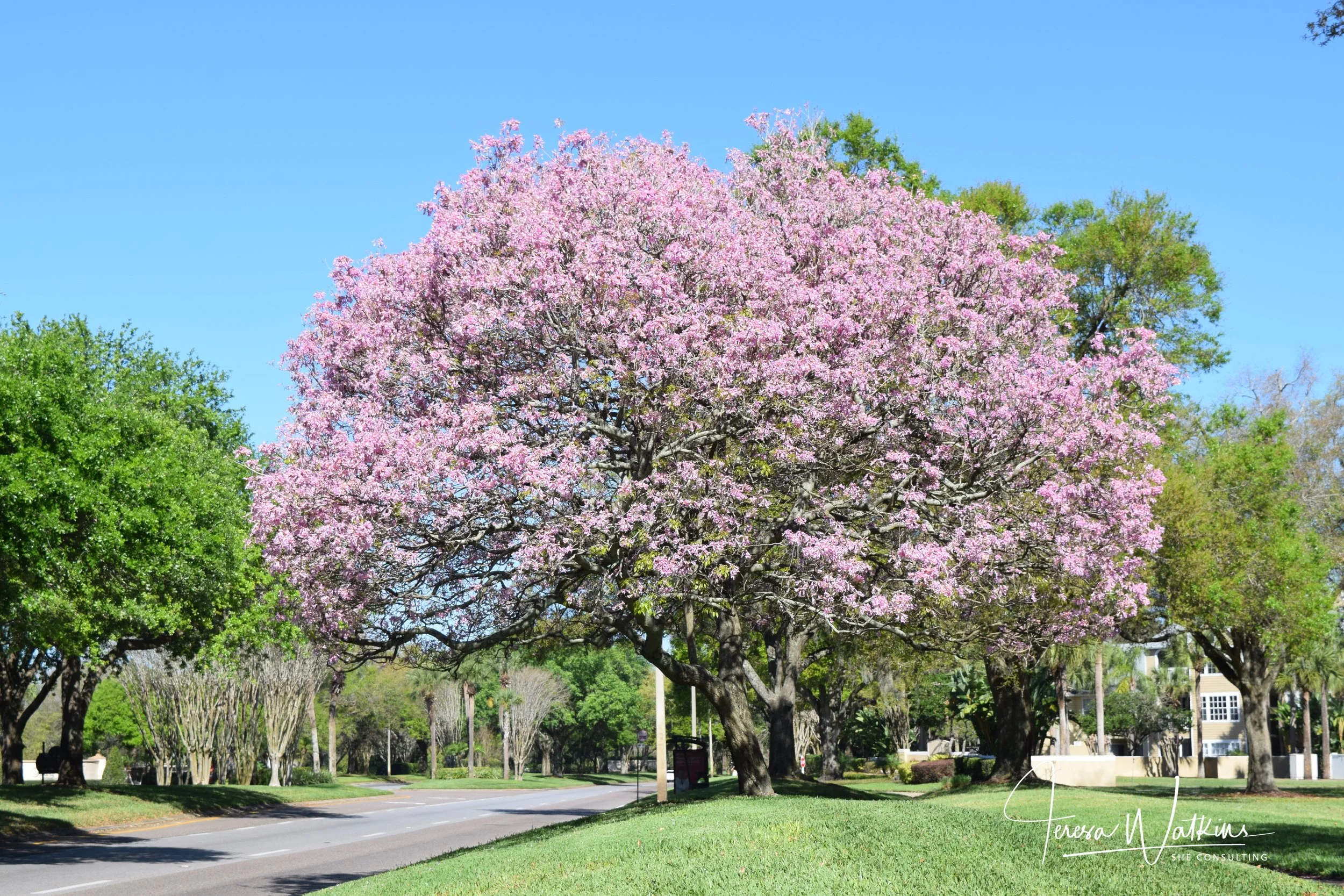
Pink Tabebuia heterophylla in Winter Park.

Welcome to In Your Backyard! Traditionally, March comes in like a lion but this year, it came in like a lamb and before we know it, it will start to roar! The winter freeze was very traumatic to Floridians, especially new residents who have never experienced winter in Florida. Yes, Virginia, Florida does have a winter season. And it doesn’t last long – three to four days – and then the warm sunshine returns with 80-degree temperatures. The benefits of living in Florida is that we do have flowers blooming all year long and seasonal color, including Autumn.  Record-setting heat this month is expected across the country, with Florida experiencing warmer-than-usual temperatures in the 70s and 80s this month—something typically not seen until April.  Even after a once in a century winter freezes, Florida’s Tabebuia trees do not let us down. Gorgeous pink and yellow flowering trees can be seen all over Central and South Florida in March.

I love seeing the explosion of color in March in our landscapes from flowers like amaryllis and orchids to camellias and gardenias. Do you have color in your yard year-round? I love seeing the explosion of color in March in our landscapes from flowers like amaryllis and orchids to camellias and gardenias. Do you have color in your yard year-round? Maybe this year while you are replacing all the plants in the yard that succumbed to the freeze, try adding Zone 8 - 10 evergreen plants that will not get winter-shock and will flowers most of the year.

Check out what to do in your landscape to help spur recovery with “What to Do In Your Landscape in March” post. I provide bulbs, edibles, and perennials to add to your yard right now plus everything to ensure your turf has a good start in Spring.  Better Lawns and Gardens producer Lizzie Steele enjoys her landscape’s beauty and shares photos of her flowers. Check out Lizzie’s Garden Adventures!  Lizzie and I would love to know what’s blooming in your yard.

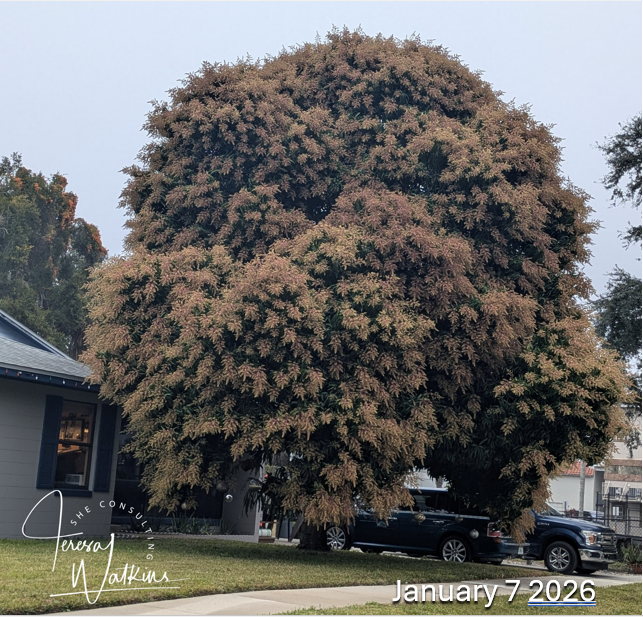
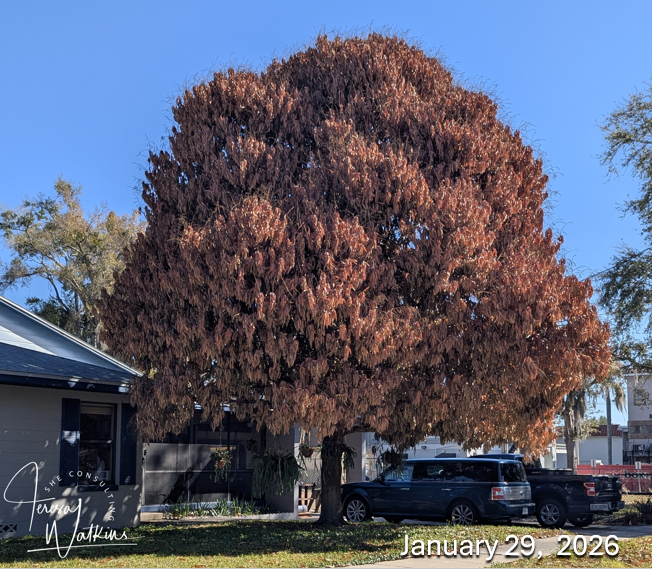
Mangos are a tasty and widely enjoyed tropical fruit that thrive in Central and South Florida. There's a large, beautifully shaped mango tree on my street, that on January 7th had literally thousands of blooms on it. On January 29th, I felt relieved it still looked healthy two days after the freeze. Unfortunately, my relief was short-lived—the tree is now in poor condition and won't bear fruit this year, but I'm hoping it will still pull through to keep its lovely structure. I will update you with a photo of the tree in June. Stay tuned!

Literally thousands of mango blossoms.

All burnt from the freeze and will drop all it’s leaves and flowers. Sad.

Is your lawn still brown? Have you wondered if your lawn is going to recover? I had Mark Kann, President of the Florida Turfgrass Association to get his insight as to determining if your lawn is dead or just dormant. You can hear Mark’s interview with his tips on fertilizing your turf this Spring here on Better Lawns and Gardens’ podcast.

One ofThe Villages Golf course in dormancy after the freeze. The hole was painted green.

Have you been to the Florida Wildflower Festival in Deland? It’s a wonderful opportunity to learn about wildflowers, buy native flowers, wildflowers, garden art, and Florida-friendly plants.  The free festival will be held this year on March 28th, with lots of plany vendors, speakers, and a chance to experience the quaint town of Deland.  I will be teaching a class on Florida’s wild pollinators; some you may not know about!  It’s always a beautiful day and a fun city to experience. The garden art and crafts are beautiful and the plants, some hard-to-find, are reasonably priced. And it’s FREE to attend! Don’t miss it.

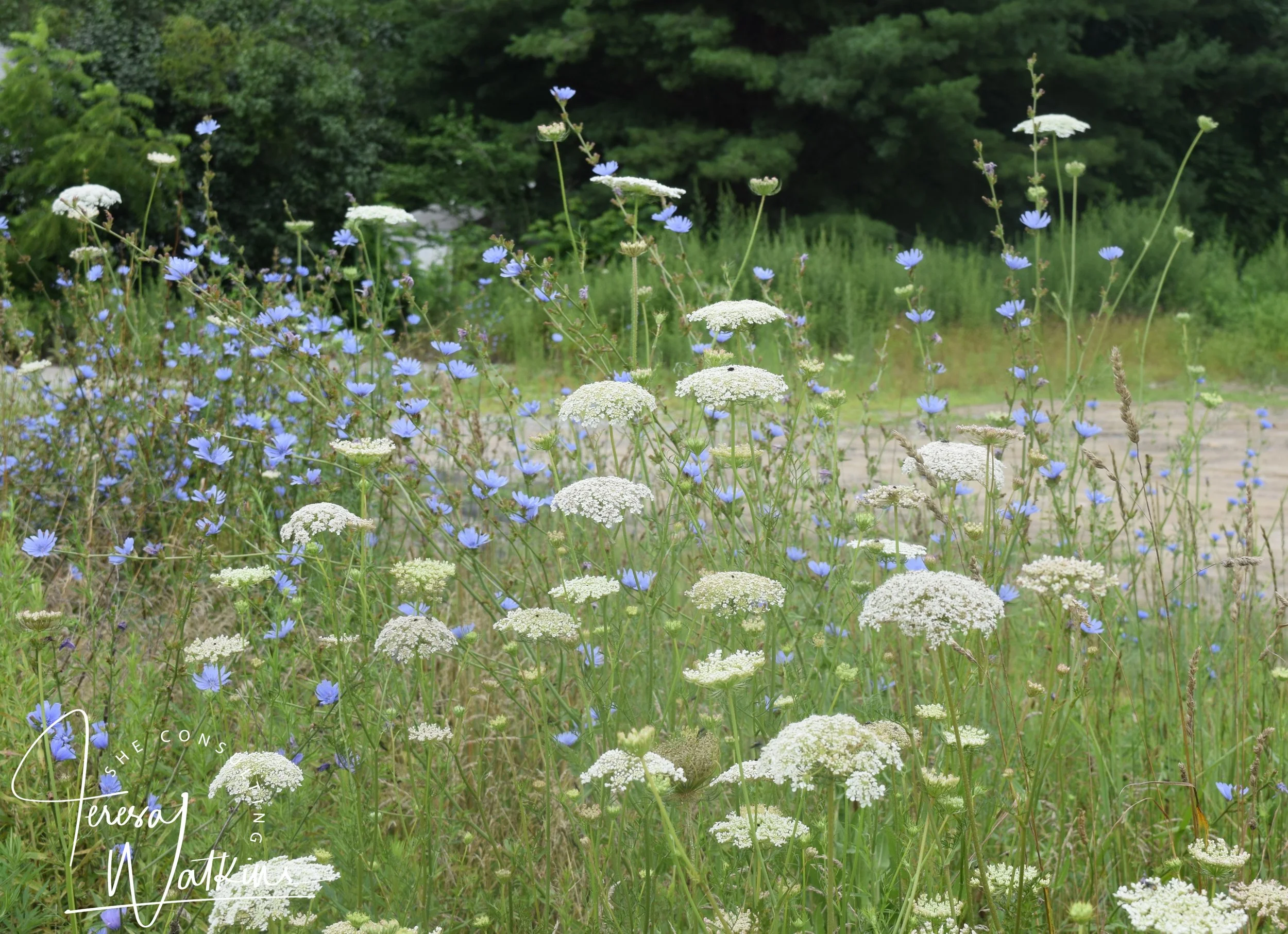
Wildflower, Queen Anne’s Lace, Daucus carota.

Update on our exciting Art in Bloom Garden Tours: The Revolutionary Garden Tour in April and The Best of English Gardens and the Chelsea Flower Show is sold out!  Our tours still have availability for a few more on our Newport Flower Show and Martha’s Vineyard in June (Great time to go on a garden adventure!), my favorite Garden Walk Buffalo and Niagara Falls, Canada tour, the Artiste Gardens of France in August, the Grand Gardens of Brandywine in September (great time to visit these palatial gardens), and the fun Ethereal Gardens of New Orleans in October. Check them all out at www.artinbloomgardentours.com

People often ask me if I can recommend a landscaping company. I am always pleased to share Otis Outdoors of Central Florida. For over eight years, owner Mickey Howell and his team have been responsible for installing my client’s landscapes. They are dedicated professionals who not only assist with installation but also offer monthly maintenance services for your landscape. If you need something done in your landscape, give Mickey a call.

Check out more of my landscape ideas with  Teresa’s Design Tips, my Plant of the Month, and the popular Landscape Malpractice – or How to Know When To Fire Your Landscape Tip #44.

Please share my newsletter with friends and family. Follow me on Facebook and Instagram. I would love to connect with you.

No need to be befuddled. There is lots to do in the garden and landscapes this month, but the weather will be beautiful and it looks like we will have some rain.  Enjoy the early Spring!

What to do in Your Backyard in March

March 2026

Average temperature      High 79    Low 56

Rainfall 3.54 inches

Full Moon: March 3rd, 6:38am.

Spring arrives: March 20th, at 10:46am.

Daylight Savings Time day: March 8th. Move irrigation to 2x a week watering.


Time to plant

Vegetables: Bean, calabaza, cantaloupe, cassava, chayote, corn,  cucumbers, dasheen, eggplant, Jerusalem artichoke, jicama, luffa, malanga, New Zealand spinach, okra, pepper, pumpkin, southern peas, squash, tamarillo, tomato, and watermelon.

 Flowers: African daisy, ageratum, aster, azalea, bacopa, balsam, begonia, black-eyed Susan, blue daze, bush-daisy, celosia, cleome, coleus, coreopsis, cosmos, dahlia, Dahlberg daisy, daylily, diascia, dusty miller, four o'clock, gaillardia, gardenia, gazania, goldenrod, hibiscus, Hollywood Hibiscus™, impatiens, ixora, Joseph's coat, King’s mantle, licorice plant, marigold, melampodium, Mexican heather, million bells, moon vine, morning glory, New Guinea impatiens, nierembergia, pentas, plumbago, roses, salvia, strawflower, tithonia, torenia, verbena, vinca, Whirling Butterflies, and zinnia.

 Herbs: Anise, basil, bay laurel, borage, cardamon, chervil, chives, coriander, costmary, dill, fennel, ginger, lemon balm, sweet marjoram, Mexican tarragon, mint, oregano, rosemary, sage, thyme and watercress.

 Bulbs: Achimenes, African iris, African-lily, amaryllis, blood lily, bulbine, caladium, canna, crinum, crocosmia, dahlia, daylily, eucharis lily, gingers, gladiolus, gloriosa lily, Louisiana iris, rain lily, tuberose and walking iris.

 Lawn care

  • Winter weather has browned many lawns; they should regreen this month.

  • Brown leaf blades do not have to be removed but can be raked out if you wish.

  • Cut back all dead branches, leaves, and flowers on perennials, shrubs, and trees.

  • Only cut back the brown fronds on palm trees.

  • Spray palm trees apical stem (at the top of the palm where the spears emerge) with a copper fungicide.

  • It’s seeding time for Bahia and Centipede lawns.

  • Get a soil test before fertilizing each Spring. 

  • UF AgriTech Soil Test Kit QR Code

  •  St. Augustine, Bahia and Bermuda lawns are ready for a spring fertilizer application.

  • Delay feedings of centipede and zoysia lawns until they regreen in late March or April.

  • Identify weeds before using general herbicide.

  • Time for using pre-emergent herbicide products is over.

  • Apply separate herbicide for weeds, if necessary. No need for weed and feed products.

  • Do not use glyphosate or other herbicides as an “edger.”

  • Manually edge garden beds with gas or electric edgers or hand spade.

  • Many weed control products cannot be used near trees and shrubs, check label restrictions.

  • Maintain lawns at their standard height; adjusting the blade height for Spring is unnecessary.  

  •  Hurry to remove patches of brown weeds and resod the areas.

  • Check for chinch bugs by using a hand-held vacuum cleaner.  Empty filter trap on white paper to find any live chinch bugs.

  • Apply insecticide if more than 20 chinch bugs are found.

  • Control fire ants in lawns; treat the entire lawn following label instructions.

  • Use alternative ground cover for lawns or strips under 4’ wide, areas difficult to mow, or spots where grass fails to grow.

  •  Have lawn care equipment serviced; change oil, check air filters and sharpen blades.

 In The Landscape

  • Cold weather damaged many tender shrubs and perennials; do needed pruning this month.

  • Cutting your shrub by ⅓ will not stress the plant too much. Water well before and after pruning.

  • Clear perennial plantings of debris and add new selections.

  • Control your landscape by trimming tree out of bounds shoots and limbs.

  • Wait to prune spring flowering shrubs until after the blossoms fade.

  • No need to hack crape myrtles and commit ‘crape murder’. Remove only seed pods and twiggy portions smaller than little finger.

  • Consider needed tree trimming; have the work performed now before hurricane season.

  • Trim declining fronds and old flower stems from palms but leave any fronds that are green.

  • Complete pruning of bush-type roses; prune climbers when the spring blooms fade.

  • Trim and divide ornamental grasses before they begin spring growth.

  • Plant warm season annuals and perennials.

  • Add trees, palms, shrubs and vines to the landscape.

  • Water new plantings frequently until they grow roots into the surrounding soils.

  • Cool-season weeds are still growing; control before they become too plentiful.

  • Reapply mulch layers to bring mulch up to 3”.

  • Trim poinsettias to within 12” to 18” from ground and begin feedings.

  • Apply fertilizer to palms, shrubs and perennials.

  • Established shade and flowering trees normally do not need special feedings.

  • Check plants for scale insects and control with natural sprays as needed.

  • Water established plants only when they show signs of wilting or moisture stress

  • Divide and replant perennials.

  • Plant rows or groups of gladiolus in weekly succession to have blooms all summer long.

  • Replant container gardens with spring flowers.

  • Divide terrestrial orchids and begin every other week feedings with a diluted fertilizer solution.

  • Turn fallen leaves into compost or use as mulch.

  • Feed container gardens with slow-release fertilizer following label instructions.

  • Give power equipment a spring checkup.

  • Clean bird houses, bird baths and fountains.

  • Remove debris from water gardens and repot lilies.

  • Sprinkle Summit Mosquito Bits™ in mosquito-prone areas like bird baths, gutters, and bromeliads.

 Vegetable and fruit care.

  • Early March is tomato, pepper, and eggplant planting time; set transplants in the ground.

  • Keep covers handy to protect cold sensitive crops until mid month.

  • Remove winter vegetables as they decline and plant warm seasonal crops.

  • Select pest resistant varieties to avoid insect and disease problems.

  • Plant short rows every few weeks of seeded crops to extend the harvest season.

  • Use bush forming crops instead of vining types in crowded gardens.

  • Herbs flourish during the Spring weather.

  • Garden pests including aphids, whiteflies and mites are active; use natural controls.

  • Spring growth is underway; complete all fruit tree pruning.

  • Prune cold damaged tropical fruits to remove brown leaves and declining stems.

  • Identify the type of grapes you are growing to obtain proper pruning and care information.

  • Pineapples start flowering this month; maintain a good care program.

  • Feed all fruit bearing trees, shrubs and vines at this time.

  • Add new fruiting trees, shrubs, and vines to the landscape.

  • Select warm locations for new tropical fruits.

  • Maintain citrus tree vigor with the first of the new year feedings.

  • Apply a minor nutrient spray to citrus trees at each flush of new growth

  • Control Asian psyllids; apply an insecticide labeled for citrus at each flush of leaf growth.

  • Add container herb and vegetable gardens to crowded landscapes.

  • Construct raised beds for easy maintenance.

  • Reapply mulch to fruit trees.

  • Fertilize vegetables lightly every 2 to 3 weeks or use a slow-release fertilizer.

  • Train vining vegetables to a trellis to save space.

  • Sprout sweet potatoes to produce transplants.

  • Install water conserving sprinklers in fruit and vegetable plantings.

 Foliage & indoor plants chores

  • Some foliage plants have been affected by the cold; trim and add more soil if needed.

  • Repot container plants that are rootbound.  

  • Replace declining plants with low light tolerant varieties.

  • Groom indoor plants to remove yellowing leaves and faded blooms.

  • Trim Christmas and holiday cactus and begin more frequent waterings and feedings.

  • Wash dust and pests from indoor plant foliage with a mild (not antibacterial) soapy solution.

  • Move orchids outdoors or to a bright area and begin every other week feedings.

  • Treat forced bulbs as temporary and add to compost pile when finished blooming.  

  • Check for mealy bugs, mites, and other pests. Treat according to pesticide label.

  • Control fungal gnats with Summit Mosquito Bits™.

  • Visit your local independent nursery centers for new plant varieties.

Embracing the Beauty of Fall

Fall is truly my favorite time of year. Not only is it the season of my favorite holidays (and Tony’s and my birthdays) but the season brings an exquisite Autumn color palette featuring rich shades of burgundy, vibrant orange, earthy browns, and deep forest greens. As the days progress, the temperatures begin to cool, even if only by a few degrees, providing a refreshing change from the heat of summer. Additionally, the humidity gradually decreases, making time spent in the garden much more comfortable and enjoyable. I’m looking forward to the upcoming change of seasons and new year.

Recently, on Better Lawns and Gardens, I had the pleasure of speaking with Katie Dubow, President of the Garden Media Group. In September, the company marked an impressive milestone, celebrating 25 years of forecasting garden trends. Their ongoing research continues to shape the gardening world, and according to their latest findings, the prominent theme for 2026 will be “Lemonading.”

 Lemonading, the ability to reframe problems with creativity into ideas and solutions. This new phrase provides opportunities for people to enjoy life and stylize it to their own personality and needs. How does Katie and the Garden Media Group Dream Team think lemonading will shape gardening in 2026?  The company’s research shows that people will be:

  • Looking for joy, relaxation, seeing their efforts make a difference, not only in gardening but in their world.

  • More “kidulting” with new software, using games and technology from our youth (and adulthood) to relax but also to be a better gardener.  

  • Setting yourself apart with collections, bento-style vignettes, especially rare and exotic plants, unusual pets, and re-shaping outdoor spaces.

  • 2026’s Color of the Year: Faded Petal. A beautiful vintage soft pink color is muted by light ash. See their flower and shrub species recommendations you can add to your landscape to showcase this new color in the link below.

Katie and her all-female staff’s predictions make sense in today’s accelerating by-the-day-world. Each of the categories is explained in depth in the Annual Report.  It’s a fun read and I will be very interested to see how much is spot on target for our future. We’ll see.

The Garden Media Group’s Annual Report can be downloaded free here.

During our final Art in Bloom Garden Tour of the year, in the New York’s Hudson River Valley, participants experienced wonderful weather and vibrant floral displays while visiting distinguished estates and notable botanical garden exhibitions. At the New York Botanical Gardens, attendees viewed The Van Gogh Flower Show, which featured an impressive selection of sunflowers, artistically arranged frames and easels with real floral compositions, as well as landscape beds designed to evoke Van Gogh’s iconic floral paintings. Additional gardens included Stonecrop Gardens, Kykuit at the Rockefeller estate, and the Gothic Revival Lyndhurst Mansion.  

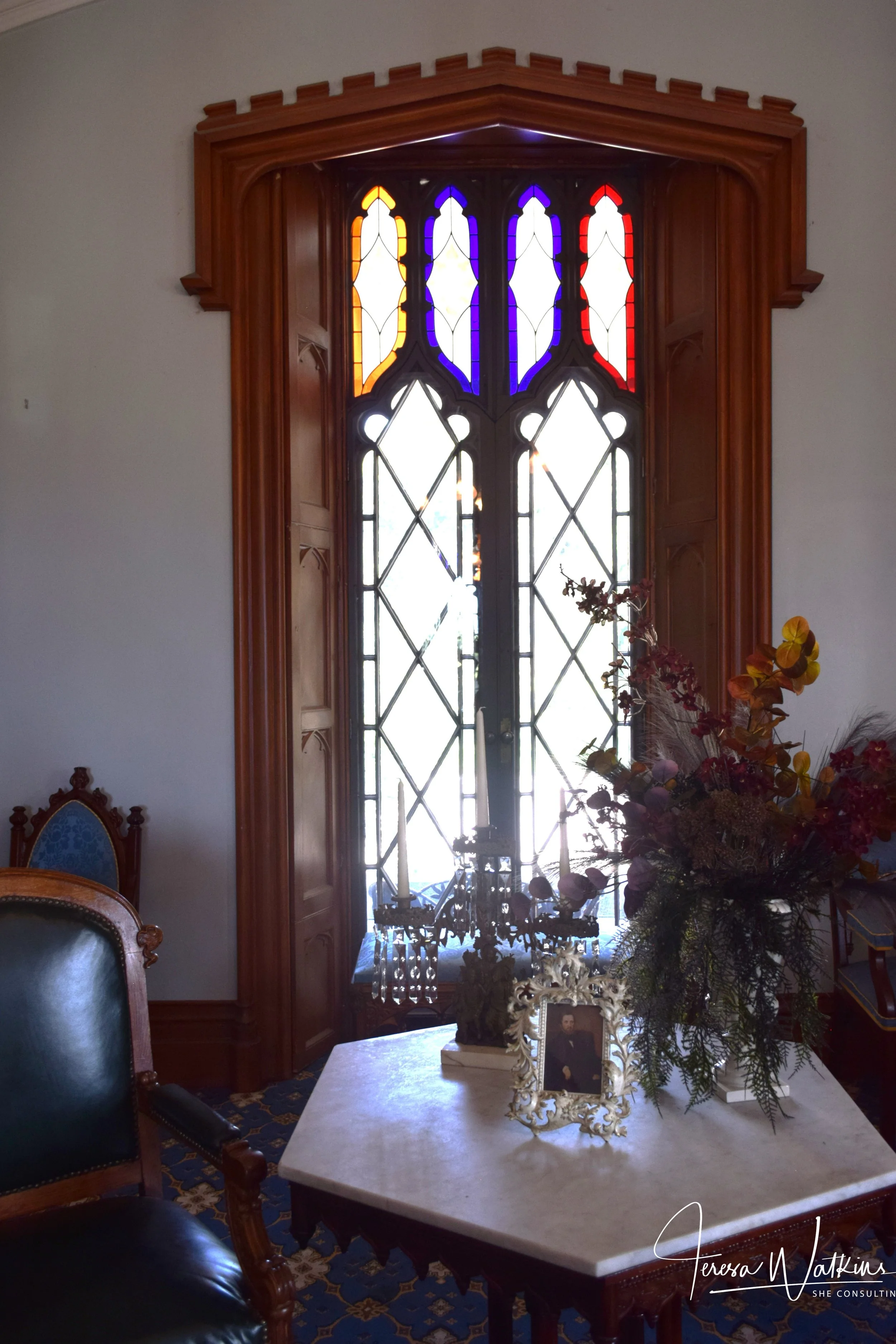
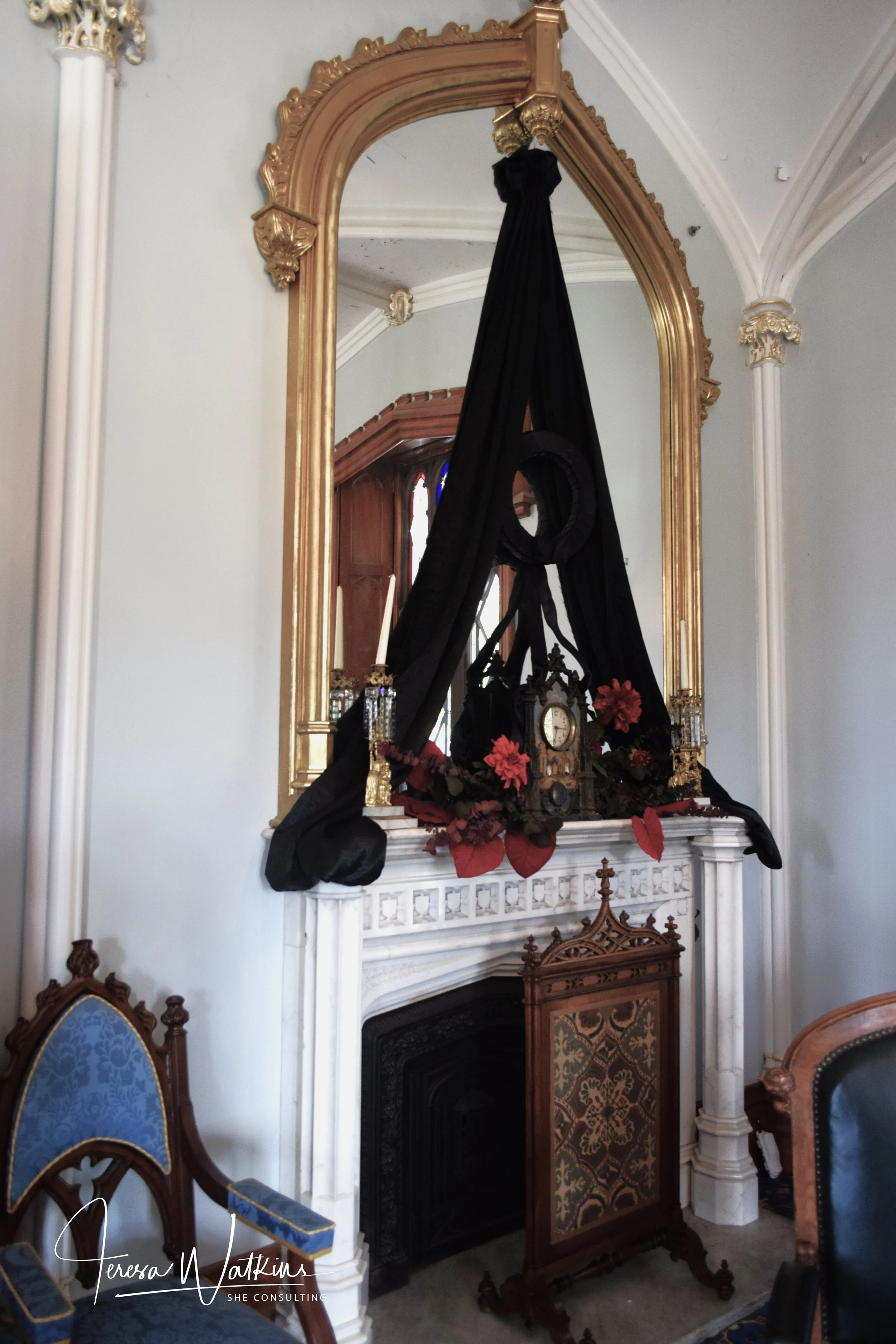
A serendipitous discovery at the Lyndhurst Mansion was that it was used as the exterior backdrop of the mansion for the 1960’s gothic “Dark Shadow” soap opera series. It was my favorite soap opera next to All My Children. The house’s interior was decorated for Halloween and so much fun to walk through. I appreciated that the home did allow for interior photographs.

Another of our garden tour stops, Wave Hill, a public garden that offers incredible views of the Hudson River and features a variety of themed gardens with creative beds, art work, and diverse plant combinations. The botanical garden includes numerous plant displays that are suitable for growing in Florida's climate. The Kate French Terrace garden beds showcase color schemes including jewel tones and soft grays, which are well suited for the fall season. I include my favorite in Teresa’s Landscape Design Tips. Does it work for you?

October marks the start of Fall gardening, so consider a soil test and fertilizing if it's been a while. Adjust soil amendments and pH as needed and consult planting guides for this month's What To Do In Your Landscape in October.

My Plant of the Month is a medium-sized shade shrub with evergreen leaves, fall and winter blooms, and no pest issues—an ideal choice for your garden.

In Lizzie’s Gardening Adventures, discover how her garden gives back and how she finally resolves turkey troubles. She rules her roost!

Horrific landscape malpractice has kept me awake for decades and is as scary today as ever. Just because “Halloween” season is approaching, doesn’t mean you have to create your own “Nightmare on Elm Street.”  Learn how to properly prune your landscape.  

Please comment below if you have any gardening questions or thoughts. I hope you enjoy the newsletter and are looking forward to the cooler temperatures and holiday season. I know I am.

In Your Backyard for August 2025

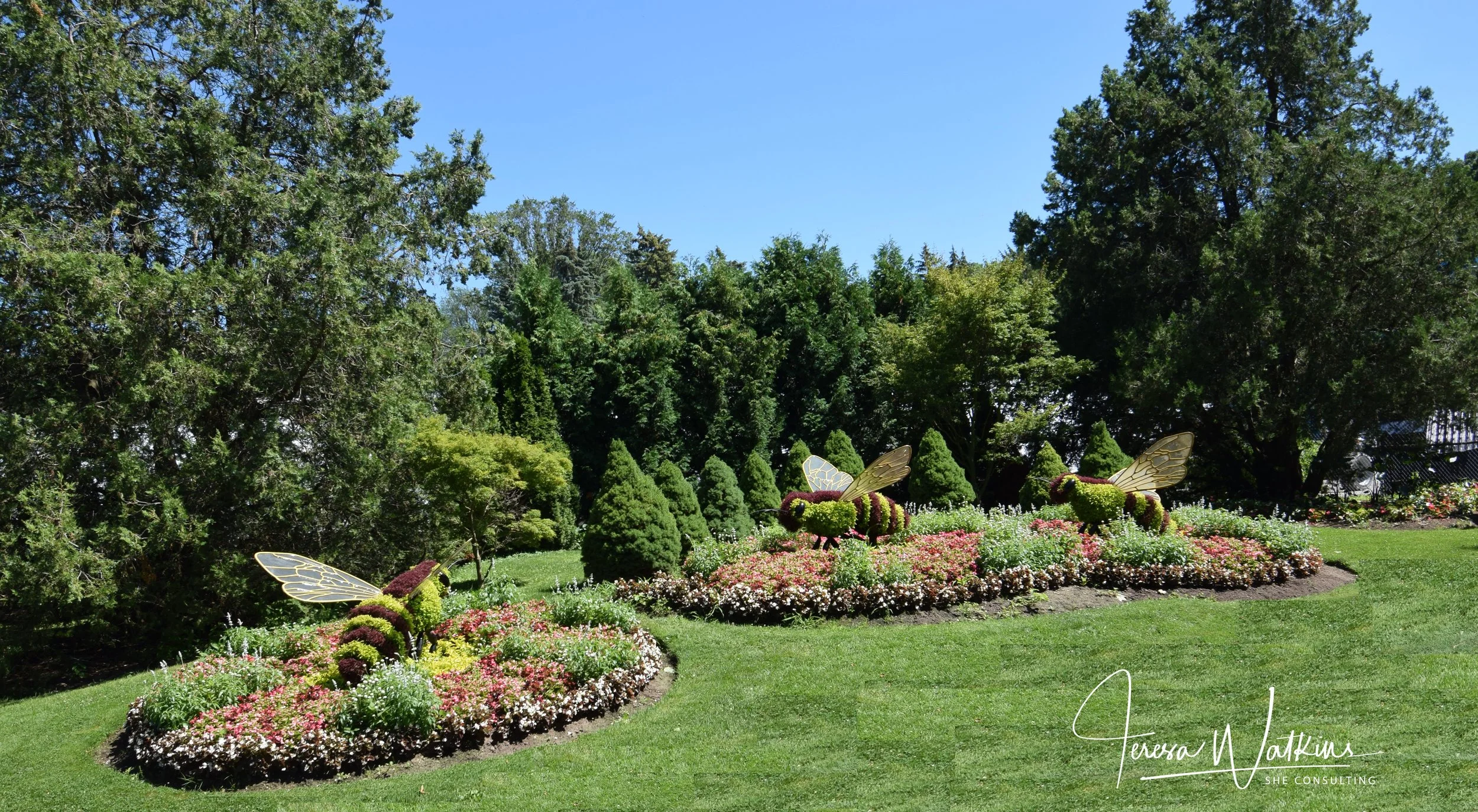
Photo credit: Teresa Watkins, Art in Bloom Garden Tours at Niagara Falls Botanical Garden, Canada.

It’s heating up this month. I can’t remember a hotter summer. But I’m glad to live in Florida. We are lucky to live on a peninsula that is surrounded by the Gulf and the Atlantic Ocean. We don’t reach 100 º. In fact, as Matt Devitt’s, weatherman at WINK, graphic shows, it’s very rare. While we may have hot temperatures, it’s been hotter around the country.

Graphic credit: Matt Devitt WINK

I have seen a lot of large patch disease in yards this summer. Large patch is caused by overwatering grass. It is a practice that is meant to be kind and attentive but it’s the worst thing a homeowner can do to their grass. That and using herbicides in this heat. Don’t.

Large Patch Disease

No matter the variety, established turfgrass only needs 1.5” a week at the most. Check your rain gauge, we have been getting enough rain in most parts of Central Florida although the South is seeing drought conditions.

How can you keep your grass unstressed in these dog-days of summer?

  1. ·  Keep your grass mowed high at 3” – 4”.

  2. ·  Make sure lawn mower blades are sharp.

  3. Water deeply but infrequently.  Add 15 mins to your timer 2x a week   

  4. Do not fertilize.

I have posted What to Do In Your Backyard for August.  Lots of pointers, but don’t overdo. It’s too hot!

Speaking of hot times. Check out my Landscape Design Tips and Landscape Malpractice Tip #39.  Both feature the same subject: Hellstrips.

My Plant of the Month is a pretty tropical with a fun name. Great for tropical gardens.

The scheduled tours for Art in Bloom Garden Tours for 2026 is up on our website. We have fantastic gardens for garden enthusiasts next year.  We are just finalizing up details to ensure the best prices and services. We already have waiting lists for most of our Spring destinations, so let us know if you want to be notified before the final itinerary get posted.  Email:  artinbloomgardentours@gmail.com

Have lots of photos to upload from our Garden Walk Buffalo, Niagara Falls, and the Newport Flower Show, and will include our trip this month from Scotland.

Let us hear from you about what you are doing to stay cool this summer!

The previous homeowners enjoyed a long, narrow lap pool and bulky firepit in their backyard. The new homeowners, with a three-year old boy and new baby girl, wanted a play area for the children and a place to watch them. My clients asked me to redesign the backyard. What could they do?  

First, I had to determine if the outdoor bench was in the ground permanently. Having the crew dig down to the bottom of the legs, and finding no cement, we knew that the bench could be dug up and flipped. The firepit was heavy but once the metal center was temporarily removed, we could roll it into place. My contractor’s crew worked very hard and rearranged the seating to face the pool.

 The landscape was then rearranged to border the new seating by transplanting the bottlebrush and the Lakeview jasmine and cutting back the Jatropha trees. I added low maintenance shrubs like fragrant tea olives, and colorful flowers like plumbago, hibiscus, and whirling butterflies. Final touch was to add the necessary zoysiagrass that can handle the children’s Little Tykes play toys and Tonka trucks in the gravel bed.  Playground transformation complete.

My design tip? Think outside of the bench, I mean box. Having a landscape that works for you means checking out all possibilities and finding a way to accomplish what needs done.  Also, find a contractor who is willing to dig out the box. Thanks, Mickey and crew!

To sit in the shade on a fine day and look upon verdure is the most perfect refreshment.

~ Jane Austen

“Mansfield Park”, 1814, p. 85

Our spring has been rough. Summertime temperatures teasingly near the 90’s with nary a drop of rainfall last month. Usually in April, Central Florida receives 3.78 inches of rain, but last month, Orlando only received .37 inches. Since the beginning of 2025, our rainfall is down 7 inches for the year. Fortunately, this month, in the first two weeks of May, we should catch up with the rainfall. We can hope for 6” to 7” just this week.

What does drought stress look like in the landscape?

Drought stressed blueberries, podocarpus, and viburnum.

So what should you do if you find your shrubs?

  • Handwater your plants on the days you cannot irrigate. Make sure you saturate rootball.

  • Make sure irrigation system is hitting the base of the plant. Remember its the rootball that needs water, not the leaves.

  • Hold off on fertilizing till rains arrive.

  • Cut the brown fronds or foliage out.

  • Do not spray pesticides.

Two ways to help prevent drought-stress in Spring and WInter:

  • Right Plant, Right Place based on your soil conditions, either xeric, mesic, or hydric soils.

  • Add organic amendments to your soil. One bag of topsoil or compost, one bag of peat, and one bag of manure for every 10 square feet of area.

Here is a great chart for building healthy Soil with organic amendments:

Find out how to have a great landscape in May, despite the heat and lack of rain. Check it out!

In April, our Art in Bloom Garden Tour traveled to Savannah, Georgia, and Charleston, South Carolina. We visited hidden gardens in Savannah, toured historic homes and plantations, learned how to propagate beautiful irises, and enjoyed a delicious cooking lesson of classic Southern cuisine, and dining in style with a night dinner cruise!  Don’t miss another garden adventure. Go to Art in Bloom Garden Tours!  Tony and I would love to have you join us!

Lizzie’s showing off her amaryllis and warns about being a jive turkey! Her life experience with a bird in the hand and two in the bushes is real. Lizzie talks turkey in her post this month.

Savannah and Charleston have beautiful, shade-tolerant pocket gardens in nearly every landscape. They use dwarf mondo grass as turf, Confederate jasmine on wrought iron fences, and this fun ornamental plant survives Zone 7 winters, and Zone 11 hot temperatures. My Plant of the Month also has yellow Asteraceae flowers. In the shade! Find out what it is and try it! Its architectural foliage is perfect for elegant, whimsical, or classic gardens.

When I go to the theme parks, I admire their instant landscapes that provide that ‘Wow’ factor around every corner. The designs, plant selections, and colors are inspiring. But usually, the theme park attraction landscapes are used as seasonal plantings and expensive. They are designed to be short-term, and believe me; we pay for it in every ticket. City and county landscapes on the other hand, should be examples of sustainable landscapes. My Landscape Malpractice this month was beautiful but not sustainable or cheap, and the location was on a rarely used avenue. It will be interesting to watch it over the next year and see how these new hybrid perennials will do.

My design tip this month is a creative exercise for a landscape that has great bones and potential. Let me know what you would do with an empty slate landscape with a beautiful fountain.

Happy Mother’s Day to all the women who are Moms! Moms with children, Stepmoms, Moms of fur babies and reptiles, Frat Moms, and teachers who serve as Moms in the classroom. My Mom loved roses. Our family consisted of six children in nine years, so she was running from morning till night. She only had one rose bush at a time. But it was always a beautiful rose when it bloomed. Great memories.

If you don’t want to get up early to listen to Better Lawns and Gardens, you can always listen to our podcast here.

Take it easy this month in the landscape, try not to stress out your lawn with excessive chemical treatments. The rainy season will be here shortly.

In my daily travels, I see yards that have potential. Would I love to have a crack at designing this landscape! Great bones, easy slope, full sun, and wonderful accoutrements, like a Spanish tile roof, water fountain, statues, and plants that could enhance the Mediterranean-style home. But in its current state, the encoutrements are not positioned well around the home. The property is a large enough to expand the landscape with a classic pergola that welcomes guests graciously into their home. What would I do?

  1. Move the water fountain closer to the home.

  2. Add and transplant the bougainvillea.

  3. Add a flagstone patio. Install a rectangular pergola that runs lengthway i

  4. Add three 6’ x 6’ or 10’ x 10’ cement paver steps where each one goes down 8” down the slope with smaller steps further down the slope to road. On each side of three pavers plant perennial lantana or drift roses.

  5. Transplant Yucca to succulent and agave landscape bed in front of house on each side.

  6. Add 4’ x 2’ cement pavers to side of house.

  7. Add Live oak and Olive trees on sides of front yard.

My design incorporates Florida-friendly principles with low-maintenance plants. My plan could be done in phases. I would plant the oak and olive tree first. Install the flagstone pathway, then move the water fountain. Transplant the yucca, add the arbor, transplant the bougainvillea, then add the pergola and walkway, finally add the succulent and agave landscape beds. Remember to retrofit the irrigation system.

Now, how would you design the yard to utilize the immense sloped front yard and create a welcoming landscaped entrance?

“Love, exciting and new, come along, we welcome you.” Okay, so the theme song isn’t exactly about gardening, but if showcases my feeling. Welcome to all the new subscribers and listeners to my monthly newsletter, “In Your Backyard.” February is the time to gear up for gardening in Florida. It has definitely warmed up (thank you, La Niña), with new leaves pushing out and up, perennial flowers and shrubs available in the nurseries, and the urge to plant is in the air. Speaking of gardening and love, I want to send out love to all the garden clubs that I get to speak to. Talk about growing! Garden clubs are the place to be! Pictured above are one of the fun activities of holiday floral arrangements. The beautiful floral centerpieces were created by members of the New Smyrna Beach Garden Club for their February meeting. I mention garden clubs frequently in my talks and on my radio show, Better Lawns and Gardens, because garden clubs are so active, inside and outside, and welcoming. If you are new to Florida and interested in learning about gardening and learning about your landscape, join a local garden club! You can find a garden club near you on the Florida Federation of Garden Clubs website.

February is when showstopping pink Trumpet trees start to bloom. Appropriately named, the flowers of the Trumpet tree resemble the musical instruments. Fast-growing and relatively pest-free, Handroanthus impetiginosus, make a beautiful street tree. I think that a neighborhood of Trumpet trees would be a strong challenger of cherry blossom trees in Spring. Did you know that Trumpet trees, also called Ipê, Ironwood, and Brazilian walnut, is also one of the strongest and hardest woods on the globe. It is considered the best lumber to use for composite decking? Known for its fire, insect, and scratch resistance, Ipê decking is also cooler to bare feet. Ipê lumber sold in the United States is harvested legally and sustainably.

With the summer-like temperatures already upon us, you’ll love all the different flowers, herbs, trees, and vegetables you can plant in February. It’s also a short month to get those landscape chores done. Just a couple of quick tips: Don’t plant rye seed anymore – as the temperatures reach 80 degrees and above, it will quickly decline, and be leery of buying beautiful winter annuals blooming like delphiniums, foxgloves, and pansies. With the heat, if they last a month, you will be lucky. Read what you should do in February here.

Congratulations to Lizzie who has her hands full of love in this month’s adventure. You can read more to see her new bundles of joy.

My Plant of the Month is also one of my favorite tropical topics. It’s a low-maintenance, colorful plant that looks good in the ground, in the air, or as a thriller in your pool garden container. With over 2,700 species to choose from, it’s not hard to become addicted to collecting all the these beautiful varieties available in Florida.

Thinking of wearing white cottony outfits, summer trips to the beach, visiting coastal lighthouses, and promenade through beautiful gardens? Join me and other garden lovers as we tour the ‘Gilded Age’ vacation destination of the rich, Newport, Rhode Island. We will attend the premier Newport Flower Show at Rosecliff Mansion, stroll the coast on Narragansett Bay, take photos of yourself next to life-sized animal topiaries, and meander on the grounds of New England’s finest estate, Blithewold Mansion and Arboretum, where you can view Champion trees and Giant sequoias, relaxing with afternoon tea, and more. Only 6 more spots left. Dates are June 19th – June 23rd, 2025, 5 days, 4 nights. More Information.

Send me your garden questions and comments. Thank you for reading “In Your Backyard.” I love knowing you are out there!

How are you doing? Two hurricanes in the first two weeks of October – we haven’t seen that in Florida ever, and it’s worse further north in Georgia, North and South Carolina, Tennessee, and surrounding border states. This is a month for recovery for millions. With the deluge of over 15” of rainfall in some areas, the loss of thousands of trees, and flooding still affecting Florida, gardening may not be on your to-do list.

Take a deep breath, do what you need to do to take care of your property and you. All those that have been devastated in North, South, and west coast of Florida, know that you are in Lizzie’s and my prayers. Check in with us on our Facebook page. Send us your photos, questions, and comments.

Take advantage of Summit Mosquito Bits and Dunks in stagnant waters around your home, and Green Armor Shield to prevent mosquito bites while working out in your yard. It prevents mosquitos from biting you through your clothing, shoes, tents, out in the woods, clearing out your brush and fallen trees.

If you need help with your landscape, here are a few resources:

It’s been a chaotic month, so keep focused on yourself, family, home, and what you need. If you do need a break and you have gardening questions, especially about your landscape issues, hope you will listen to Better Lawns and Gardens every Saturday morning 7am to 9am on your iHeart station or anywhere you listen to podcasts.

My design tips will be back next month with special emphasis on recovery. Send me your questions, thoughts, or ideas you would like.

Hope everything is back to normal for you and Florida soon. Take care,