Halloween

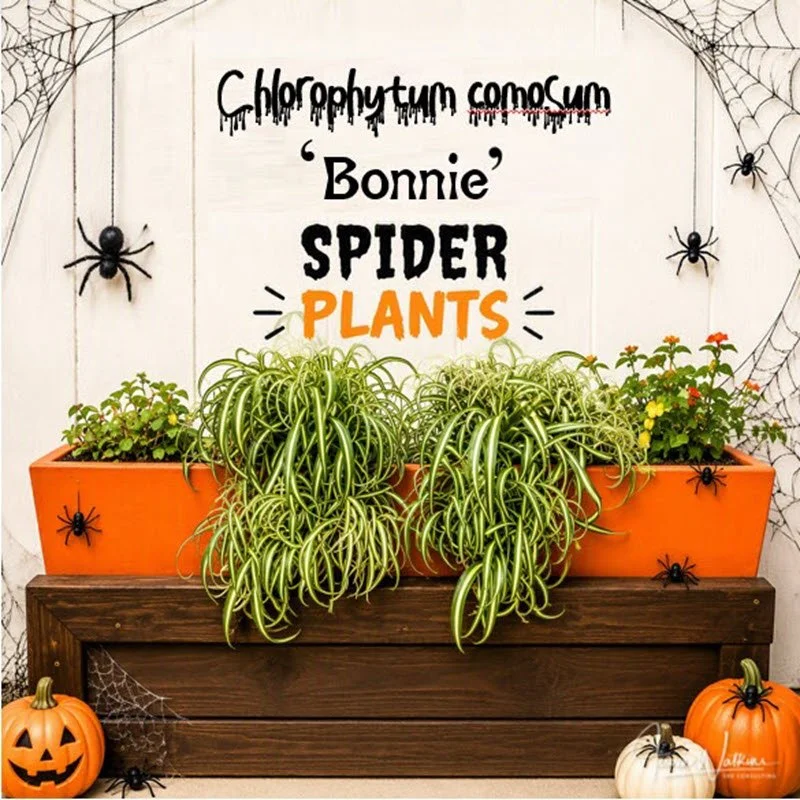
Photo of spider plants, spider graphics: Teresa Watkins
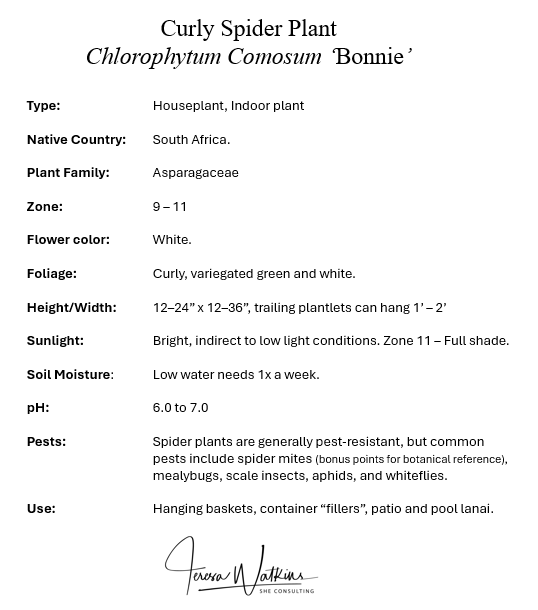
Spider plants (Chlorophytum comosum) are among the most recognizable and forgiving houseplants around, especially for anyone who remembers the 1960s and 70s when they seemed to occupy every college dorm room, hippie hideaway, and macramé hanging basket in America. Today, there are more than 200 named varieties, ranging from solid green selections to the white-striped 'Variegatum' and the reverse-variegated 'Vittatum', all known for producing arching foliage and their famous dangling "spiderettes." My favorite is the Curly Spider Plant, Chlorophytum comosum 'Bonnie'. Instead of long, straight leaves, 'Bonnie' sports playful green-and-white curls that look as though they just came from a garden salon. Its compact, whimsical form adds texture and personality to containers and hanging baskets while maintaining the spider plant's well-earned reputation as one of the easiest, most carefree houseplants you'll ever grow.

Teresa’s Note: The planter featured in the graphic is one of my client installations, showcasing Curly Spider Plant 'Bonnie' paired with colorful impatiens.

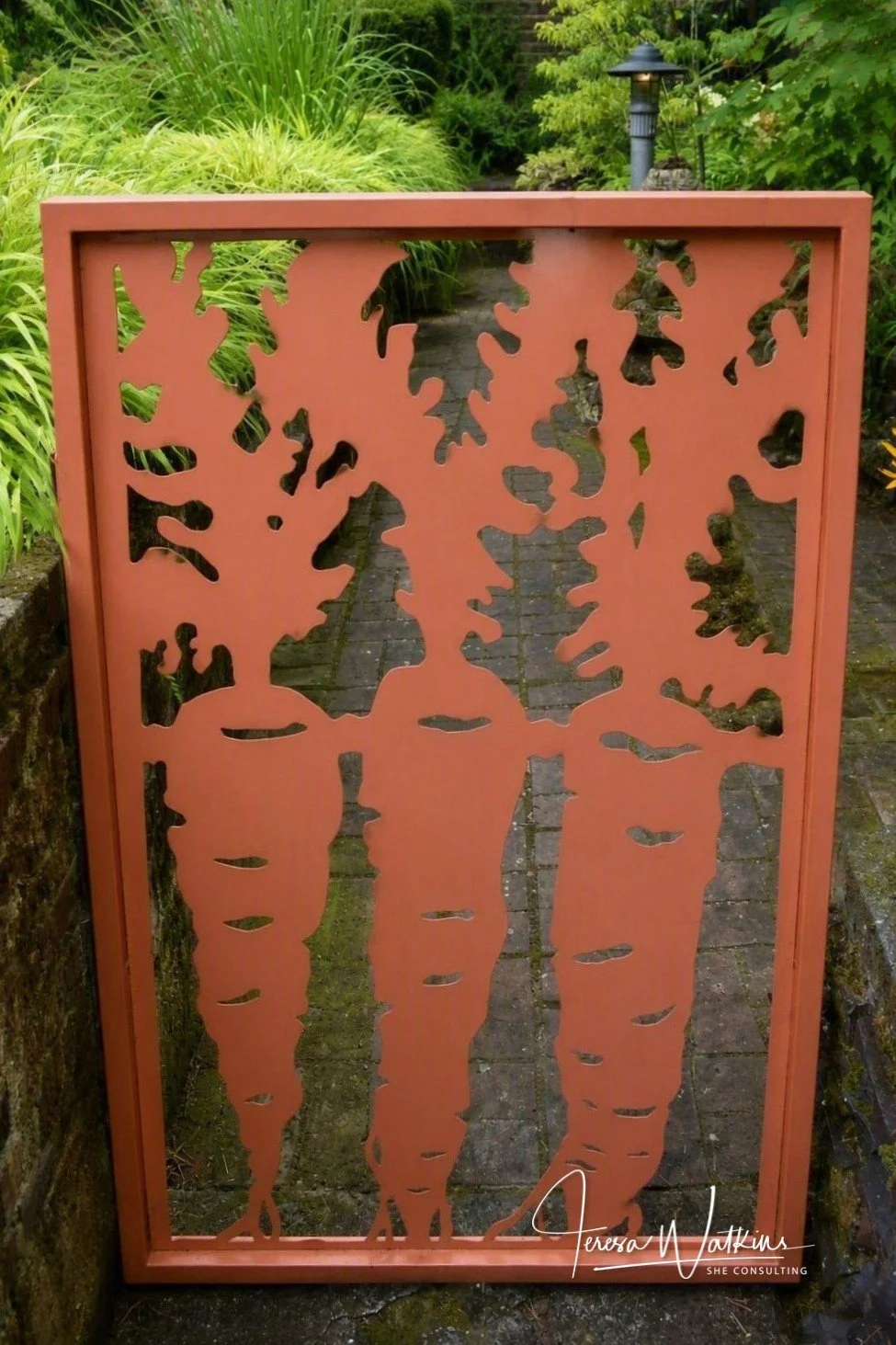
Orange Eclectic Garden Inspiration

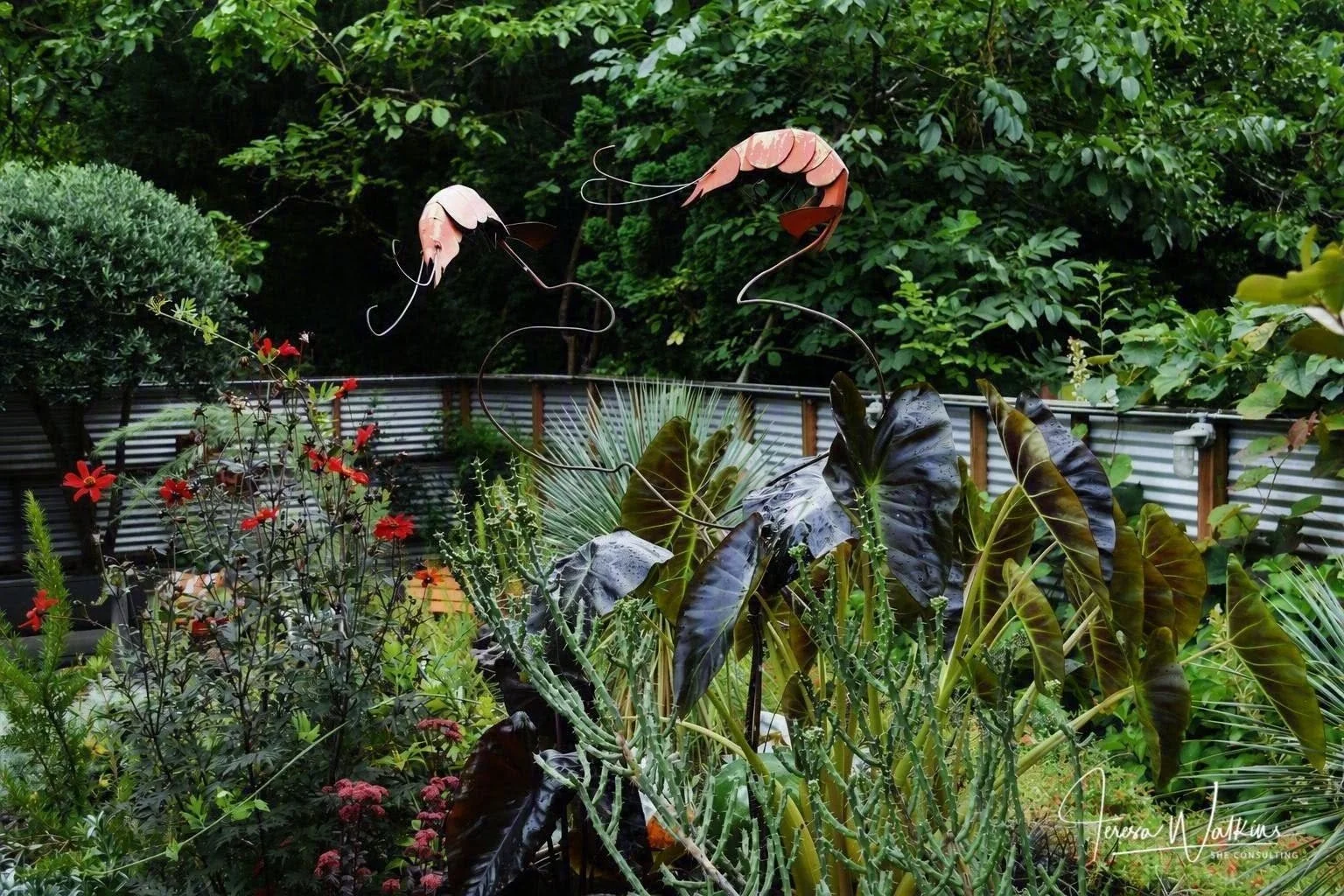
How inspiring can a private garden tour be? Step inside this stunning West Coast garden, that I've affectionately nicknamed "Orange Eclectic," and discover how bold, vibrant color can transform an ordinary sloped landscape into a breathtaking terraced outdoor retreat. From eye-catching plant combinations, and garden art on the ground and in the air, to creative design details, this garden showcases the power of color to bring energy, personality, and excitement to every corner of the landscape. See all of the Orange Eclectic Garden album on my Facebook page.

Ready for more garden inspiration? Explore the full lineup of Art in Bloom Garden Tours for 2027, featuring extraordinary private gardens, beautiful destinations, and unforgettable experiences. All tours are confirmed, and space is limited, so reserve your spot soon. https://www.artinbloomgardentours.com/2027-garden-tours

5. Bleeding Hearts: Clerodendrum thomsoniae is a vine from the mint family (Lamiaceae), though some sources like the USDA Plants Database list it under Verbenaceae. It grows in Central or South Florida with full sun to partial shade, producing red, heart-shaped flowers throughout the year, especially in milder weather.

4. Witches Hair — Cuscuta, or dodder, is a genus of over 201 parasitic plants, usually yellow, orange, or red. Once classified in Cuscutaceae, it is now part of the morning glory family.

3. Black Bat Plant – Tacca chantrieri. – Species of flowering plant in the yam family – National Flower of Thailand. It smells like a rotting corpse, self-pollinating. It can be planted in full shade outside or can be an indoor plant.

2. Snapdragon Skulls – After blooming, snapdragon seeds resemble human skulls. Historically, these plants were believed to protect against deceit, curses, and witchcraft, and some myths claimed they could restore youth and beauty to women who consumed them.

1. Ghost Pipes – Monotropa uniflora Ghost plant or Death plant, Indianpipe is a spectral herbaceous perennial wildflower, Grows throughout Florida naturally in mixed temperate hardwood forests and scrub, particularly where the ground is covered in leaf litter and lichens. It typically blooms in November. Its whitish color is due to it being non-photosynthetic and does not contain chlorophyll.