Teresa's Top Five

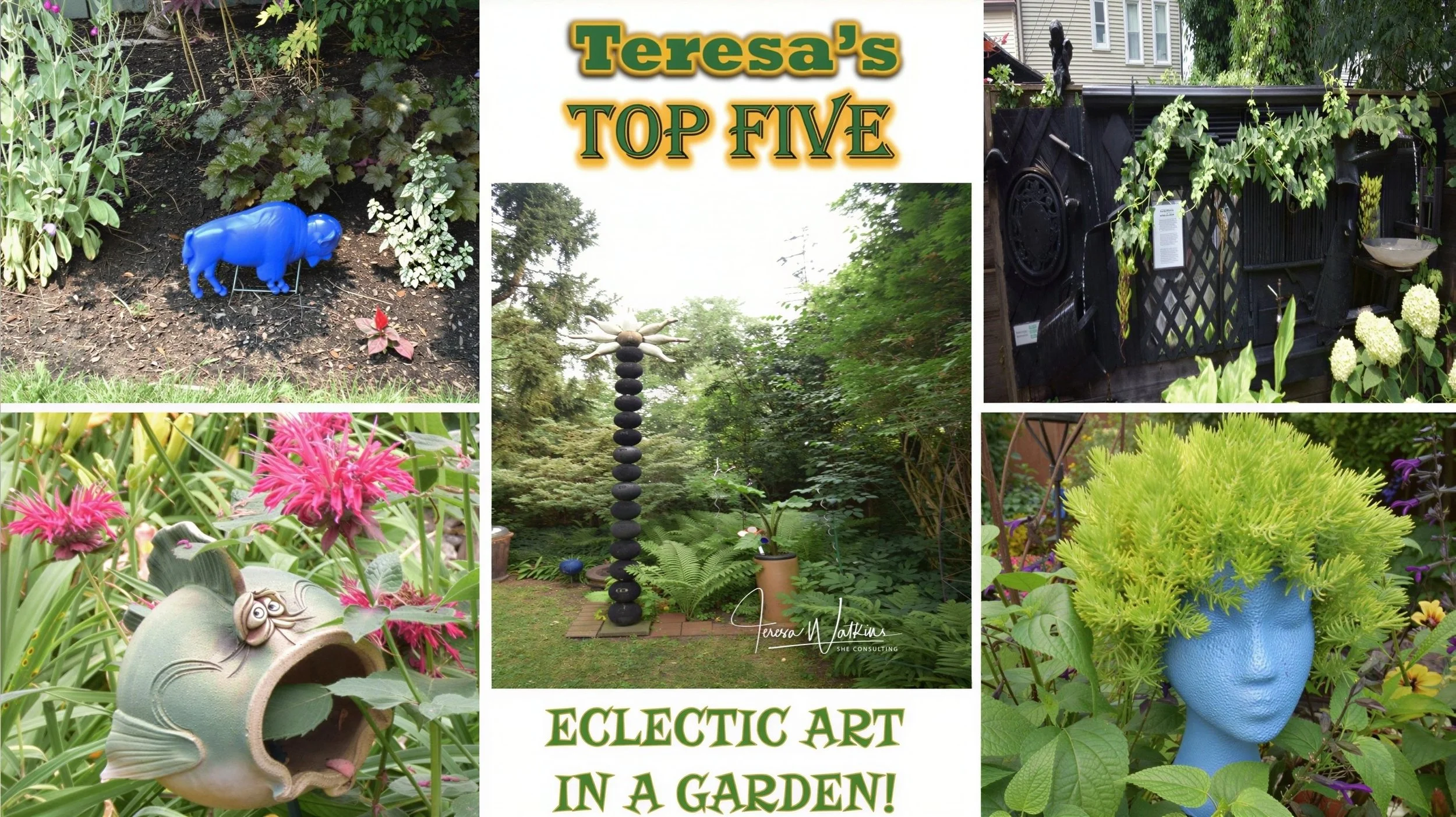
5.  A 12’ tall totem pole constructed with black bowling balls with a white pins at the top..

4. A work of art created out of garden tools that was all connected by a pipe structure into a water feature. This entire piece of art was painted monochromatic matte black in homage to the Russian immigrant artist, Louise Neveleson, whose work is in famous museums around the world.

3. Hair salon painted Styrofoam heads filled with sedums and succulents. The colors were brilliant blues, yellows, greens, oranges, some with sunglasses.

2. Eclectic artwork, made from ceramic, glass, metal, porcelain, and other very strange materials.

1, Statues of Buffalos made of every material, color, shape, and size imaginable, from 6” tall to real life size one-ton buffalos.

Teresa’s Top Five Zinnias To Beat The Heat

Zinnias were the first flowers I learned to draw—and they’re easy to love. In my view, they’re among the most enjoyable long-lasting annuals to grow. Whether you’re a child, a beginner gardener, Master Gardener, or a professional landscaper, zinnias provide vibrant color, summer-long blooms, few pest problems, and minimal maintenance. These are my five favorite zinnia varieties from Burpee seeds for a pollinator garden or meadow—plant a few now!

  1. Macarenia zinnias bring vivid spicy-orange color to the garden. Their 3" blooms last all summer, brightening beds, borders, containers, and cut-flower gardens, with colors that deepen as the flowers mature. Burpee 35 seeds, $8.95.

  2. Raspberry Lemonade zinnias’ bold 2–3" blooms bring a colorful display to borders and containers. The vibrant mix features coral, yellow, and starlight rose, offering easy-care, long-lasting summer color with strong disease and drought tolerance. Burpee 25 Seeds $6.95

  3. Giant flowered zinnias are dynamic! These sturdy, bushy flowers produce huge 5" double blooms that look like dahlias and add bold, vibrant color to the garden. Heat-loving and easy to grow, they keep flowering more as you cut them, making them a summer bouquet favorite. Burpee 150 seeds $5.45 and 375 seeds $7.95

  4. Tequila Lime zinnias are large, bright zinnias feature crisp, citrus-green blooms up to 3" wide. Their rounded flowers add a lively lime-colored pop to the garden and are ideal for cutting and arranging. Purchase Burpee 50 seeds $6.95

  5. Cactus Flowered Zinnias are an enduring Heirloom variety. Narrow, quilled petals give these heirloom zinnias distinctive flair. Introduced as Burpee’s “breakthrough” zinnia in the 1920s, this mix produces double and semi-double blooms up to 5" wide in scarlet, rose, orange, white, and yellow. Exceptional for cut flowers. Burpee 100 seeds $4.95

You can seeds in seed-starting trays and pots or directly into your garden. Seeds will germinate in 7 to 10 days. If needed, thin flowers out as they reach 1” to 2”, spacing them one half of the variety’s mature height. (See on seed packet) Keep consistently moist, watering if no rain 1x - 2x a week. But do not overwater. Container plants may need more watering oversight depending on pot material. To prevent fungal issues, water in early morning between 4am and 6am.

Photo credit: Burpee

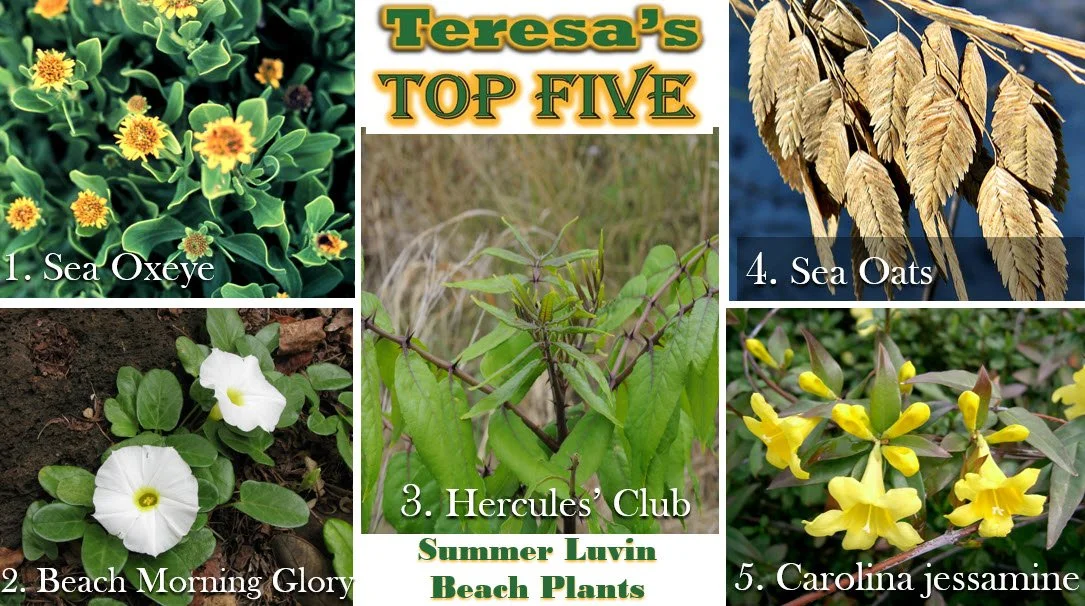
  1. Bushy seaside oxeye (Borrichia frutescens) is highly salt-tolerant, able to withstand short periods of drought and occasional saltwater inundation. Well suited to coastal restoration and landscaping, it works effectively as a border planting, in mixed wildflower gardens, and along retention pond edges. Spreading by rhizomes, it can form long-lasting colonies.

  2. Beach morning glory (Ipomoea imperati) is a trailing evergreen vine with showy white flowers that usually bloom in summer and fall, though flowering may occur year-round. Native to coastal dunes, it helps stabilize sand and tolerates drought, salt, and low-nutrient soils. Low-growing and non-climbing, it spreads quickly, making it best suited for coastal landscapes and dune restoration areas where it has room to sprawl. With regular maintenance, it can also be used as a groundcover in suitable conditions 

  3. Hercules’ club (Zanthoxylum clava-hercules) is an aromatic, heavily thorned tree with a rounded crown, spreading branches, yellow flowers, and fruit. It is used in landscaping, especially in natural areas and restoration projects, and serves as a host plant for giant swallowtail butterfly caterpillars. A member of the citrus family (Rutaceae), it is related to native citrus species such as wild lime. Also known as “toothache tree” or “tingle tongue,” its leaves, bark, and twigs can cause a tingling numbness in the mouth when chewed. Native Americans and early settlers used it medicinally to relieve toothaches.

  4. Sea oats (Uniola paniculata) are tall, spreading grasses that sway in coastal dunes and provide valuable habitat. Their flowers supply pollen for many insects, while their seeds feed beach mice, rabbits, and birds. In coastal landscapes, they serve as excellent foundation plants, tolerating hurricane-force winds and saltwater storm surge. Their deep, dense roots, which can reach 40 feet, anchor sand and help hold dune habitats together. Because of their important role in coastal protection, sea oats are protected under Florida law. Allow plenty of space, as they spread by rhizomes

  5. Carolina jessamine (Gelsemium sempervirens) provides welcome winter color and is among the first flowers to bloom in Florida, often appearing in early January. This easy-to-grow vine works well on fences and trellises, where its small leaves and twining stems create a light, airy look. It can also serve as a groundcover or climb trees, flowering in the canopy. Moderately fast-growing, it can be shaped or controlled with pruning, though it may sucker and spread beneath mulch. Note: toxic to children and pets

5. Chamomile – Traditionally used for digestion, anxiety, and sleep; now popular in teas and skincare.

4. Mint – Known for helping with nausea and stomach cramps, mint is still widely used in teas, balms, and cooking today.

3. Yarrow – When crushed, it can be applied to wounds to help decrease bleeding and swelling; it is also used to lower fever and improve circulation.

2. Comfrey – Used topically to support the healing process of bruises and fractures.

1. Sage – Traditionally employed for respiratory issues and overall wellness; it remains accessible in dried form and is included in herbal mixtures.

Source: Penn State Extension

Photo credit: www.Heirloomroses.com, Pinterest, www.floribundance.com, Teresa Watkins

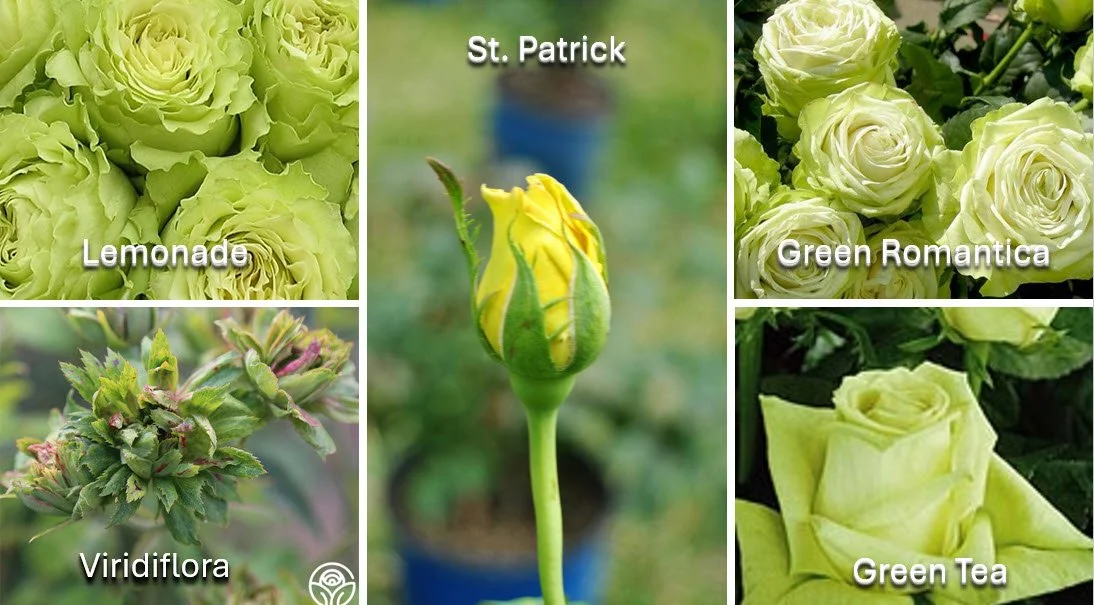
Rosa chinensis ‘Viridiflora’

A China rose with green sepals instead of petals. This rose attains a height of 3 to 5 feet and has a shrubby growth habit, making it suitable for border plantings or as an ornamental feature.  Zoned 5 through 10, as well as its tolerance of shade,

Green Tea: Pale Green Hybrid Tea

Hybrid tea rose grown in South America showcases a pale green, nearly white, double blossoms with a traditional rose form. Grows to a height of 3–4 feet.

Green Romantica®  

The Hybrid Tea variety, bred for its distinct green hues, is noted for its subtle fragrance and gentle green coloration. Available on Heirloom Roses dot com.

Lemonade: Chartreuse Cabbage Rose

This rose features large, chartreuse-green, ruffled blooms and sturdy heads, ideal for centerpieces. It grows 3–4 feet tall with a bushy form.

St. Patrick, Hybrid Tea Rose

I have grown this lovely yellow rose, indeed tinged with green, displays striking chartreuse buds and large 5-inch flowers with more than 35 petals. Its bushy form blooms continuously, and the grey-green leaves provide a perfect contrast to the blossoms.

www.heirloomroses.com and specialty growers.

5. Bleeding Hearts: Clerodendrum thomsoniae is a vine from the mint family (Lamiaceae), though some sources like the USDA Plants Database list it under Verbenaceae. It grows in Central or South Florida with full sun to partial shade, producing red, heart-shaped flowers throughout the year, especially in milder weather.

4. Witches Hair — Cuscuta, or dodder, is a genus of over 201 parasitic plants, usually yellow, orange, or red. Once classified in Cuscutaceae, it is now part of the morning glory family.

3. Black Bat Plant – Tacca chantrieri. – Species of flowering plant in the yam family – National Flower of Thailand. It smells like a rotting corpse, self-pollinating. It can be planted in full shade outside or can be an indoor plant.

2. Snapdragon Skulls – After blooming, snapdragon seeds resemble human skulls. Historically, these plants were believed to protect against deceit, curses, and witchcraft, and some myths claimed they could restore youth and beauty to women who consumed them.

1. Ghost PipesMonotropa uniflora Ghost plant or Death plant, Indianpipe is a spectral herbaceous perennial wildflower, Grows throughout Florida naturally in mixed temperate hardwood forests and scrub, particularly where the ground is covered in leaf litter and lichens. It typically blooms in November. Its whitish color is due to it being non-photosynthetic and does not contain chlorophyll.

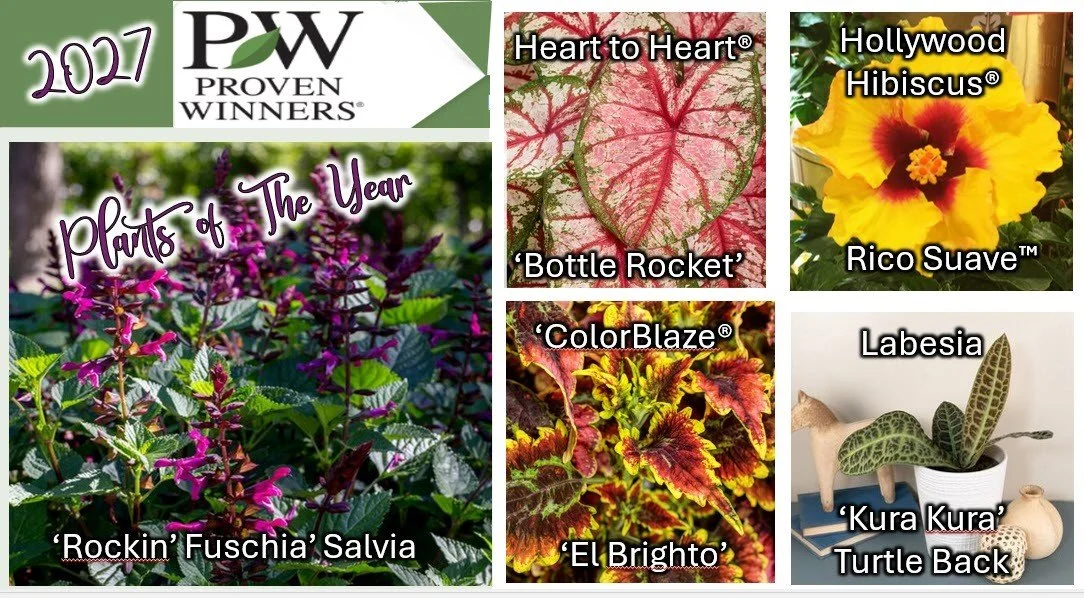
Hanging baskets are an effective way to enhance entryways, patios, arbors, or gazebos, adding both vivid color and vertical interest to outdoor spaces. Consider these new and attractive low-maintenance flowering options and more from Proven Winners for your landscape.

  1. Variegated Dogwood, Cornus alba ‘Variegata’ Zone 2 - 8

  2. Fatsia japonica ‘Spider’s Web’ Zone 7b - 10b

  3. Giant Double Begonia, Begonhia spp. Zone 9 - 10

  4. Variegated Liy of the Nile, Agapanthus praecox ssp orientalis 'Variegata Zone 7 - 10

  5. Ornamental Allium, Allium aflatunense, Zone 7 - 10

Flowers that are in bold can be planted in Florida. Alliums must be planted in the Fall.