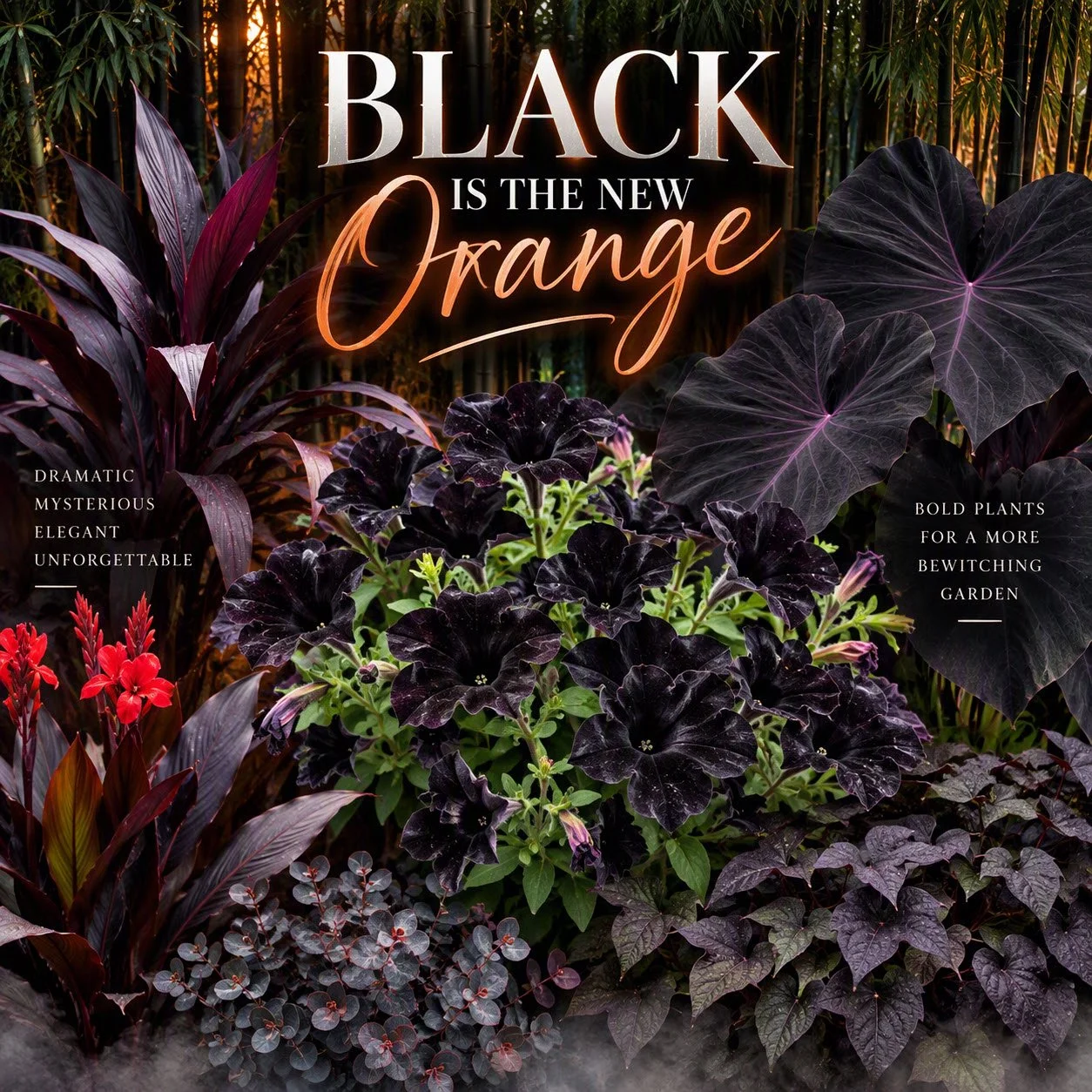
My garden tours last month infused a love of the color orange, and at just the right time of year: Fall, with all its pumpkins, persimmons, and Halloween charm. But while orange may be the season's star, black is the new orange in my landscape designs.
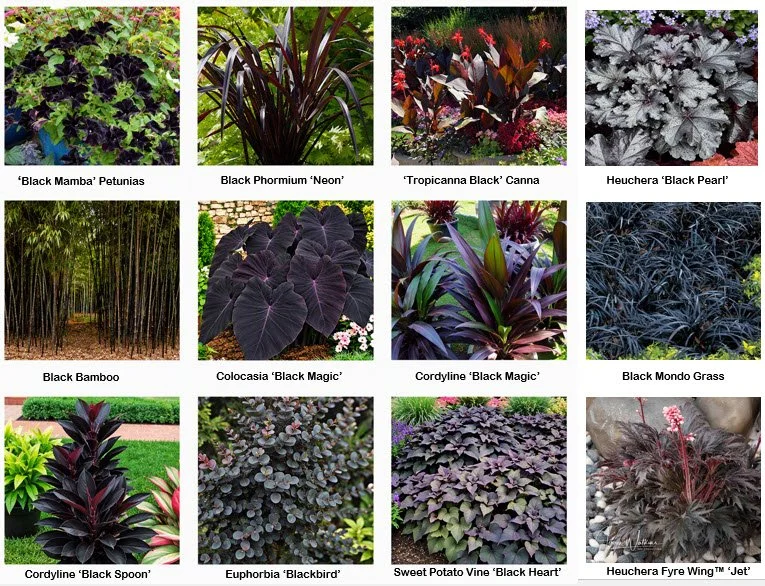
Or perhaps I should say "sorta black," because nature never quite gives us a true black plant. Those dramatic foliage plants and blooms we admire are actually deep shades of burgundy, maroon, purple, or chocolate brown that appear black, especially when the light hits them just right.
Unlike animals, plants don't produce melanin, the pigment responsible for true black coloration. Instead, their dark, mysterious appearance comes from high concentrations of anthocyanins, pigments that create rich red and purple hues. When layered with chlorophyll and influenced by factors such as cool temperatures, low light, or even a little environmental stress, these pigments absorb most visible light and reflect only the deepest reds and violets.
The result is one of nature's most enchanting illusions: foliage and flowers that look almost black. That's why I love incorporating these near-black beauties into garden designs. They provide striking contrast against silver foliage, make chartreuse leaves glow, and give bright flowers an extra pop. While true black may not exist in the plant kingdom, these dark gems prove that black is the new orange when it comes to adding drama, depth, and sophistication to the landscape.