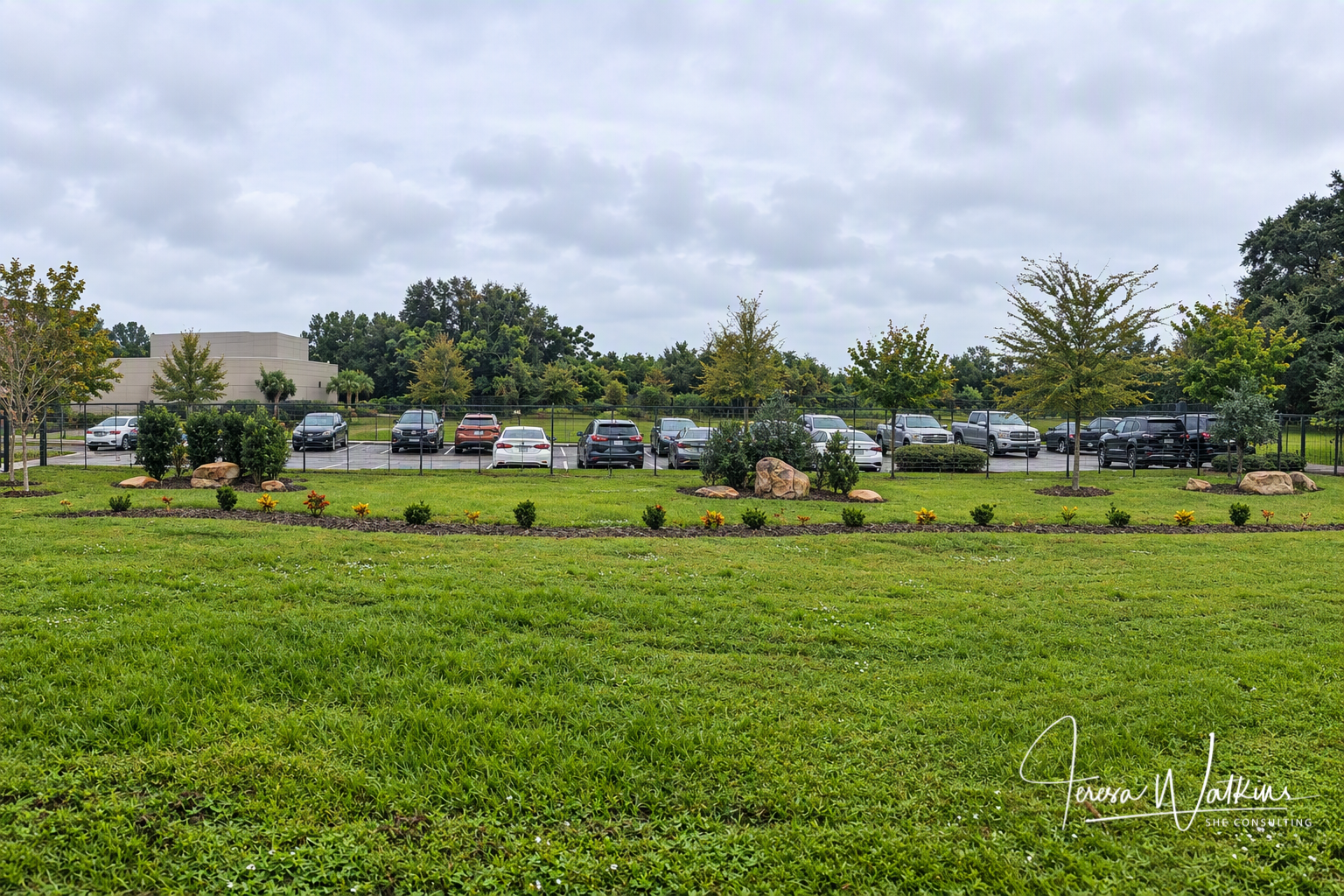
Some landscapes grab my attention because they're beautiful. Others catch my eye because they're a master class in what not to do. What caught my attention wasn't the well-designed landscape, the handsome boulders, or the thoughtful screening. This landscape made me step on my brakes for a reason... and unfortunately, it was all because of a skinny row of tropical shrubs demanding attention they hadn't earned.
The project started with several advantages. There was clearly a healthy budget, enough trees and shrubs to soften and visually screen the very long parking lot fence, and a collection of boulders appropriately sized for the scale of the landscape. Too often, designers scatter undersized rocks like decorative breadcrumbs and call it a day. These boulders actually belonged there.
So what did I notice while driving past at 45 miles per hour?
Not the attractive screening plants. Not the well-proportioned boulders. Not the thoughtful layout.
What caught my attention was the stark strip of evenly spaced 3-gallon tropical shrubs marching across the front of the bed like they had just arrived from the "Mobile Home Landscape Starter Kit."
It's a classic mistake. The larger landscape elements were doing the heavy lifting, but the thin row of undersized tropicals became the visual focal point because they created a hard, repetitive line that practically waved at passing motorists. Instead of enhancing the planting design, they distracted from it.
Good landscape design should draw your eye toward the strongest features. Unfortunately, those little shrubs have the attention-seeking persistence of a lost kitten, but unfortunately not the charm that usually comes with kittens. If the landscaper wanted to have a separate strip to mow around, then this landscape bed needs more plants, more boulders, (shorter but wider), and some ornamental grasses to soften the strip edges.
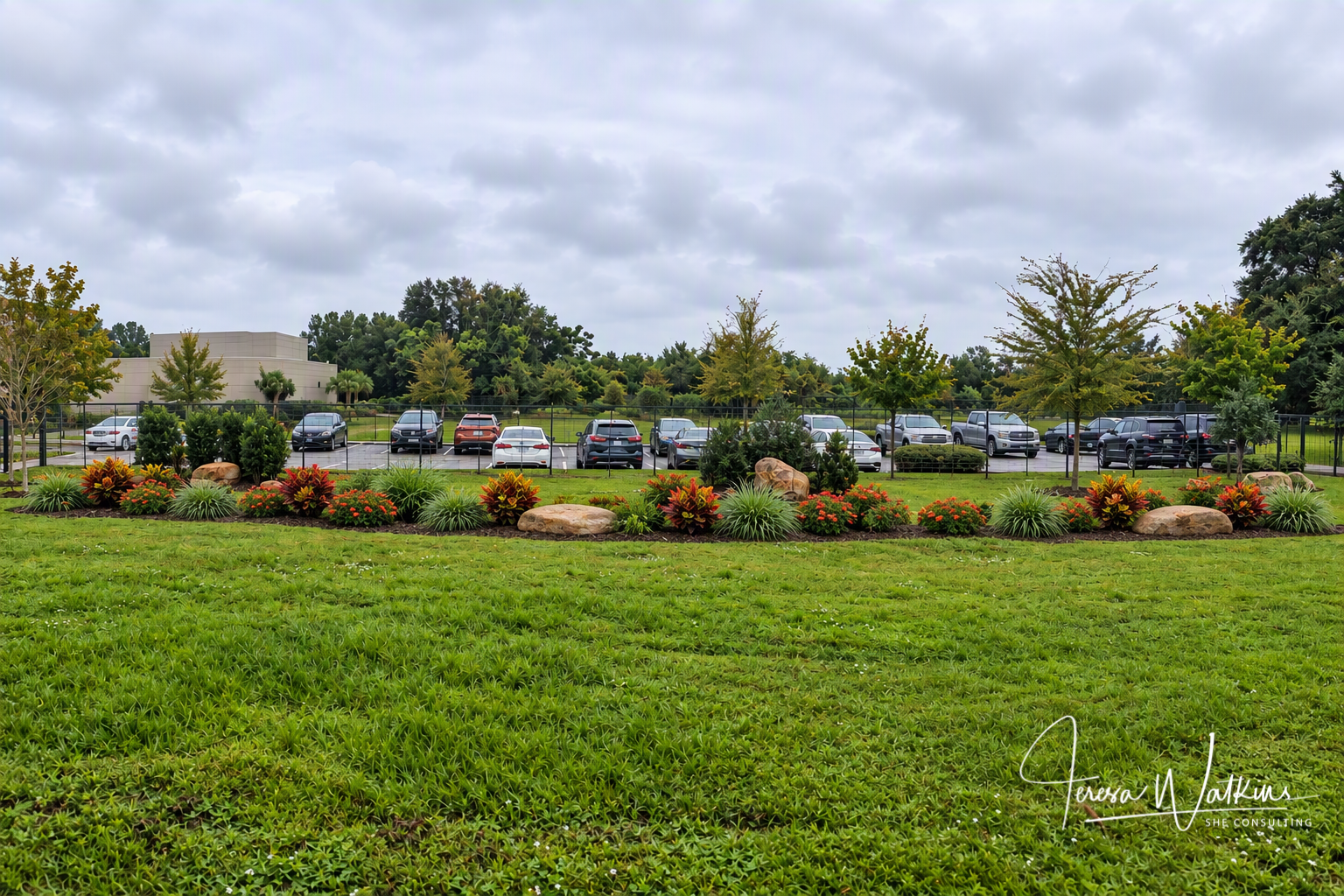
Here's my idea of a design fix that would visually anchor the landscape and better connect the fence plantings to the foreground. Adding more plants, ornamental grasses, and a few short, wide boulders would create the scale and rhythm this space is missing.
But honestly, I still wouldn't have chosen these particular plants.
Why? Because crotons and ixoras are practically on Florida's annual freeze-replacement program. Every winter, we know what's coming. Temperatures dip, leaves burn, branches die back, and commercial properties are left wondering why they have to replace their landscape each year.
That's not good landscape design. That's job security for the landscape company.
A landscape of this size deserves plants that provide year-round structure and beauty, not plants that spend part of every winter trying to recover from the last cold snap. With so many Florida-friendly shrubs and ornamental grasses available, there are better choices that would deliver color, texture, and reliability without turning seasonal damage into an expected maintenance expense.
It's a shame, because the bones of this landscape are excellent. The budget was there. The boulders are appropriately scaled. The screening is effective. Yet the plant palette feels like the weakest link in an otherwise well-executed design. A great landscape should mature and improve with time, not require an annual shopping trip to replace freeze-damaged plants.