What to do in your Backyard in April

April Calendar 2026

Average temperature: High 83 Low 60

Rainfall average: 2.42 inches

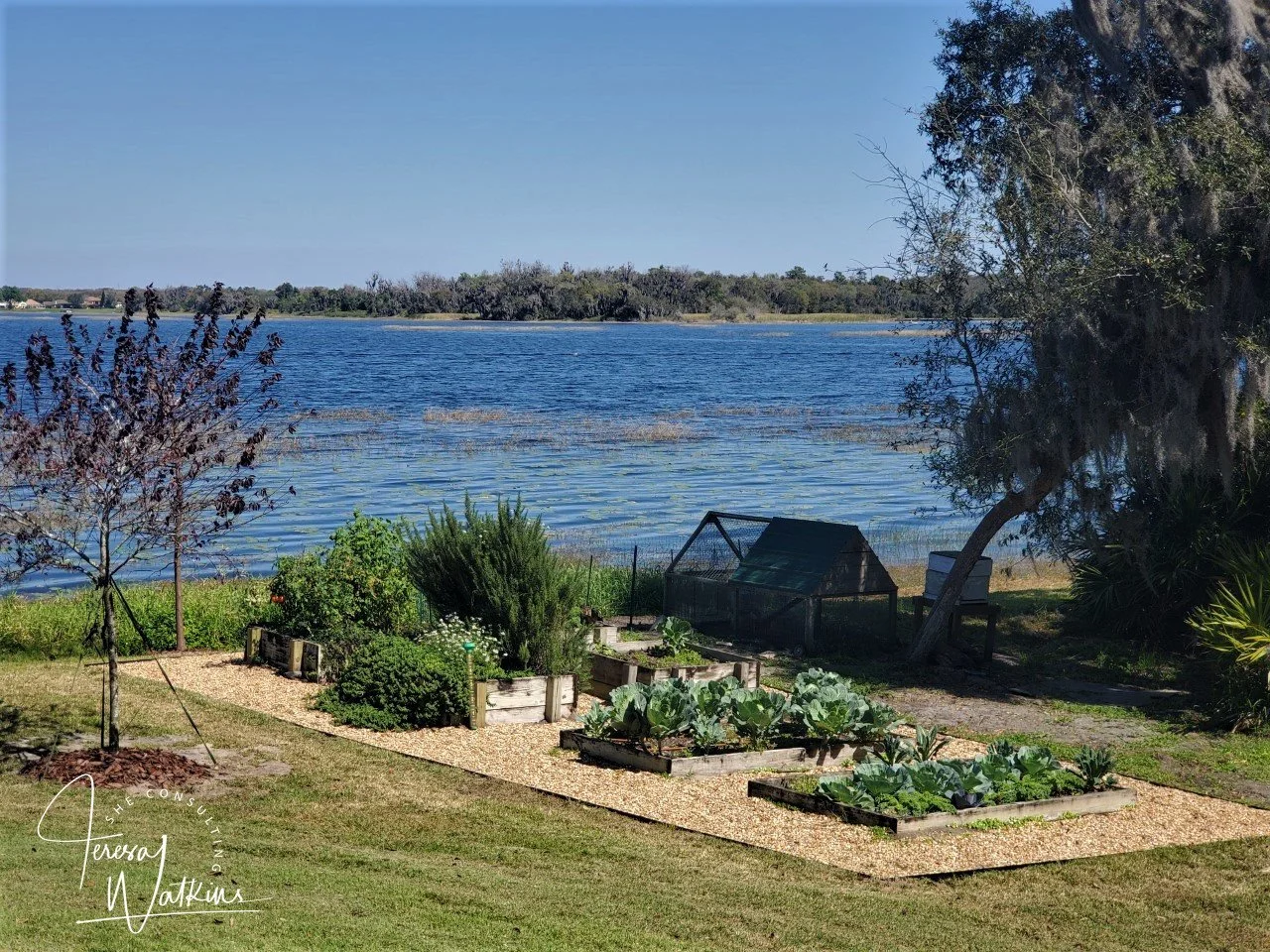
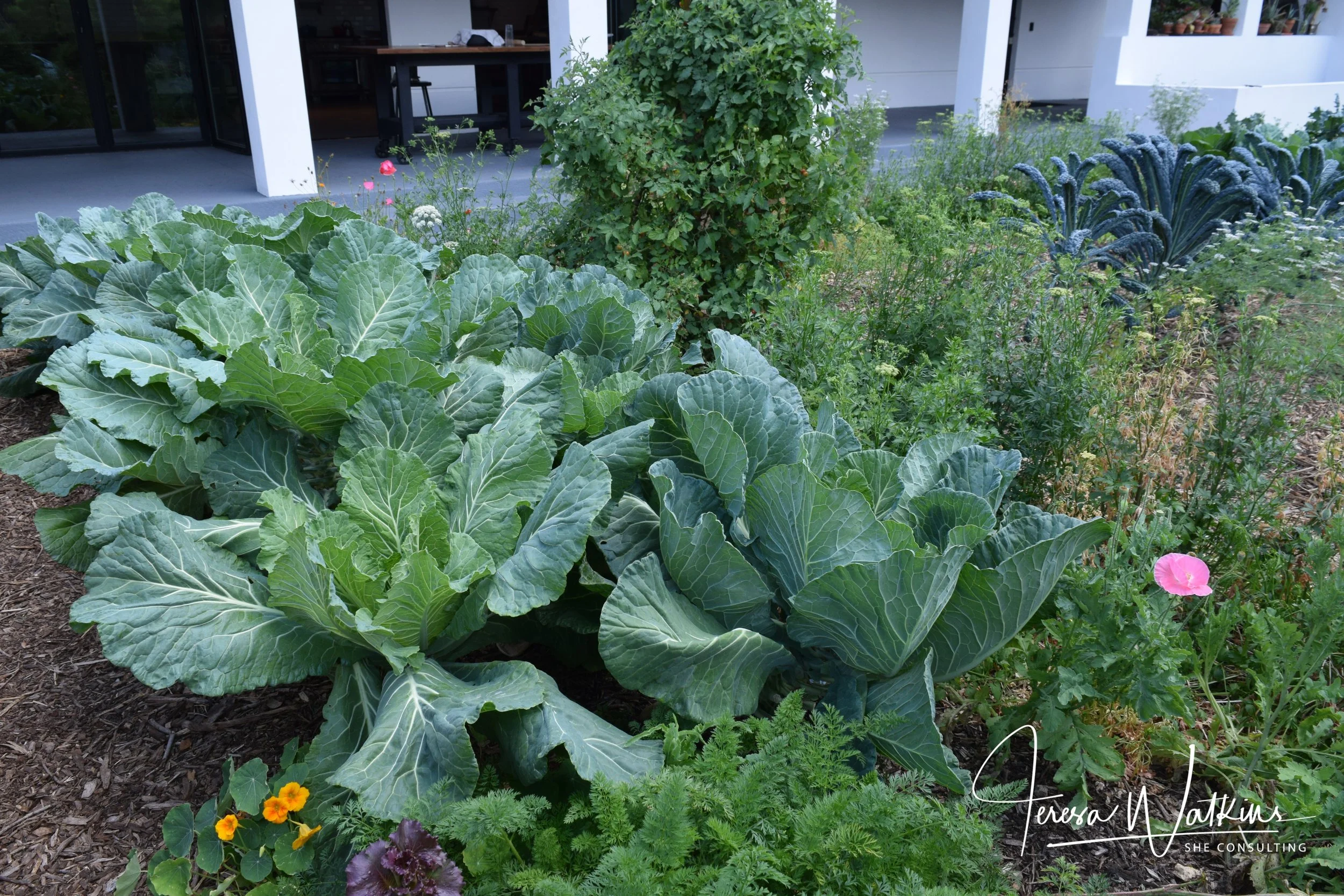
 April is the month to celebrate National Gardening Month! Gardening is a wonderful way to exercise, breathe in fresh air, and get some sun. Celebrate your landscape, garden, or raised bed by trying a new plant, adding flowers, or a memento or a piece of art.

 What can you plant?

 Vegetables: Calabaza, cantaloupe, cassava, chayote, cherry and Everglades tomato, cucumber, dasheen, eggplant, Jerusalem artichoke, jicama, Korean spinach, lima bean, Malabar spinach, malanga, New Zealand spinach, okra, pepper, roselle, Seminole pumpkin, snap beans, squash, Southern pea, sweet potato, tamarillo, yam and yard-long bean.

 Flowers: African daisy, ageratum, aster, bacopa, balsam, begonia, black-eyed Susan, blue daze, browallia, bush daisy, cat's whiskers, celosia, cleome, coleus, coreopsis, cosmos, crossandra, Dahlberg daisy, diascia, gazania, gaillardia, gerbera, goldenrod, impatiens, Joseph's coat, lantana, licorice plant, lisianthus,  marigold, melampodium, Mexican sunflower, million bells, moon flower, nicotiana, nierembergia, pentas, periwinkle, porterweed, portulaca, purslane, salvia, sunflower, torenia and zinnia.

Bulbs: Asiatic lilies, achimenes, African iris, agapanthus, amaryllis, Amazon lily, blackberry lily, blood lily, bulbine, caladium, canna, crinum, dahlia, eucharis lily, gingers, gladioli, gloriosa lily, society garlic, tuberous begonias, and rain lily.

 Herbs: Anise, basil, bay laurel, borage, cardamom, chives, coriander, dill, borage, edible ginger, lemon balm, oregano, Mexican tarragon, mint, oregano, rosemary, sage, savory, sweet marjoram and thyme.

Lawn care

  • Although lawns experienced stress due to the extreme cold winter temperatures, most should be undergoing recovery.

  • Remove dead grass to reduce thatch accumulation.

  • Patches of dead or recovering weeds are easily found and should be replaced with sod or plugs of grass.

  • Complete feeding of Bahia, Bermuda and St. Augustine lawns to encourage spring growth. Never apply fertilizer before a rain event.

  • Delay feeding centipede and zoysia lawns until they begin new growth.

  • Apply weed killer separately from fertilizer applications.

  • Weed killers should only be applied in temperatures lower than 85⁰.

  • Get a soil test before applying fertilizer to know what nutrients are needed.

  • Yellowing lawns can often be regreened with an iron-only application.

  • Check the soil acidity of all home lawns; adjust the pH if needed.

  • Mow zoysia lawns to the desired 2- to 3-inch height.

  • Starter fertilizers can be used with new lawns to supply phosphorus for root growth.

  • Chinch bug controls are often needed in the Spring for St. Augustine lawns.

  • To test for chinch bugs, use a hand vacuum to the outside of a dead area to check for insects. Count the chinch bugs, if less than 10 bugs, keep eye on area. If more than 10, apply pesticide to the green portions of lawn.

  • Mole crickets are back in Bahia, Bermuda and zoysia lawns; control as needed. 

  • Spring is our normal dry season; water when lawns begin to show moisture stress as permitted. Never irrigate more than 2x a week.

  • Adjust sprinklers to avoid sidewalks and roadways and water only the turf.

  • Apply up to three-quarters of an inch of water at each irrigation.

  • Change the oil and service air filters of gas-powered equipment.

  • Sharpen mower blades when the cutting edges begin to dull.

  • Edge lawns growing along sidewalks.

  • Aerate older lawns and remove thatch if needed. Lawns less than 2 years old rarely need dethatching.

    “Remember thatch is caused by overwatering and overfertilizing.”

  • Don’t fight the shade; consider another ground cover for these problem spots.


Landscape chores

  • Walk yards on a weekly basis to inspect shrubs and trees to catch problems early.

  • Prune shrubs this month before new shoots form.

  • Many plants that suffered damage in winter should be showing new growth by now. 

  • Prune the dead from declining plants several inches above a node into healthy wood.

  • Remove branches that cross other limbs or are growing too close.

  • Prune spring flowering trees and shrubs after the blossoms fade.

  • Keep palms healthy; only remove the brown fronds plus fruiting stems as needed.

  • Rake and use leaves as mulch or compost them for later use in gardens.

  • Keep weeds under control by removing them weekly.

  • Plant a tree on National Arbor Day April 24th.

  • Remove declining cool season annuals and add spring warm weather selections.

  • Make sure the root balls of all plant are moist at planting time.

  • Create tree rings with berms at the edge of root balls of new trees and shrubs to direct water to the roots.

  • To encourage growth, give poinsettias a spring trimming; repot new ones or add them to the landscape.

  • Maintain 2- to 3-inch mulch layers with trees and shrubs.

  • Water annuals and perennials when the soil begins to dry or they show signs of wilting.

  • Use slow-release fertilizers that will feed landscape plants for months.

  • Palms need specific nutrients; use 8-2-12-4Mg (UF/IFAS) fertilizers made for palms every 3 to 4 months.

  • Inspect older trees and trim as needed before the hurricane season begins.

  • Be safe; have arborist do the pruning of larger and older trees.

  • Trim old flower stalks from amaryllis, amazon lilies and other spring flowering plants.

  • Water new plantings as needed to keep the soil moist.

  • Divide your perennials this month, ideally before the hottest weather sets in.

  • Train vines to a trellis or arbor.

  • Create a resource for wildlife and pollinators, add a water feature to the landscape, clean established ones.

  • Transplant and feed water lilies and bog plants.


Fruit & vegetable plantings

  • Hurry to plant tomatoes, peppers and eggplants transplants (not seeds) in the garden.

  • Select larger transplants for this time of the year.

  • Remove cool season crops completing their harvests and add the seeded crops.

  • Cut back tropical fruit trees damaged by winter freeze but still alive.

  • Many bananas were damaged by the cooler weather; remove declining portions.

  • Tropicals should be coming back from winter freezes, if not, throw away.

  • Citrus greening has become a devastating problem; remove severely affected trees.

  • Control citrus psyllids by spraying Neem85 at each flush of growth; use sprays or soil treatments according to label.

  • Apply Southern Ag minor nutrient spray to citrus trees at each flush of growth.

  • Finish granular spring feedings of all fruit trees.

  • Start sweet potatoes to have transplants for May.

  • Plant tropical vegetables that won’t mind the summer heat and humidity.

  • Complete herb plantings before hot weather arrives; many will grow easily in bright shade in summer.

  • Feed vegetable plantings lightly every 3 to 4 weeks or use a slow-release fertilizer as labeled.

  • Help maintain a moist soil with a 2- to 3-inch mulch layer with all but citrus.

  • Add edible fruit bearing trees, shrubs and vines to the landscape.

  • Blueberries need very acidic soil with 4.5 to 5.5 pH; check soil pH before planting.

  • Grow blueberries in pine bark fines in planting holes or in containers.

  • Transplant papaya seedlings to the landscape, keep moist and feed monthly.


Foliage & Indoor plants

  • Provide indoor foliage plants with a filtered sun location outdoors to encourage new growth.   

  • Groom to reshape and remove declining portions.

  • Trim overgrown stems of foliage plants to make cuttings.

  • Rootbound foliage plants that have been in their containers for years will benefit from taking them out of their pots, cutting a third of the roots off, add new soil and replant in same container.

  • Trim Christmas and holiday cactus if needed to keep compact; root the cuttings.

  • Give foliage plants a spring feeding with a slow-release fertilizer.

  • Add a saucer to plants on patios to capture and conserve water for use.

  • Transplant amaryllis that flowered during the winter to the garden or grow in containers.

  • Wash away dust and insects from leaves and stems.

  • Insects like scale, mealy bugs & thrips may need an insecticidal soap or oil spray for control.

  • Your orchid blooms can easily be propagated after blooming to produce new plants. Fabulous Instagram video show how easily it can be done.

  • Move orchids & bromeliads outdoors to a shady location.

  • Repot orchids & bromeliads when they begin spring growth as needed and begin feedings.

  • Visit independent garden centers to see Spring 2026 new varieties to purchase.

  • Most forced bulbs cannot be regrown in Florida; toss the plants and keep the containers.

  • Consider using foliage plants for shady landscape sites instead of turf.

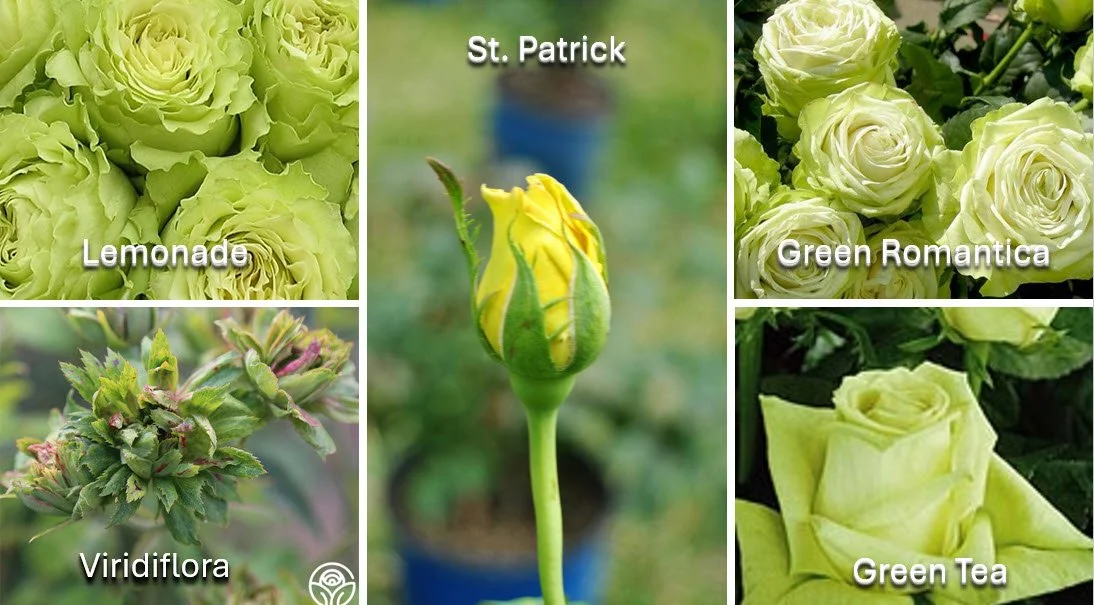
Photo credit: www.Heirloomroses.com, Pinterest, www.floribundance.com, Teresa Watkins

Rosa chinensis ‘Viridiflora’

A China rose with green sepals instead of petals. This rose attains a height of 3 to 5 feet and has a shrubby growth habit, making it suitable for border plantings or as an ornamental feature.  Zoned 5 through 10, as well as its tolerance of shade,

Green Tea: Pale Green Hybrid Tea

Hybrid tea rose grown in South America showcases a pale green, nearly white, double blossoms with a traditional rose form. Grows to a height of 3–4 feet.

Green Romantica®  

The Hybrid Tea variety, bred for its distinct green hues, is noted for its subtle fragrance and gentle green coloration. Available on Heirloom Roses dot com.

Lemonade: Chartreuse Cabbage Rose

This rose features large, chartreuse-green, ruffled blooms and sturdy heads, ideal for centerpieces. It grows 3–4 feet tall with a bushy form.

St. Patrick, Hybrid Tea Rose

I have grown this lovely yellow rose, indeed tinged with green, displays striking chartreuse buds and large 5-inch flowers with more than 35 petals. Its bushy form blooms continuously, and the grey-green leaves provide a perfect contrast to the blossoms.

www.heirloomroses.com and specialty growers.

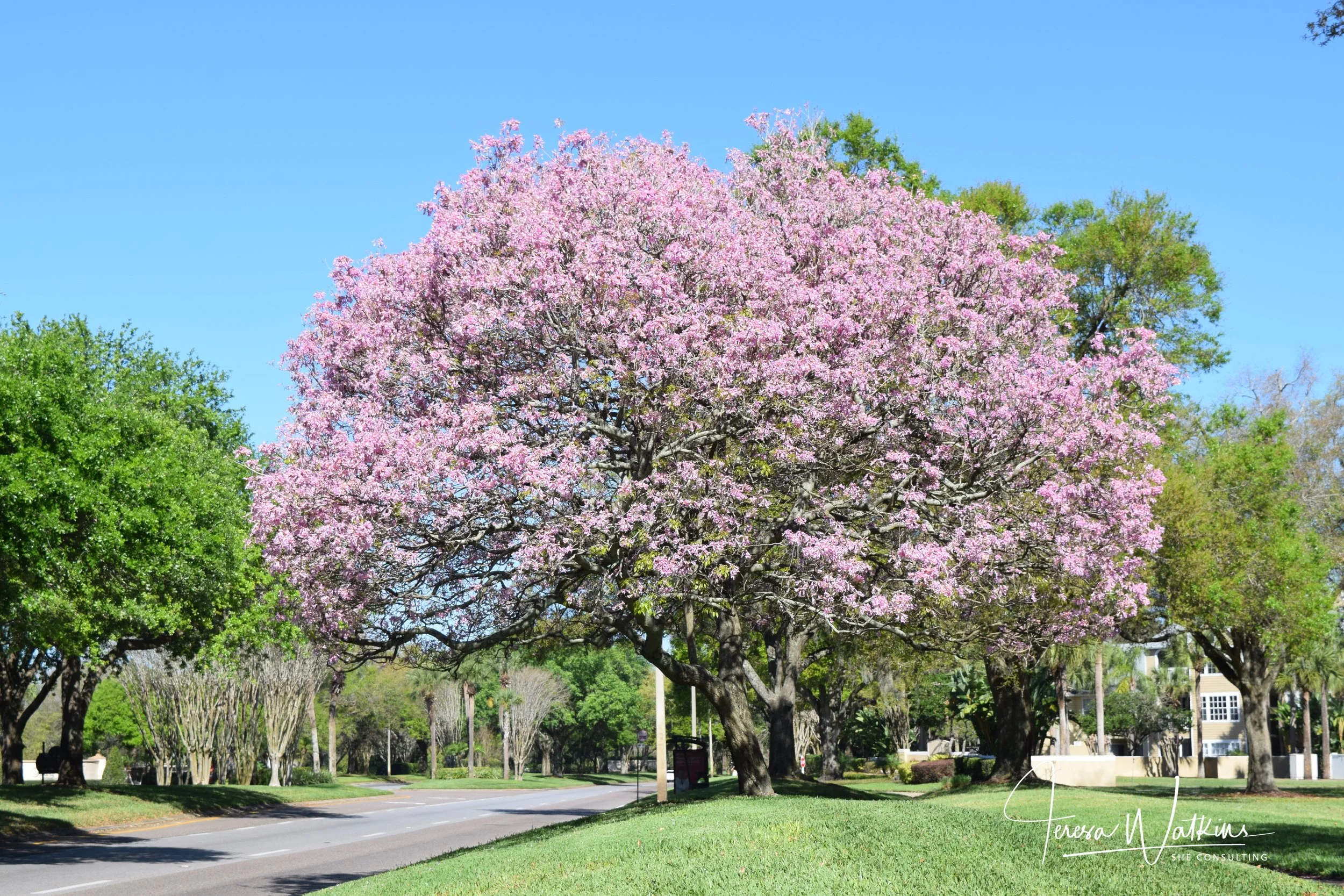
Pink Tabebuia heterophylla in Winter Park.

Welcome to In Your Backyard! Traditionally, March comes in like a lion but this year, it came in like a lamb and before we know it, it will start to roar! The winter freeze was very traumatic to Floridians, especially new residents who have never experienced winter in Florida. Yes, Virginia, Florida does have a winter season. And it doesn’t last long – three to four days – and then the warm sunshine returns with 80-degree temperatures. The benefits of living in Florida is that we do have flowers blooming all year long and seasonal color, including Autumn.  Record-setting heat this month is expected across the country, with Florida experiencing warmer-than-usual temperatures in the 70s and 80s this month—something typically not seen until April.  Even after a once in a century winter freezes, Florida’s Tabebuia trees do not let us down. Gorgeous pink and yellow flowering trees can be seen all over Central and South Florida in March.

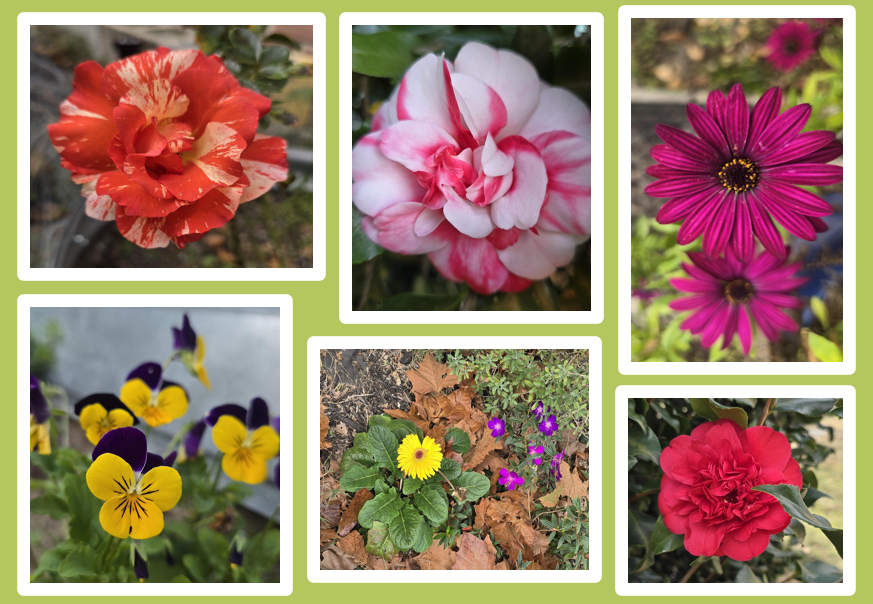
I love seeing the explosion of color in March in our landscapes from flowers like amaryllis and orchids to camellias and gardenias. Do you have color in your yard year-round? I love seeing the explosion of color in March in our landscapes from flowers like amaryllis and orchids to camellias and gardenias. Do you have color in your yard year-round? Maybe this year while you are replacing all the plants in the yard that succumbed to the freeze, try adding Zone 8 - 10 evergreen plants that will not get winter-shock and will flower most of the year.

Check out what to do in your landscape to help spur recovery with “What to Do In Your Landscape in March” post. I provide bulbs, edibles, and perennials to add to your yard right now plus everything to ensure your turf has a good start in Spring.  Better Lawns and Gardens producer Lizzie Steele enjoys her landscape’s beauty and shares photos of her flowers. Check out Lizzie’s Garden Adventures!  Lizzie and I would love to know what’s blooming in your yard.

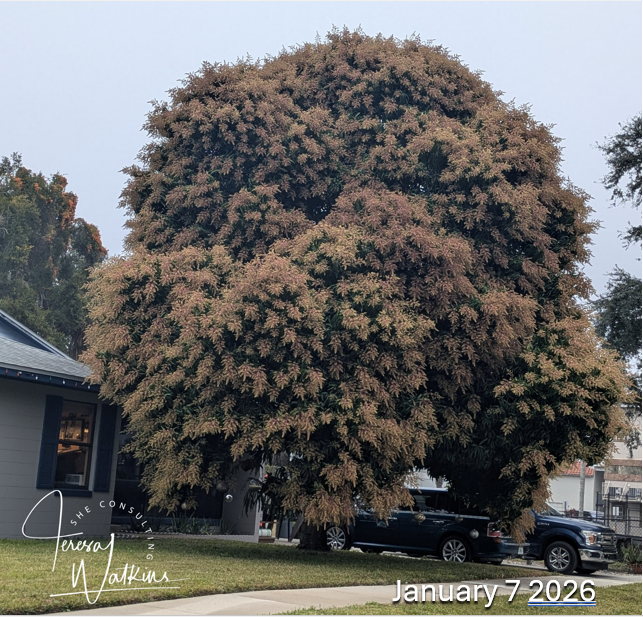
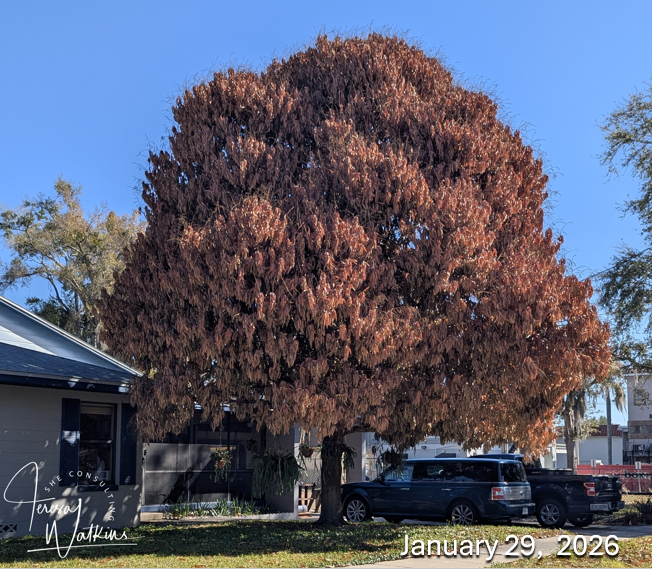
Mangos are a tasty and widely enjoyed tropical fruit that thrive in Central and South Florida. There's a large, beautifully shaped mango tree on my street, that on January 7th had literally thousands of blooms on it. On January 29th, I felt relieved it still looked healthy two days after the freeze. Unfortunately, my relief was short-lived—the tree is now in poor condition and won't bear fruit this year, but I'm hoping it will still pull through to keep its lovely structure. I will update you with a photo of the tree in June. Stay tuned!

Literally thousands of mango blossoms.

All burnt from the freeze and will drop all it’s leaves and flowers. Sad.

Is your lawn still brown? Have you wondered if your lawn is going to recover? I had Mark Kann, President of the Florida Turfgrass Association to get his insight as to determining if your lawn is dead or just dormant. You can hear Mark’s interview with his tips on fertilizing your turf this Spring here on Better Lawns and Gardens’ podcast.

One ofThe Villages Golf course in dormancy after the freeze. The hole was painted green.

Have you been to the Florida Wildflower Festival in Deland? It’s a wonderful opportunity to learn about wildflowers, buy native flowers, wildflowers, garden art, and Florida-friendly plants.  The free festival will be held this year on March 28th, with lots of plany vendors, speakers, and a chance to experience the quaint town of Deland.  I will be teaching a class on Florida’s wild pollinators; some you may not know about!  It’s always a beautiful day and a fun city to experience. The garden art and crafts are beautiful and the plants, some hard-to-find, are reasonably priced. And it’s FREE to attend! Don’t miss it.

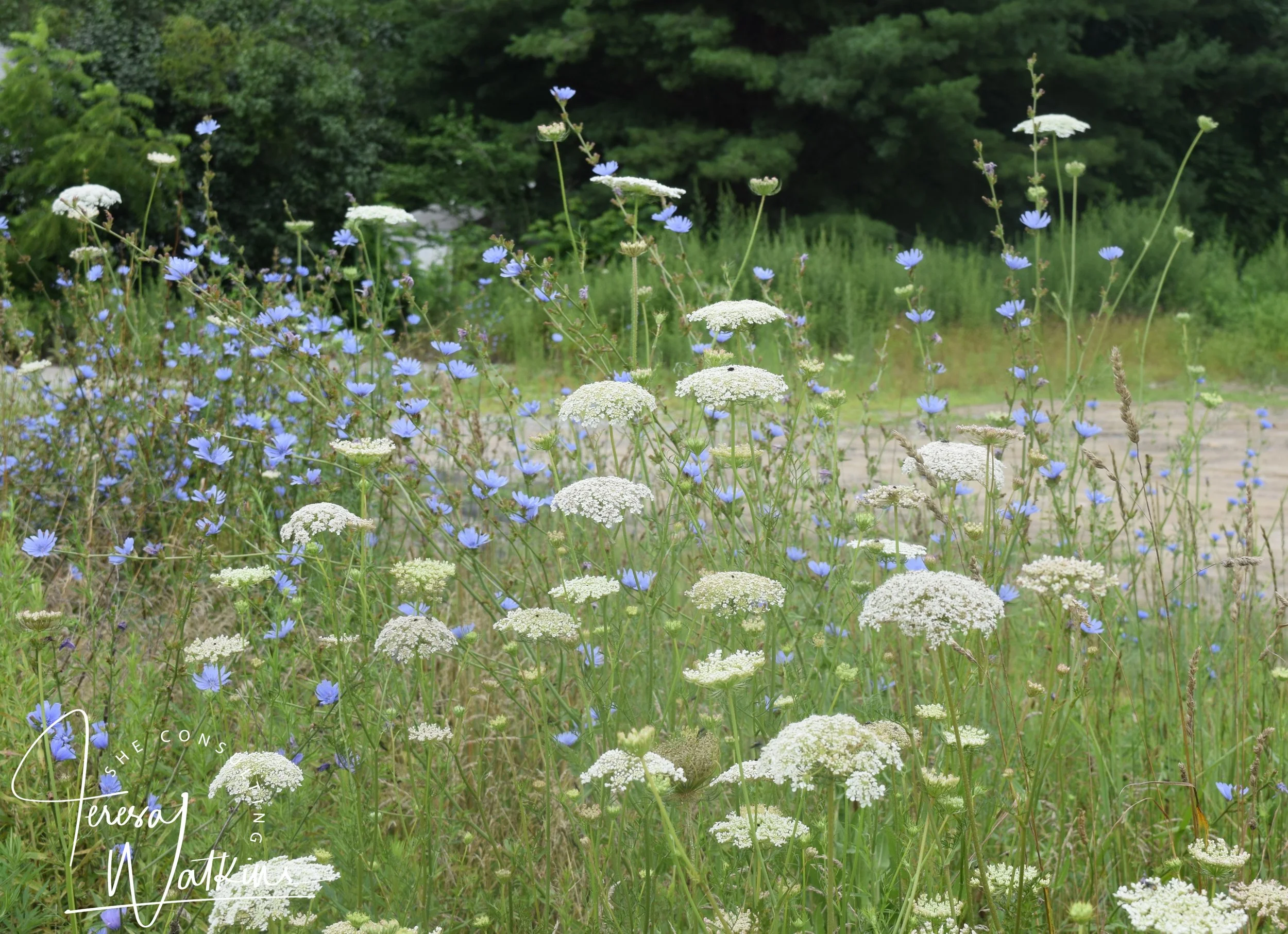
Wildflower, Queen Anne’s Lace, Daucus carota.

Update on our exciting Art in Bloom Garden Tours: The Revolutionary Garden Tour in April and The Best of English Gardens and the Chelsea Flower Show is sold out!  Our tours still have availability for a few more on our Newport Flower Show and Martha’s Vineyard in June (Great time to go on a garden adventure!), my favorite Garden Walk Buffalo and Niagara Falls, Canada tour, the Artiste Gardens of France in August, the Grand Gardens of Brandywine in September (great time to visit these palatial gardens), and the fun Ethereal Gardens of New Orleans in October. Check them all out at www.artinbloomgardentours.com

People often ask me if I can recommend a landscaping company. I am always pleased to share Otis Outdoors of Central Florida. For over eight years, owner Mickey Howell and his team have been responsible for installing my client’s landscapes. They are dedicated professionals who not only assist with installation but also offer monthly maintenance services for your landscape. If you need something done in your landscape, give Mickey a call.

Check out more of my landscape ideas with  Teresa’s Design Tips, my Plant of the Month, and the popular Landscape Malpractice – or How to Know When To Fire Your Landscape Tip #44.

Please share my newsletter with friends and family. Follow me on Facebook and Instagram. I would love to connect with you.

No need to be befuddled. There is lots to do in the garden and landscapes this month, but the weather will be beautiful and it looks like we will have some rain.  Enjoy the early Spring!

I am truly impressed by the resilience of the flowers, which have maintained their beauty despite experiencing unusually cold temperatures. Considering the occurrence of freezes—albeit infrequent in the state of Florida—it is remarkable that such growth and aesthetic appeal continue to thrive.

Updates through “Lizzie Said What” socials. Remember, life can be a joyful journey. Enjoying all moments is up to YOU!

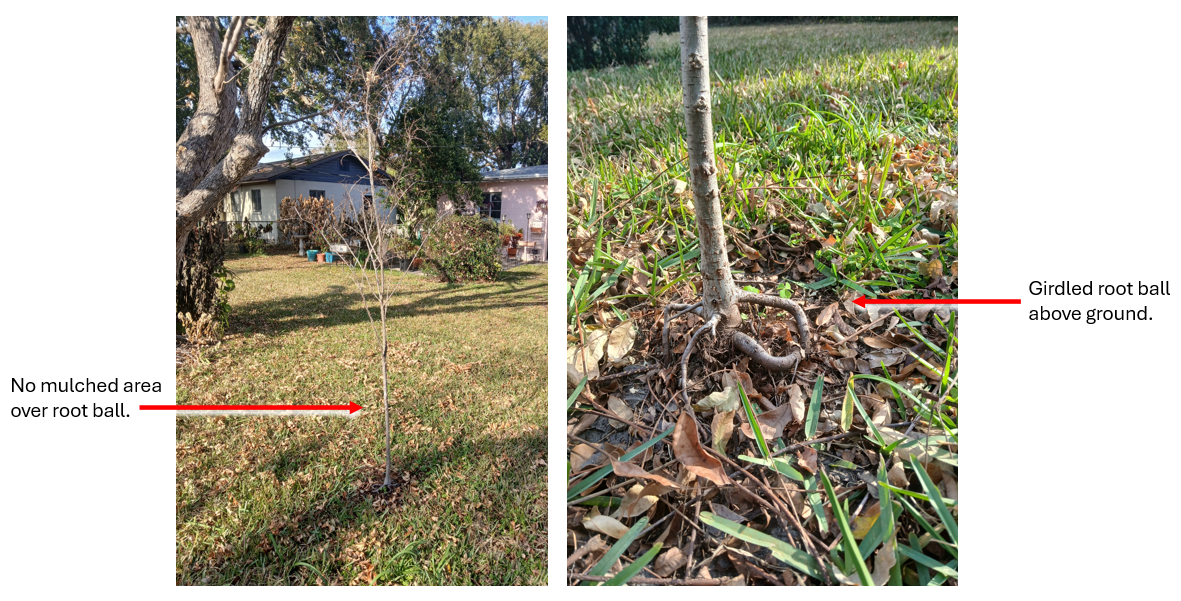
A listener from Better Lawns and Gardens wrote in about a year-old tree that hasn't grown and appears unhealthy. While planting a tree might seem as simple as digging a hole, proper planting involves more steps to ensure healthy growth for years to come.  

You’ll notice that this winged elm tree is quite slender, and its roots appear to be girdling. Fortunately, the homeowner reached out just in time! Let's ensure this native Florida tree is planted properly.

First, it needs to have a mulched area around the base. The grass is competing with the elm tree's roots for water and nutrients.  So, mulching around the tree will be the last step.  First, dig the tree up and look at the root ball. If you do not see any new roots, wash all the dirt away and gently open up the root system and untangle, if it needs it. It does appear that this tree’s above ground roots are girdling. Washing the roots won't hurt when it's this young but again be gentle. If roots have grown together or too entangled, select a few roots that can be cut diagonally that will allow  you to spread the roots freely.

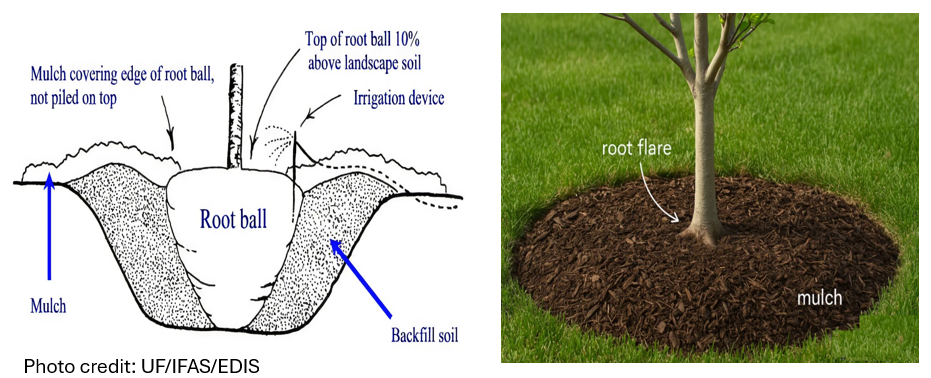
Place the tree in a hole that is twice as wide as its root ball and ensure it sits about two inches above ground level. The base flare of the tree should remain visible above the soil by approximately two inches. Cover the roots with soil, keeping the flare exposed. (See graphic). Fill the hole with soil and water deeply, eliminating any air pockets.

Next, form a six-foot circle around the tree and apply three inches of organic mulch, taking care not to cover the root flare. Add slow-release fertilizer on top of the root ball (not inside the hole). Provide 1 to 3 inches of water each week through hand watering until the rainy season begins. New trees require consistent watering for at least three to five years, or longer during droughts. Fruit trees generally need more frequent watering.

Thank you to S. for the use of their photos.

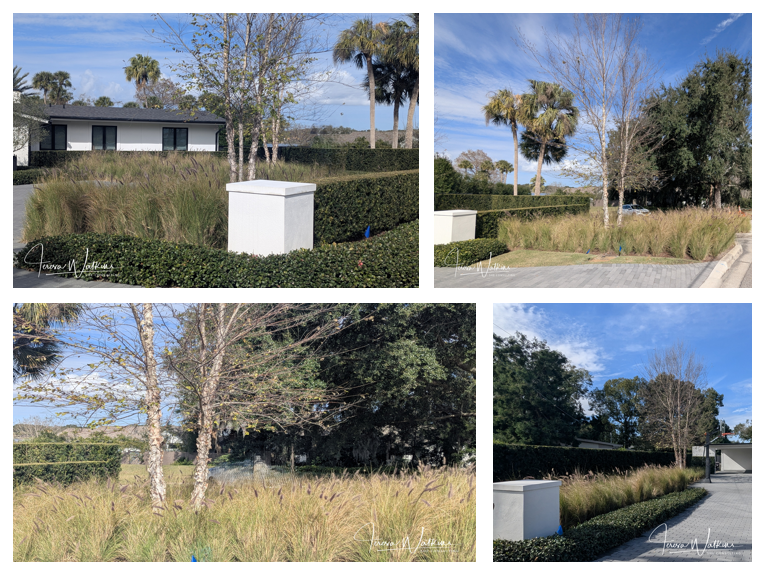
Flowering ornamental grass, Pennisetum spp.

Ornamental grasses can add beauty to a landscape, but if not carefully designed, they might appear messy. These grasses offer several benefits: they work well in mass plantings, on slopes, provide seasonal color, and attract wildlife by offering resources. However, ornamental grasses spread by seed and often rely on fire for maintenance in the wild. In residential settings, when cut back to six inches, they can look unappealing for three to four months. Ornamental grasses should be trimmed during winter. With thoughtful design, though, they can be an ideal choice for a low-maintenance and attractive landscape.

While visiting a client, I passed this Mid-century modern home and couldn't resist stopping to admire the elegant landscape. It's a wonderful demonstration of how ornamental grasses can be used effectively. Encircling a native River Birch, these grasses stood out—swaying gracefully with the wind and displaying vibrant autumn hues.

So, how did the homeowner accomplish such a beautiful landscape using ornamental grass?

  • Right plant, right place. They selected a Fountain grass, Pennisetum spp. that needed full sun and mesic soils.

  • The grasses were spaced close appropriately, 3 to 6 feet on center, depending on mature size.

  • They installed the proper amount for mass plantings. The total amount of plants was between 50 and 75+ three-gallon plants.

  • The homeowner does not overwater. Grasses like moisture if they have soils with good drainage. Water 1x to 2x a week is all that’s necessary.

  • Mulching the landscape bed will only be needed once or twice until the grasses are established.

The landscape enhances the home by providing natural beauty throughout the year, supporting environmental sustainability, and supplying resources for local birds.

My favorite ornamental grasses to use in my landscape designs are Miscanthus ‘Adagio’, several varieties of Lomandra longifolia, ‘Everillo’ Japanese sedge (Carex oshimensis ‘Everillo’), Fountain grasses, (Pennisetum spp.), ‘Purple Majesty’ ornamental millet (Pennisetum glaucum ‘Purple Majesty’) as an annual grass, and the blue-green Juncus inflexus 'Blue Dart'.

What to do in Your Backyard in March

March 2026

Average temperature      High 79    Low 56

Rainfall 3.54 inches

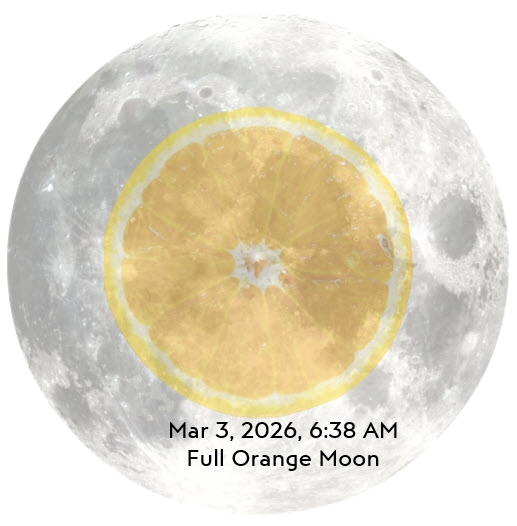
Full Moon: March 3rd, 6:38am.

Spring arrives: March 20th, at 10:46am.

Daylight Savings Time day: March 8th. Move irrigation to 2x a week watering.


Time to plant

Vegetables: Bean, calabaza, cantaloupe, cassava, chayote, corn,  cucumbers, dasheen, eggplant, Jerusalem artichoke, jicama, luffa, malanga, New Zealand spinach, okra, pepper, pumpkin, southern peas, squash, tamarillo, tomato, and watermelon.

 Flowers: African daisy, ageratum, aster, azalea, bacopa, balsam, begonia, black-eyed Susan, blue daze, bush-daisy, celosia, cleome, coleus, coreopsis, cosmos, dahlia, Dahlberg daisy, daylily, diascia, dusty miller, four o'clock, gaillardia, gardenia, gazania, goldenrod, hibiscus, Hollywood Hibiscus™, impatiens, ixora, Joseph's coat, King’s mantle, licorice plant, marigold, melampodium, Mexican heather, million bells, moon vine, morning glory, New Guinea impatiens, nierembergia, pentas, plumbago, roses, salvia, strawflower, tithonia, torenia, verbena, vinca, Whirling Butterflies, and zinnia.

 Herbs: Anise, basil, bay laurel, borage, cardamon, chervil, chives, coriander, costmary, dill, fennel, ginger, lemon balm, sweet marjoram, Mexican tarragon, mint, oregano, rosemary, sage, thyme and watercress.

 Bulbs: Achimenes, African iris, African-lily, amaryllis, blood lily, bulbine, caladium, canna, crinum, crocosmia, dahlia, daylily, eucharis lily, gingers, gladiolus, gloriosa lily, Louisiana iris, rain lily, tuberose and walking iris.

 Lawn care

  • Winter weather has browned many lawns; they should regreen this month.

  • Brown leaf blades do not have to be removed but can be raked out if you wish.

  • Cut back all dead branches, leaves, and flowers on perennials, shrubs, and trees.

  • Only cut back the brown fronds on palm trees.

  • Spray palm trees apical stem (at the top of the palm where the spears emerge) with a copper fungicide.

  • It’s seeding time for Bahia and Centipede lawns.

  • Get a soil test before fertilizing each Spring. 

  • UF AgriTech Soil Test Kit QR Code

  •  St. Augustine, Bahia and Bermuda lawns are ready for a spring fertilizer application.

  • Delay feedings of centipede and zoysia lawns until they regreen in late March or April.

  • Identify weeds before using general herbicide.

  • Time for using pre-emergent herbicide products is over.

  • Apply separate herbicide for weeds, if necessary. No need for weed and feed products.

  • Do not use glyphosate or other herbicides as an “edger.”

  • Manually edge garden beds with gas or electric edgers or hand spade.

  • Many weed control products cannot be used near trees and shrubs, check label restrictions.

  • Maintain lawns at their standard height; adjusting the blade height for Spring is unnecessary.  

  •  Hurry to remove patches of brown weeds and resod the areas.

  • Check for chinch bugs by using a hand-held vacuum cleaner.  Empty filter trap on white paper to find any live chinch bugs.

  • Apply insecticide if more than 20 chinch bugs are found.

  • Control fire ants in lawns; treat the entire lawn following label instructions.

  • Use alternative ground cover for lawns or strips under 4’ wide, areas difficult to mow, or spots where grass fails to grow.

  •  Have lawn care equipment serviced; change oil, check air filters and sharpen blades.

 In The Landscape

  • Cold weather damaged many tender shrubs and perennials; do needed pruning this month.

  • Cutting your shrub by ⅓ will not stress the plant too much. Water well before and after pruning.

  • Clear perennial plantings of debris and add new selections.

  • Control your landscape by trimming tree out of bounds shoots and limbs.

  • Wait to prune spring flowering shrubs until after the blossoms fade.

  • No need to hack crape myrtles and commit ‘crape murder’. Remove only seed pods and twiggy portions smaller than little finger.

  • Consider needed tree trimming; have the work performed now before hurricane season.

  • Trim declining fronds and old flower stems from palms but leave any fronds that are green.

  • Complete pruning of bush-type roses; prune climbers when the spring blooms fade.

  • Trim and divide ornamental grasses before they begin spring growth.

  • Plant warm season annuals and perennials.

  • Add trees, palms, shrubs and vines to the landscape.

  • Water new plantings frequently until they grow roots into the surrounding soils.

  • Cool-season weeds are still growing; control before they become too plentiful.

  • Reapply mulch layers to bring mulch up to 3”.

  • Trim poinsettias to within 12” to 18” from ground and begin feedings.

  • Apply fertilizer to palms, shrubs and perennials.

  • Established shade and flowering trees normally do not need special feedings.

  • Check plants for scale insects and control with natural sprays as needed.

  • Water established plants only when they show signs of wilting or moisture stress

  • Divide and replant perennials.

  • Plant rows or groups of gladiolus in weekly succession to have blooms all summer long.

  • Replant container gardens with spring flowers.

  • Divide terrestrial orchids and begin every other week feedings with a diluted fertilizer solution.

  • Turn fallen leaves into compost or use as mulch.

  • Feed container gardens with slow-release fertilizer following label instructions.

  • Give power equipment a spring checkup.

  • Clean bird houses, bird baths and fountains.

  • Remove debris from water gardens and repot lilies.

  • Sprinkle Summit Mosquito Bits™ in mosquito-prone areas like bird baths, gutters, and bromeliads.

 Vegetable and fruit care.

  • Early March is tomato, pepper, and eggplant planting time; set transplants in the ground.

  • Keep covers handy to protect cold sensitive crops until mid month.

  • Remove winter vegetables as they decline and plant warm seasonal crops.

  • Select pest resistant varieties to avoid insect and disease problems.

  • Plant short rows every few weeks of seeded crops to extend the harvest season.

  • Use bush forming crops instead of vining types in crowded gardens.

  • Herbs flourish during the Spring weather.

  • Garden pests including aphids, whiteflies and mites are active; use natural controls.

  • Spring growth is underway; complete all fruit tree pruning.

  • Prune cold damaged tropical fruits to remove brown leaves and declining stems.

  • Identify the type of grapes you are growing to obtain proper pruning and care information.

  • Pineapples start flowering this month; maintain a good care program.

  • Feed all fruit bearing trees, shrubs and vines at this time.

  • Add new fruiting trees, shrubs, and vines to the landscape.

  • Select warm locations for new tropical fruits.

  • Maintain citrus tree vigor with the first of the new year feedings.

  • Apply a minor nutrient spray to citrus trees at each flush of new growth

  • Control Asian psyllids; apply an insecticide labeled for citrus at each flush of leaf growth.

  • Add container herb and vegetable gardens to crowded landscapes.

  • Construct raised beds for easy maintenance.

  • Reapply mulch to fruit trees.

  • Fertilize vegetables lightly every 2 to 3 weeks or use a slow-release fertilizer.

  • Train vining vegetables to a trellis to save space.

  • Sprout sweet potatoes to produce transplants.

  • Install water conserving sprinklers in fruit and vegetable plantings.

 Foliage & indoor plants chores

  • Some foliage plants have been affected by the cold; trim and add more soil if needed.

  • Repot container plants that are rootbound.  

  • Replace declining plants with low light tolerant varieties.

  • Groom indoor plants to remove yellowing leaves and faded blooms.

  • Trim Christmas and holiday cactus and begin more frequent waterings and feedings.

  • Wash dust and pests from indoor plant foliage with a mild (not antibacterial) soapy solution.

  • Move orchids outdoors or to a bright area and begin every other week feedings.

  • Treat forced bulbs as temporary and add to compost pile when finished blooming.  

  • Check for mealy bugs, mites, and other pests. Treat according to pesticide label.

  • Control fungal gnats with Summit Mosquito Bits™.

  • Visit your local independent nursery centers for new plant varieties.