A listener from Better Lawns and Gardens wrote in about a year-old tree that hasn't grown and appears unhealthy. While planting a tree might seem as simple as digging a hole, proper planting involves more steps to ensure healthy growth for years to come.
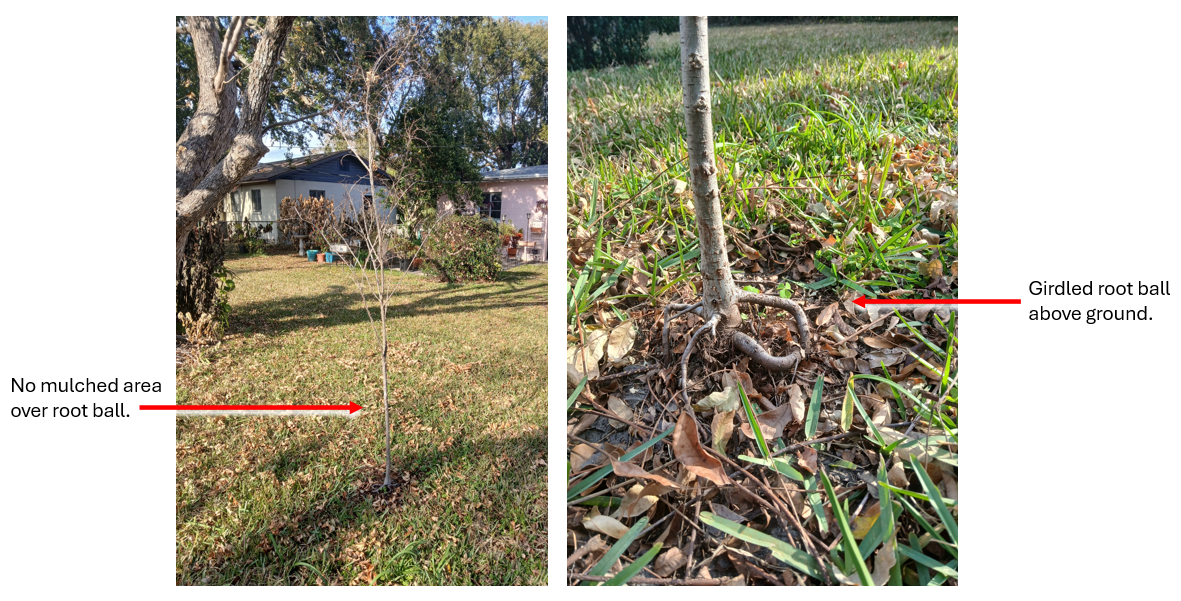
You’ll notice that this winged elm tree is quite slender, and its roots appear to be girdling. Fortunately, the homeowner reached out just in time! Let's ensure this native Florida tree is planted properly.
First, it needs to have a mulched area around the base. The grass is competing with the elm tree's roots for water and nutrients. So, mulching around the tree will be the last step. First, dig the tree up and look at the root ball. If you do not see any new roots, wash all the dirt away and gently open up the root system and untangle, if it needs it. It does appear that this tree’s above ground roots are girdling. Washing the roots won't hurt when it's this young but again be gentle. If roots have grown together or too entangled, select a few roots that can be cut diagonally that will allow you to spread the roots freely.
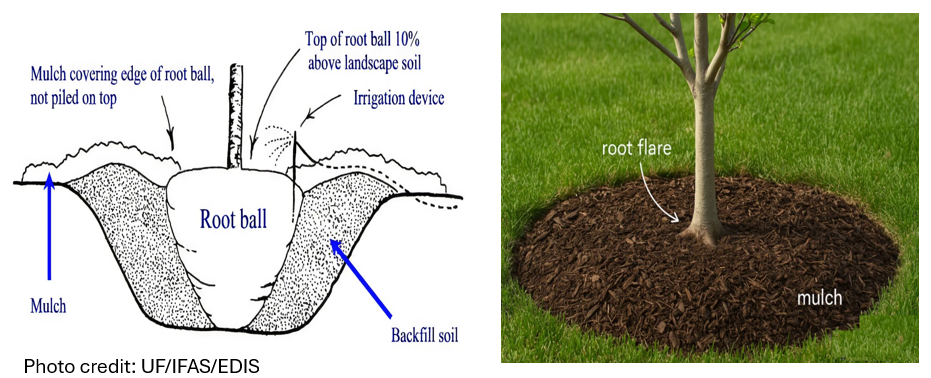
Place the tree in a hole that is twice as wide as its root ball and ensure it sits about two inches above ground level. The base flare of the tree should remain visible above the soil by approximately two inches. Cover the roots with soil, keeping the flare exposed. (See graphic). Fill the hole with soil and water deeply, eliminating any air pockets.
Next, form a six-foot circle around the tree and apply three inches of organic mulch, taking care not to cover the root flare. Add slow-release fertilizer on top of the root ball (not inside the hole). Provide 1 to 3 inches of water each week through hand watering until the rainy season begins. New trees require consistent watering for at least three to five years, or longer during droughts. Fruit trees generally need more frequent watering.
Thank you to S. for the use of their photos.