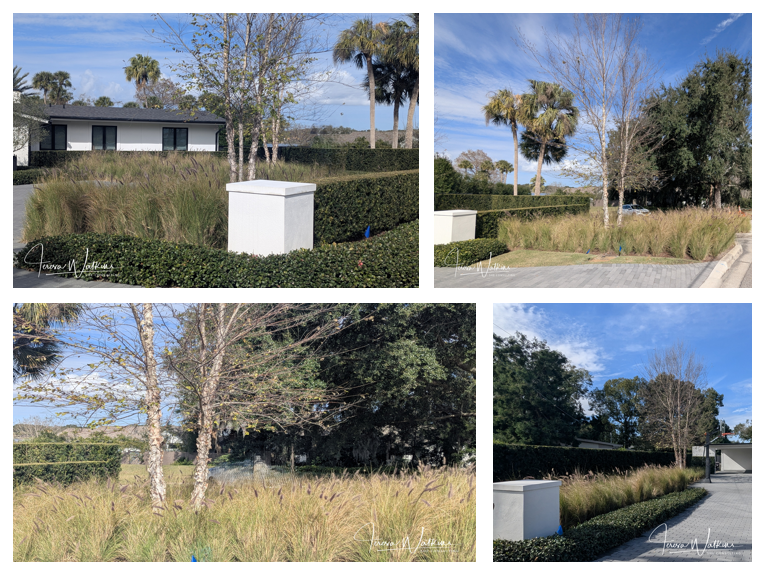
When cities and HOAs grow tired of maintaining landscaped medians, it shows. Crape myrtles, palms, Japanese blueberries, ornamental grasses, and other FDOT-recommended species selected for median plantings are valued for their adaptability and malleability[1], but they still require routine care. While these plants do not need the severe topping often referred to as "crape murder," they do benefit from seasonal pruning in both spring and fall.
Spring pruning should focus on removing crossing branches, limbs that restrict air circulation, and tender new growth that often develops as a result of improper pruning practices. By fall, these vigorous shoots have matured and begun developing into larger branches, requiring additional attention to maintain the plant's natural form.
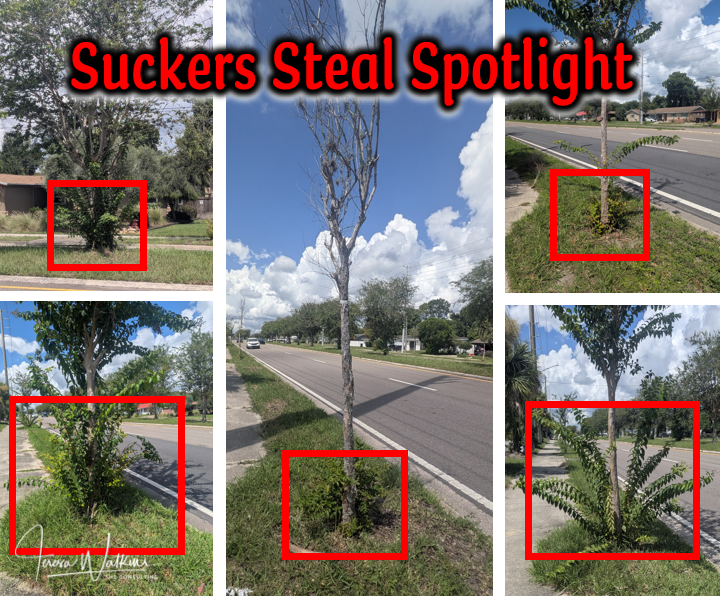
Those vigorous shoots emerging from the base of a crape myrtle are called suckers. Although they may appear harmless, they can quickly alter the tree's graceful structure and divert energy away from flowering and canopy development. Suckers should be removed as soon as they appear by cutting them as close to their point of origin as possible.
Unfortunately, common maintenance practices often contribute to excessive sucker growth. Repeated injury from string trimmers or mowers around the base of a crape myrtle stimulates the plant to produce even more suckers. For this reason, weed whackers should never be used around the trunks of trees or shrubs. Mechanical damage not only encourages unwanted growth but can also create wounds that invite pests and disease.
For best results, inspect crape myrtles several times during the growing season, especially after pruning, storm damage, or periods of rapid growth. The easiest way to remove suckers is to catch them early. When the shoots are still soft and green, simply rub them off by hand. No tools are necessary, and early removal prevents them from developing into larger branches that require corrective pruning later.
Consistent sucker removal helps maintain the tree's attractive form, improves air circulation within the canopy, and creates a cleaner, more professional appearance. A healthy crape myrtle should showcase its distinctive bark and elegant branching structure, not a thicket of unwanted shoots surrounding its base.
Carefully designed and often expensive median landscapes can quickly become eyesores when routine maintenance is neglected. The lesson for cities, counties, and HOAs is simple: there is no such thing as a "no-maintenance" landscape. Every landscape requires ongoing care to preserve its beauty, safety, and long-term value.
[i] Malleability is the quality of plant material to easily recover after being damaged by vehicles, vandalism or similar causes. Damaged trees will sprout from roots or stems to quickly restore their ornamental function. Similarly, trees with high malleability can be more easily managed at a 100 mm or smaller caliper. Stems are simply removed and replaced by sprouts which take the place of removed stems. Thus, a tree may be managed at a designated caliper diameter for a much longer time than one which cannot be so easily renewed. https://www.fdot.gov/
Teresa’s note: The species are strong enough to slow down a colliding vehicle from entering the opposite-direction highway but able to give way for safety of humans and vehicles.