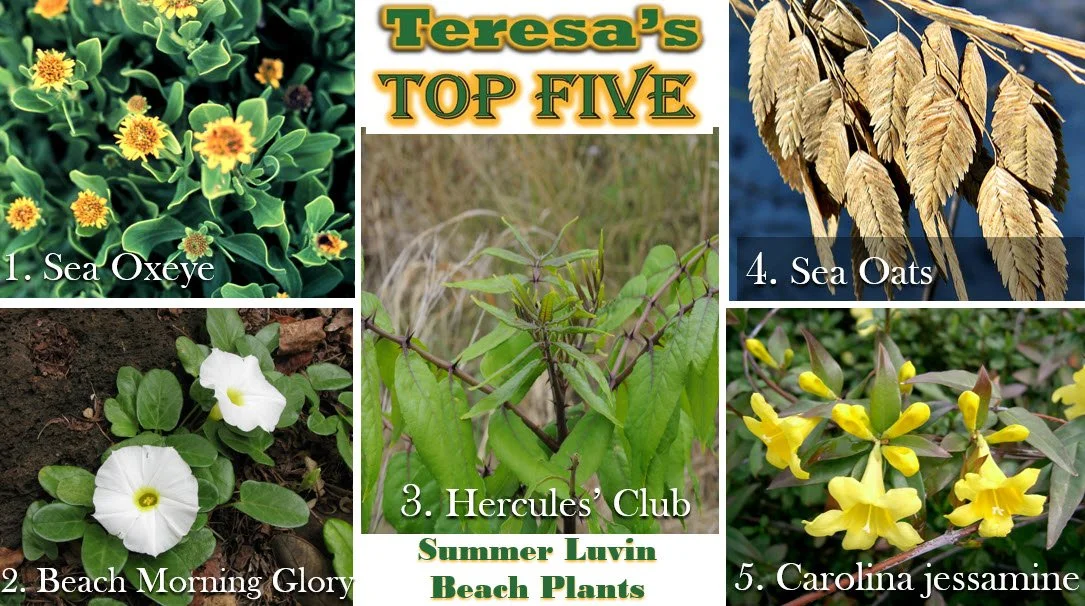
Bushy seaside oxeye (Borrichia frutescens) is highly salt-tolerant, able to withstand short periods of drought and occasional saltwater inundation. Well suited to coastal restoration and landscaping, it works effectively as a border planting, in mixed wildflower gardens, and along retention pond edges. Spreading by rhizomes, it can form long-lasting colonies.
Beach morning glory (Ipomoea imperati) is a trailing evergreen vine with showy white flowers that usually bloom in summer and fall, though flowering may occur year-round. Native to coastal dunes, it helps stabilize sand and tolerates drought, salt, and low-nutrient soils. Low-growing and non-climbing, it spreads quickly, making it best suited for coastal landscapes and dune restoration areas where it has room to sprawl. With regular maintenance, it can also be used as a groundcover in suitable conditions
Hercules’ club (Zanthoxylum clava-hercules) is an aromatic, heavily thorned tree with a rounded crown, spreading branches, yellow flowers, and fruit. It is used in landscaping, especially in natural areas and restoration projects, and serves as a host plant for giant swallowtail butterfly caterpillars. A member of the citrus family (Rutaceae), it is related to native citrus species such as wild lime. Also known as “toothache tree” or “tingle tongue,” its leaves, bark, and twigs can cause a tingling numbness in the mouth when chewed. Native Americans and early settlers used it medicinally to relieve toothaches.
Sea oats (Uniola paniculata) are tall, spreading grasses that sway in coastal dunes and provide valuable habitat. Their flowers supply pollen for many insects, while their seeds feed beach mice, rabbits, and birds. In coastal landscapes, they serve as excellent foundation plants, tolerating hurricane-force winds and saltwater storm surge. Their deep, dense roots, which can reach 40 feet, anchor sand and help hold dune habitats together. Because of their important role in coastal protection, sea oats are protected under Florida law. Allow plenty of space, as they spread by rhizomes
Carolina jessamine (Gelsemium sempervirens) provides welcome winter color and is among the first flowers to bloom in Florida, often appearing in early January. This easy-to-grow vine works well on fences and trellises, where its small leaves and twining stems create a light, airy look. It can also serve as a groundcover or climb trees, flowering in the canopy. Moderately fast-growing, it can be shaped or controlled with pruning, though it may sucker and spread beneath mulch. Note: toxic to children and pets

In Your Backyard